eVidyarthi
Menu
  • School
    • Close
    • CBSE English Medium
    • CBSE Hindi Medium
    • UP Board
    • Bihar Board
    • Maharashtra Board
    • MP Board
    • Close
  • English
    • Close
    • English Grammar for School
    • Basic English Grammar
    • Basic English Speaking
    • English Vocabulary
    • English Idioms & Phrases
    • Personality Enhancement
    • Interview Skills
    • Close
  • Sarkari Exam Preparation
    • Close
    • All Govt Exams Preparation
    • State Wise Competitive Exam Preparation
    • India – Notes for All Competitive Exams
    • MCQs & Notes for Competitive Exams
    • NCERT Syllabus for Competitive Exam
    • Close
  • Study Abroad
    • Close
    • Study in Australia
    • Study in Canada
    • Study in UK
    • Study in Germany
    • Study in USA
    • Close
  • Current Affairs
    • Close
    • Current Affairs
    • Current Affairs Quizzes
    • State Wise Current Affairs
    • Monthly Current Affairs
    • Close
History Class 12 Maharashtra Board | Menu
  • MCQ History Class 12 Maharashtra Board
  • Book History Class 12 Maharashtra Board
  • Question Answers History Class 12 Maharashtra Board
  • Notes History Class 12 Maharashtra Board
  • Important Questions History Class 12 Maharashtra Board
  • History Class 12

Important Questions Class 12 Chapter 12 History Maharashtra Board

India Transformed – Part II


Short Questions

1. Who founded the Muslim Satyashodhak Samaj?
Answer: Hamid Dalwai.

2. What is the full form of AYUSH?
Answer: Ayurveda, Yoga and Naturopathy, Unani, Siddha, and Homeopathy.

3. Which state became India’s first 100% literate state?
Answer: Kerala.

4. What is the name of the campaign launched for polio eradication?
Answer: Pulse Polio.

5. Who is known as ‘Beejmata’?
Answer: Rahibai Popere.

6. Which gas was recommended to reduce pollution in Delhi?
Answer: CNG (Compressed Natural Gas).

7. What is the name of the turtle festival in Ratnagiri?
Answer: Turtle Festival.

8. Which award was given to Sachin Tendulkar?
Answer: Bharat Ratna.

9. What is the name of the tourism campaign ‘Atulya Bharat’?
Answer: A campaign to boost tourism.

10. Which organization works for heritage conservation in India?
Answer: INTACH.

Long Questions

1. What was the purpose of the Human Rights Protection Act 1993?
Answer: The Human Rights Protection Act 1993 established the National Human Rights Commission to protect fundamental rights like life and equality. It allows the commission to act on complaints or media reports to ensure no one is deprived of these rights.

2. How did the Pulse Polio campaign work to eradicate polio in India?
Answer: The Pulse Polio campaign, started in 1995, aimed to vaccinate all children under five against polio. It used awareness camps, home visits, and media to ensure success, supported by WHO, UNICEF, and the Government of India.

3. What steps were taken to address air pollution in Delhi?
Answer: The Centre for Science and Environment highlighted Delhi’s pollution due to vehicles. The Supreme Court ordered CNG use for public transport in 1998, and vehicles now need a Pollution Under Control (PUC) certificate for insurance.

4. Who is Rahibai Popere, and what is her contribution to agriculture?
Answer: Rahibai Popere, known as ‘Beejmata,’ preserves native seeds of food grains and vegetables. She started a seed bank with over 50 landraces, spreading her work through micro-banking groups and BAIF to promote sustainable farming.

5. What is the role of Bhau Katdare in environmental conservation?
Answer: Bhau Katdare, through Sahyadri Nisarg Mitra, protects endangered species like the White-breasted Sea Eagle and Olive Ridley turtles. His efforts led to the Turtle Festival and the inclusion of Indian Swiftlets in the Wildlife Protection Act.

6. How did Kerala achieve 100% literacy in 1990?
Answer: Kerala became 100% literate in 1990 through a campaign teaching reading, writing, math, hygiene, and savings. Free eye check-up camps and spectacles were provided to senior citizens, helping them attend literacy classes.

7. What are the objectives of the Sarva Shiksha Abhiyan program?
Answer: Sarva Shiksha Abhiyan, launched in 2001, aims to provide free education to children aged 6-14, eliminate gender discrimination, ensure 100% school attendance, and improve education quality, especially for girls and special-needs children.

8. What is the significance of the Khelo India scheme?
Answer: Khelo India promotes sports by encouraging student participation from school, increasing girls’ involvement, and building sports facilities. It aims to create a platform for excellence and offers training under Sports Authority of India coaches.

9. How does the Ministry of Tourism attract foreign tourists to India?
Answer: The Ministry of Tourism provides e-visas, a 24/7 multilingual helpline (dial 1363), and promotes unique destinations through campaigns like Atulya Bharat and Swadesh Darshan, covering pilgrimage, adventure, and eco-tourism.

10. What is the role of INTACH in preserving India’s heritage?
Answer: INTACH, established in 1984, conserves India’s tangible and intangible heritage through its branches across the country. It works on architectural, natural, and cultural heritage, raising awareness and offering training via the INTACH Heritage Academy.
Notes Class 12 Chapter 12 History Maharashtra Board

India Transformed – Part II


12.1 Social Domain

India has made significant progress in reducing social inequalities. The government has introduced laws and programs to promote equality and protect human rights.

Key Initiatives:

Human Rights Protection Act, 1993:

  • Established the National Human Rights Commission to protect basic rights like life and equality.
  • The Commission can act on complaints or media reports about human rights violations (called Sui Moto Cognisance).
  • Social activists or organizations can file complaints on behalf of victims.

Domestic Violence Act, 2005:

  • Protects women from domestic violence.
  • Grants women the right to live in the house they reside in, even if they don’t own it.

Triple Talaq Law, 2019:

  • Declared the practice of Triple Talaq illegal.
  • Inspired by Hamid Dalwai, who founded the Muslim Satyashodhak Samaj in 1970 to promote Muslim women’s rights and a uniform civil code.

Sex Ratio Issue:

  • The 2011 census showed a low sex ratio: 914 girls per 1,000 boys (age 0-1 years).
  • Women’s organizations raised concerns, leading to awareness campaigns.
  • Maharashtra banned fetal sex determination tests and launched the Lek Ladaki program to promote the value of girls.

12.1.1 Health

India’s health sector has seen major improvements, with campaigns and programs to enhance public health.

Key Programs:

Pulse Polio Campaign (1995):

  • Aimed to eradicate polio in India.
  • Sponsored by WHO, UNICEF, Rotary International, and the Government of India.
  • Ensured every child under 5 years received polio vaccination through awareness camps, home visits, and media campaigns.
  • Known as ‘Do Boond Zindagi Ke’ (Two Drops of Life).

AYUSH (2009):

  • A department under the Ministry of Health and Family Welfare to promote alternative medicine like Ayurveda, Yoga, Naturopathy, Unani, Siddha, and Homeopathy.
  • Focuses on education, research, and standardization of these medical practices.

12.1.2 Environment

Environmental challenges like air and water pollution are being addressed through government policies and activism.

Air Pollution:

Issues:

  • Rising air pollution, especially in cities like Delhi, due to vehicle emissions.
  • Poorly maintained vehicles release toxic gases and carbon particles, harming health and heritage monuments.

Solutions:

  • Centre for Science and Environment highlighted Delhi’s pollution problem.
  • CNG (Compressed Natural Gas) mandated for public transport vehicles in Delhi by the Supreme Court in 1998.
  • Pollution Under Control (PUC) certificates made mandatory for vehicles; non-compliant vehicles cannot get insurance.
  • PUC certificate centers were set up across cities.

Water Pollution:

  • Chemical effluents from industries pollute rivers and streams.
  • Non-biodegradable materials like plastics and pesticides harm water, soil, and food, causing diseases in humans, animals, and plants.

Environmental Activists:

  • Sundarlal Bahuguna: Led the Chipko Movement to protect forests.
  • Medha Patkar: Spearheaded the Narmada Bachao Movement to save rivers and communities.
  • Dr. Rajendra Singh: Focused on water conservation.

Notable Environmental Efforts in Maharashtra:

Rahibai Popere (Beejmata):

  • Known as the Seed Mother, she preserves native seeds of crops like rice, millets, and vegetables.
  • Founded Kalasubai Parisar Biyanee Samvardhan Samiti.
  • Stores seeds in earthen pots with ash and neem leaves to protect them from pests.
  • Recognized as one of BBC’s Women of the Year 2018 and awarded the Nari Shakti Award in 2018.

Bhau Katdare:

  • Works with Sahyadri Nisarg Mitra to conserve wildlife.
  • Protected the White-breasted Sea Eagle by identifying 62 nesting sites in Ratnagiri.
  • Stopped smuggling of Indian Swiftlet nests, leading to their inclusion in the Wildlife Protection Act, 1972.
  • Protects Olive Ridley Turtles at Velas beach, resulting in the Turtle Festival, which boosts tourism.
  • Currently works to save the endangered Pangolin.

Premsagar Mestri:

  • Works through SEESCAP to conserve vultures (Long-billed and White-back Vultures) in Raigad.
  • Addresses issues like toxic painkillers (e.g., diclofenac), lack of tall trees, and food scarcity affecting vulture populations.

12.1.3 Education

Education in India has transformed with a focus on literacy, equality, and modern syllabi.

Key Milestones:

Kerala’s Literacy Success:

  • Declared 1990 as the International Year of Literacy.
  • Kerala became India’s first 100% literate state, with Ernakulum as the first fully literate district (announced on February 4, 1990).
  • The literacy campaign included reading, writing, math, hygiene, vaccination, cooperative agriculture, and savings.
  • Free eye check-up camps and spectacles were provided to senior citizens to support literacy classes.

Maharashtra’s Education Initiatives:

  • Introduced English from Class 1 to help students master it alongside their mother tongue.
  • Focused on listening, speaking, reading, and writing skills through engaging textbooks by Balbharati.
  • Recognized by the National Knowledge Commission.

National Education Reforms:

  • National Council of Educational Research and Training (NCERT) revised syllabi to promote democratic values, social justice, gender equality, environmental protection, and national unity.
  • Teacher training programs were conducted across Maharashtra.
  • Acharya Ram Murti Committee (1990) recommended universal education, women’s education, and increased funding for education.
  • Banned pre-admission interviews for children and addressed heavy schoolbag issues.

Sarva Shiksha Abhiyan (SSA, 2001):

  • Motto: “Let’s all learn, Let’s all progress”.
  • Aimed to provide free education to children aged 6-14 (via the 86th Constitutional Amendment).
  • Focused on eliminating gender disparities and supporting children with special needs.
  • Combined with programs like Mid Day Meal and Khadu-Phala Yojana.

District Primary Education Programme (DPEP, 1994):

  • Implemented in seven states, including Maharashtra, to ensure 100% primary school enrollment and reduce dropouts.
  • Supported by the World Bank.

Mid Day Meal (Shaley Poshan Ahar, 1995):

  • Provides meals to primary school children to improve attendance and nutrition.
  • Food grains distributed where cooking facilities are unavailable.

EDUSAT (2004):

A satellite launched to promote distance education in regional languages through six communication channels.

Special Programs in Maharashtra:

  • Ratrashala (Night Schools): Started by Mahatma Jotirao Phule in the 19th century for working students.
  • Sakharshala: Schools for children of sugarcane workers near sugar factories.
  • 100% literacy achieved in Sindhudurg and Wardha districts with help from voluntary organizations

12.2 Sports

Sports in India have evolved with globalization, professionalization, and government support.

Key Developments:

Historical Achievements:

  • Indian hockey team’s international victories.
  • Wrestler Khashaba Jadhav gained fame in global wrestling.

Modern Trends:

  • New sports like cricket, kabaddi, and badminton gained popularity.
  • Rules and formats have changed (e.g., cricket shifted from 5-day matches to 20-over T20; wrestling now uses points instead of pinning).
  • Sports like swimming, shooting, chess, and skydiving are gaining attention.

Professionalization:

  • Sports clubs (e.g., IPL for cricket, Vivo Pro Kabaddi League) adopt players, provide training, and sign professional contracts.
  • Media coverage, sports journals, and dedicated TV channels have created a marketing ecosystem for sports.

Government Support:

National Sports Policy (2001):

  • Aims to promote sports nationwide, develop skills, build facilities, and encourage corporate investment.
  • Focuses on talent scouting and public awareness.

Come and Play Scheme (2011):

Provides access to five sports complexes in Delhi under the Sports Authority of India (SAI) for youth training.

National Sports University (2018, Manipur):

Offers courses in sports education, management, psychology, and coaching.

Khelo India:

  • Combines old and new schemes to promote sports among students, especially girls.
  • Includes 12 aspects to create a larger sports platform.

Awards and Incentives:

  • Bharat Ratna: Awarded to Sachin Tendulkar, who was also nominated to the Rajya Sabha.
  • Rajiv Gandhi Khel Ratna: Rs. 7,50,000 for outstanding performance (e.g., awarded to Virat Kohli and Saikhom Mirabai Chanu in 2018).
  • Other awards: Arjun Award, Dhyanchand Award, Dronacharya Award, etc.
  • Olympic gold medalists receive Rs. 75,00,000; pensions for retired athletes (Rs. 20,000/month for Olympic winners, Rs. 12,000/month for Asian Games winners).
  • Rewards for medals in Para Olympics, Commonwealth Games, Asian Championships, etc.

Importance:

    1. Sports are now seen as a viable career option for youth.
    2. Integrated into school and college curricula for holistic development.

12.3 Cultural Heritage and Tourism

Tourism is a growing industry in India, contributing to foreign exchange and cultural preservation.

Key Features:

Economic Impact:

  • Tourism generates significant revenue and employment opportunities (e.g., guides, hotel staff, transport services).
  • The number of tourists visiting India is increasing annually.

Government Initiatives:

  • E-Visa System: Introduced by the Ministries of Home Affairs, Tourism, and Foreign Affairs, including e-business, e-medical, and e-visa options.
  • 24/7 Tourist Helpline (1363): Provides information in 12 languages (Hindi, English, Arabic, French, etc.) on topics like adventure sports, health tourism, and film festivals.
  • Training Institutes: Offer courses in hospitality, hotel management, and soft skills for tourist services.
  • Premium Hotels: Provide world-class amenities for tourists.

Promotional Campaigns:

  • Atulya Bharat: An ad campaign to boost tourism.
  • GONORTHEAST: A Discovery Channel show promoting Northeast India’s unique culture and nature.
  • Swadesh Darshan: Offers 13 types of pilgrimage tours (e.g., Himalayan, coastal, Buddhist centers).
  • Indian Tourism Mart (2018): Organized with FAITH to promote India globally.
  • Channels like BBC, Discovery, and History showcase India’s heritage to attract international tourists.

Heritage Conservation:

  • INTACH (Indian National Trust for Art and Cultural Heritage, 1984):
  • Works on conserving tangible (natural, cultural) and intangible heritage.
  • Has over 200 branches and departments like architectural heritage, heritage education, and tourism.
  • Notable work in Maharashtra for heritage preservation.
  • UNESCO World Heritage: Jaipur (Pink City) was inscribed as a World Heritage Site in 2019.

Pilgrimage Tourism:

Swadesh Darshan and Prasad schemes promote 95 pilgrim and spiritual centers, including Trimbakeshwar in Maharashtra.

Question Answers Class 12 Chapter 12 History Maharashtra Board

India Transformed – Part II


Exercise

Q.1 (A) Choose the correct alternative and rewrite the statement.

1. In 1995 the health department of the Indian government launched the campaign, dubbed as Pulse Polio.
2. The first district in Kerala to become completely literate was Ernakulum.

(B) Find the incorrect pair from group ‘B’, and write the corrected one.

Group ‘A’Group ‘B’
 National Human Rights CommissionProtection of Human Rights
 Centre for Science and EnvironmentStudy of Pollution in Delhi
SEESCAPInstitute for conservation of turtles
INTACHOrganisation creating awareness for conservation of heritage

Answer:
Incorrect Pair: SEESCAP – Institute for conservation of turtles
Corrected Pair: SEESCAP – Institute for conservation of vultures


Q.2 Write names of historical places/persons/events.

1. Commission established vide Human Right Protection Act: National Human Rights Commission
2. The player who was awarded the highest title, ‘Bharat Ratna’: Sachin Tendulkar


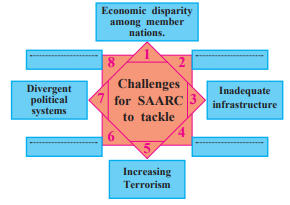
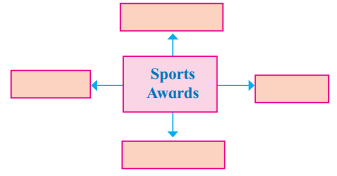
Q.3 Complete the concept map.

Answer:


Q.4 Write short notes.

1. Sarva Shiksha Abhiyan
Sarva Shiksha Abhiyan (SSA), launched in 2001 with the motto “Let’s all learn, Let’s all progress,” aims to universalize elementary education in India. It was introduced following the 86th Constitutional Amendment, which grants free education to children aged 6-14. The program focuses on eliminating disparities in access to primary education, particularly for girls and children with special needs (Divyang). SSA integrates earlier initiatives like the Mid-Day Meal scheme and Khadu-Phala Yojana to enhance its effectiveness. Its objectives include 100% school enrollment, improving educational standards, eliminating gender discrimination, and ensuring full attendance by 2010.

2. Air Pollution
Air pollution is a significant issue in India, primarily due to the increasing number of automobiles, especially those with poor maintenance, emitting toxic gases and carbon particles. In Delhi, the Centre for Science and Environment highlighted this problem, noting its impact on heritage monuments. To address this, the Supreme Court mandated the use of Compressed Natural Gas (CNG) for public transport vehicles in 1998. Additionally, the Pollution Under Control (PUC) certificate became mandatory for vehicles, with non-compliant vehicles ineligible for insurance. PUC certificate centers were established, and efforts continue to curb air pollution through stricter regulations and public awareness.

3. Eradication of Polio
The Pulse Polio campaign, launched in 1995 by the Indian government in collaboration with WHO, UNICEF, Rotary International, and others, aimed to eradicate polio. Targeting children under five, the campaign ensured no child was left unvaccinated through extensive awareness camps, home visits, and media campaigns like “Do Boond Zindagi ke.” The initiative’s success was driven by its comprehensive approach, significantly reducing polio cases and contributing to India’s transformation in the health sector.


Q.5 Answer the following questions in detail.

1. Explain the sports policy of the Government of India.
The Government of India announced its National Sports Policy in 2001 to promote sports across the country and enhance the performance of Indian sportspersons globally. The policy’s key objectives include:

  • Expanding Sports Access: Promoting sports in all regions of India to ensure inclusivity.
  • Skill Development: Supporting athletes to develop specialized skills through training and infrastructure.
  • Infrastructure Development: Building foundational sports facilities to nurture talent.
  • Talent Identification: Collaborating with the National Sports Federation of India and other institutions to identify and groom sports talent.
  • Private Sector Involvement: Encouraging industries, corporates, and private institutions to invest in sports.
  • Public Awareness: Creating awareness about the importance of sports and fostering public interest.

To support these goals, initiatives like the ‘Come and Play’ scheme (2011) provided access to five sports complexes in Delhi under the Sports Authority of India (SAI), offering training by SAI coaches. The establishment of the National Sports University in Manipur in 2018 furthered sports education through Bachelor’s, Master’s, M.Phil., and Ph.D. programs in sports management, psychology, and coaching. The ‘Khelo India’ scheme integrates old and new objectives to create a broader platform for sports, emphasizing early sports engagement in schools and increasing girls’ participation. Financial incentives include the National Sports Development Fund, tax exemptions for donations, and awards like the Rajiv Gandhi Khel Ratna, Arjun Award, and pensions for retired athletes (e.g., Rs.20,000/month for Olympic winners since 2018).

2. Which programmes and facilities are created by the Ministry of Tourism of the Indian government to attract tourists?

The Ministry of Tourism, in collaboration with other ministries, has implemented several programs and facilities to attract tourists and boost India’s tourism industry, which significantly contributes to foreign exchange earnings. Key initiatives include:

  • E-Visa Facility: The Ministries of Home Affairs, Tourism, and Foreign Affairs introduced e-visas, including e-business, e-medical, and general e-visas, to simplify entry for international tourists.
  • Multilingual Information Service: A 24/7 helpline (dial 1363) provides tourist information in Hindi, English, and ten foreign languages (Arabic, French, German, Italian, Japanese, Korean, Chinese, Russian, Spanish), covering topics like cruise tours, adventure sports, health tourism, and eco-friendly tourism.
  • Training Institutes: Institutes have been established to train professionals in soft skills, such as communication and hospitality, to enhance the tourist experience.
  • Premium Accommodations: High-quality hotels and hospitality training institutes in cities ensure comfortable stays for tourists.
  • Advertisement Campaigns: The ‘Atulya Bharat’ campaign and the ‘GONORTHEAST’ travel show on Discovery promote India’s unique cultural and natural attractions, particularly in northeastern states.
  • Swadesh Darshan and Prasad Schemes: These programs promote 13 types of pilgrimage tours, including Himalayan, coastal, and Buddhist circuits, covering 95 spiritual and pilgrim centers like Trimbakeshwar in Maharashtra.
  • Indian Tourism Mart (2018): Organized with the Federation of Associations in Indian Tourism and Hospitality (FAITH), this event modeled on international tourism marts promotes India globally.
  • Global Media Outreach: Channels like BBC, Discovery, and History showcase India’s cultural and historical heritage, attracting tourists from countries like the USA, France, and Japan.

Q.6 State your opinion.

1. Joint military practice sessions are beneficial for both participant countries.
While the provided document does not directly address joint military practice sessions, I believe they are highly beneficial for participant countries. These sessions foster mutual trust, enhance interoperability between armed forces, and improve coordination in addressing shared security challenges. They allow countries to share expertise, adopt best practices, and strengthen diplomatic ties, contributing to regional and global stability. For example, joint exercises like those between India and other nations (e.g., Malabar Exercise) enhance maritime security and deter common threats. However, such collaborations must respect national sovereignty and align with mutual strategic interests to avoid dependency or conflicts of interest.

2. All of us have the responsibility of taking care of our heritage places.
I strongly agree that preserving heritage places is a collective responsibility. Heritage sites, such as Jaipur’s Pink City (a UNESCO World Heritage Site), reflect India’s rich cultural and historical legacy. As citizens, we must protect these sites from pollution, vandalism, and neglect by raising awareness, supporting conservation efforts like those of INTACH, and adopting sustainable tourism practices. For instance, reducing plastic use and respecting site regulations can prevent degradation. Schools, communities, and governments should collaborate to educate people about the value of heritage, ensuring these treasures are preserved for future generations.

Important Questions Class 12 Chapter 11 History Maharashtra Board

India Transformed – Part I


Short Questions

1. What is GATT?
Answer: GATT (General Agreement on Tariffs and Trade) is a 1947 multinational trade agreement to promote economic development through trade.

2. When was the World Trade Organization (WTO) founded?
Answer: The WTO was founded on January 1, 1995.

3. What is the Dunkel Draft?
Answer: It’s a draft by Arthur Dunkel, emphasizing free trade and liberalization, fundamental to the WTO’s establishment.

4. What is the Pradhan Mantri Rojgar Yojana?
Answer: A 1993 scheme to create job opportunities for educated youth in India.

5. When was the Kisan Credit Card plan started?
Answer: It was started in 1998 to support farmers with funds and insurance.

6. What is the Golden Quadrilateral?
Answer: A 1998 highway project connecting Delhi, Mumbai, Chennai, and Kolkata.

7. When did the Indian Postal Department start the Speed Post service?
Answer: Speed Post was started in 1986.

8. What is BRICS?
Answer: BRICS is an organization of Brazil, Russia, India, China, and South Africa, formed in 2006 to enhance trade.

9. What is Param-8000?
Answer: A supercomputer developed by C-DAC, Pune, marking India’s entry into the global computer market.

10. When was the Right to Information Act implemented in Maharashtra?
Answer: It was implemented on October 12, 2005.

Long Questions

1. How did India’s economic policies change after 1990?
Answer: After 1990, India adopted liberal economic policies, promoting globalization. It joined the WTO, simplified import rules, and modified patent laws. Leaders like Narasimha Rao and Manmohan Singh boosted economic growth, reducing poverty and improving infrastructure.

2. What is the role of the World Trade Organization (WTO)?
Answer: The WTO, formed in 1995, promotes free global trade among 123 nations. It sets rules for trade, reduces customs duties, and supports economic development. India’s membership helped it integrate into the global economy.

3. What are the objectives of the Pradhan Mantri Gram Sadak Yojana?
Answer: Launched in 2000, this scheme aims to build good roads in rural areas. It connects villages to improve access to health, education, and economic opportunities. By 2005, 75,000 km of roads were completed.

4. How has the Indian Postal Department modernized its services?
Answer: The Indian Postal Department, over 250 years old, now offers banking, Speed Post, and courier services. It introduced ATMs, mutual funds, and Ganga Jal delivery. Personalized stamps and philatelic services also enhance its offerings.

5. What is the significance of the Jawaharlal Nehru National Urban Renewal Mission (JNNURM)?
Answer: Launched in 2005, JNNURM modernizes cities by improving roads, public transport, and sewage systems. It focuses on housing for the poor and efficient waste management, transforming urban infrastructure across India.

6. How has India progressed in the field of science and technology?
Answer: India developed supercomputers like Param-8000 and launched satellites like Chandrayaan-1. The IT sector grew, with cities like Pune becoming hubs. Nuclear tests and internet expansion highlight India’s technological advancements.

7. What was the impact of the Kargil War on India’s defense policies?
Answer: The 1999 Kargil War led India to modernize its military. It upgraded equipment, trained personnel, and built the Arihant nuclear submarine. Joint military exercises with other nations also strengthened defense capabilities.

8. What are the key features of the Right to Information Act 2005?
Answer: The RTI Act allows citizens to access public records, documents, and data. It promotes transparency by letting people request information from public authorities. The act was influenced by movements led by activists like Anna Hazare.

9. Why were new states like Chhattisgarh and Uttarakhand formed in 2000?
Answer: Large states like Madhya Pradesh and Uttar Pradesh were divided for better governance. Chhattisgarh and Uttarakhand were created on November 1 and 9, 2000, respectively, after long-standing regional demands for separate states.

10. How do youth-related policies in India support young people?
Answer: Policies like Nehru Yuva Kendra Sangathan train youth in skills and leadership. National Youth Day and festivals promote talent, while youth hostels encourage adventure. These initiatives empower India’s large youth population.

Notes Class 12 Chapter 11 History Maharashtra Board

India Transformed – Part I


11.1 Globalization

India Before and After 1990: Before 1990, India had a closed economy. After adopting liberal economic policies in 1990, it opened up to global trade, leading to significant changes.

General Agreement on Tariffs and Trade (GATT):

  • Established in 1947 by 23 nations in Geneva to promote international trade.
  • Aimed to reduce trade barriers and treat member countries as “most favored nations.”
  • Focused on economic development through production and trade.
  • Annual meetings were held in Geneva, with each country having one vote to discuss trade issues.

World Trade Organization (WTO):

  • Formed on January 1, 1995, by 123 nations to promote free trade globally.
  • India is a member of the WTO.
  • The Dunkel Draft by Arthur Dunkel, WTO Director General, emphasized liberalized trade with fewer restrictions.
  • India simplified import rules, modified intellectual property and patent laws to align with global standards.

Key Contributions:

  • Prime Ministers Narsimha Rao, Atal Bihari Vajpayee, and Manmohan Singh played crucial roles in advancing liberalization.
  • A 2006 WTO report highlighted India’s economic growth, reduced poverty, lower infant mortality, and improved literacy, water supply, and drainage systems.

11.2 Transformation in Various Fields

India’s transformation is visible in rural and urban development, communication, defense, and citizen rights.

11.2.1 Rural Development Plans

  • Objective: To balance rural and urban development and prevent neglect of rural areas.
  • Key Plans:

Pradhan Mantri Rojgar Yojana (1993):

  • Started by the Ministry of Commerce and Industry to create job opportunities for educated youth.
  • Focused on private enterprise and self-employment.

Rojgar Hami Yojana:

  • Launched on Mahatma Gandhi’s birth anniversary to provide daily wages to unemployed agricultural laborers.
  • Initially implemented in 257 districts, targeting two young laborers per family below the poverty line.
  • Merged into Gramin Rojgar Yojana in 2001.

Kisan Credit Card (1998):

  • Supported farmers by providing funds for equipment and seeds.
  • Later included insurance for cardholders.

Suvarnajayanti Gramin Swayam Rojgar Yojana (1999):

  • Combined multiple schemes like Ekatmik Gramin Vikas Yojana, Ganga Kalyan Yojana, and others.
  • Benefited 12.07 lakh people by 2005-06.

Jawahar Gram-Samruddhi Yojana (1999):

  • Aimed to provide employment for unemployed men and women.
  • Merged into Sampoorna Gramin Rojgar Yojana in 2001.

Sampoorna Gramin Rojgar Yojana (2001):

  • Combined Rojgar Aashwasan Yojana and Jawahar Gram-Samruddhi Yojana.
  • Provided wage-earning opportunities and food grains in exchange for work.
  • Focused on water conservation and agricultural land development in 150 backward districts by 2004.

Rashtriya Gramin Rojgar Hami Yojana (2006):

  • Aimed to reduce poverty, starvation, and unemployment in rural areas.
  • Guaranteed 100 days of work per rural family.
  • Implemented in 350 districts by 2008.

Agriculture and Livestock:

  • 54% of India’s population (2011 census) is engaged in agriculture.
  • Mrida Swasthya Card Yojana: Improves soil fertility and agricultural production.
  • Pradhan Mantri Krishi Sinchan Yojana: Ensures adequate water supply for farming.
  • Krishi Vikas Yojana: Promotes organic farming and increases farmers’ income.
  • Pradhan Mantri Fasal Bima Yojana: Provides insurance to farmers for crop failures due to natural calamities, pests, or climate issues.
  • Indian Council for Agricultural Research (ICAR): Supports agricultural research and exhibitions to introduce farmers to new technologies.
  • Encourages indigenous seeds, cattle breeds, goat keeping, poultry farming, and fish farming.
  • India ranks second globally in fish production and first in milk production.
  • National Livestock Mission (2014-15): Supports fodder availability, loans, and cattle keeper organization.
  • Pradhan Mantri Gram Sadak Yojana (2000):
  • Built roads to connect villages, starting with those having a population of 1,000.
  • Merged into Pradhan Mantri Gramoday Yojana in 2001.
  • Completed 75,000 km of roads by 2005 to improve access to health, education, water, housing, and electricity.

11.2.2 Urban Development Plans

Jawaharlal Nehru National Urban Renewal Mission (JNNURM, 2005):

Focused on modernizing cities through improved roads, public transport, wastewater management, sewage systems, and housing for the poor.

Golden Quadrilateral (Suvarna Chatushkon Yojana, 1998):

  • A highway network connecting Delhi, Mumbai, Chennai, and Kolkata.
  • Managed by the National Highways Authority of India.
  • Aimed to link major port cities with 7,300 km of highways (25% completed by 2008).

Metro Railway:

Delhi Metro started in 2002, revolutionizing public transport with above- and underground systems for faster and smoother travel.

11.2.3 Means of Communication

Postal Department:

  • Established in 1766 by the British, it is over 250 years old.
  • Evolved from letter delivery to banking services like Postal Savings Accounts, Term Deposits, Public Provident Fund, Kisan Vikas Patra, and Sukanya Samruddhi Account.
  • By 2018, 23,557 post offices were under Core Banking Solutions, with ATMs and mutual fund services.
  • Offers money transfer services for Non-Resident Indians.

Speed Post (1986):

  • Delivers over 3 crore letters and parcels monthly.
  • Provides delivery confirmation via SMS, courier services (passports, business parcels), and packaging services.
  • Novel services include delivering Ganga Jal from Rishikesh and Gangotri (since 2016) and personalized postage stamps.

Philately:

  • The postal department supports philatelists with limited-edition stamps on themes like Ramayana, Mahabharata, Indian cuisine, and heritage sites.
  • Issued 50 stamp series between April 2017 and March 2018.

Other Services:

  • Schemes like National Pension Scheme, Pradhan Mantri Suraksha Vima Yojana, Pradhan Mantri Jeevan Jyoti Vima Yojana, Atal Pension Yojana, and Indian Post Payments Bank.
  • Services like Sarvabhaum Suvarn Rokhe, Electronic Indian Postal Order, E-Dakghar, E-Payment Portal, and Mobile App.

11.3 Economic Issues

Ministry of Disinvestment:

  • Created to manage the government’s withdrawal from public sector investments in mining, petroleum, roads, highways, ports, and telecom.
  • Renamed Department of Investment and Public Asset Management (DIPAM) in 2016.

Impact of Privatization, Liberalization, and Globalization (KHAUJA):

Boosted Indian companies’ confidence, enabling them to acquire foreign firms in steel, pharmaceuticals, tea, and automobiles.


11.4 BRICS

Overview:

Formed in 2006 by Brazil, Russia, India, China, and South Africa to enhance trade.

11th BRICS Conference (2019, Brazil):

  • Theme: “Economic Growth for an Innovative Future.”
  • Discussed technological cooperation, digital economy, international crime, and financial scams.

11.5 Science and Technology

Supercomputers:

  • Param-8000 (1991): Developed by C-DAC, Pune, marking India’s entry into the global computer market.
  • Param-10000 (1998): An advanced version with high mathematical potential.
  • Parampadma (2003): A further upgraded supercomputer.

Software Industry:

  • Liberalization policies boosted software exports from 3.2% to over 25% after 2005.
  • Tata Consultancy Services became Asia’s largest software firm in 2004.
  • Pune and Bengaluru emerged as IT hubs.

Internet and Telecom:

  • Internet services began in 1995 in major cities.
  • BSNL (2000) provided mobile, internet, and broadband services.

Space Research:

  • Oceansat-1 (1999): Collected oceanographic data.
  • Chandrayaan-1 (2008): Confirmed water on the moon.
  • Chandrayaan-2 and Mangalyaan: Furthered India’s space exploration.
  • India commercially launched satellites for Italy, Argentina, Belgium, South Korea, Indonesia, and Germany.

Nuclear Tests:

Conducted at Pokhran, Rajasthan, to demonstrate nuclear strength.

VVPAT (Voter Verified Paper Audit Trail):

  • Introduced in 2011 for Nagaland elections, widely used in Lok Sabha elections since 2019.
  • Allows voters to verify their vote via a slip.

Indian Science Congress Association (1914):

  • Promotes scientific research and publications.
  • Asima Chatterjee was the first female General President in 1975.

11.6 Defense Affairs

Kargil War (1999):

  • Fought in Kargil-Drass, Ladakh, against Pakistani intrusion.
  • Known as Operation Vijay, it was a victory for India.
  • Led to intensified military modernization.

Arihant-Class Nuclear Submarine (2009):

  • India’s first indigenous nuclear submarine, developed with Russia’s cooperation.
  • Made India the sixth country with this technology.

Make in India:

Emphasized indigenous defense production and women’s recruitment in the military.

International Military Exercises:

Conducted with Oman, Nepal, Mongolia, USA, Sri Lanka, Russia, Bangladesh, and England to exchange technology and combat terrorism.

Women in the Military:

  • Indian military trained foreign women officers (e.g., Afghan Air Force).
  • In 2016, Avani Chaturvedi, Bhavana Kant, and Mohana Singh became the first women pilots in the Indian Air Force.

11.7 Youth-Related Policies

  • Youth Definition: Individuals aged 15-29.
  • Nehru Yuva Kendra Sangathan (1972):
  • Trains youth in skills like literacy, health, hygiene, family welfare, environmental conservation, and self-employment.
  • Merged into National Youth Empowerment Programme.
  • National Youth Day:
  • Celebrated on January 12, Swami Vivekananda’s birth anniversary.
  • National Youth Festival:
  • Held annually in January to showcase youth talents, organized by the central and state governments.
  • Youth Hostels Association of India:
  • Manages 83 hostels offering affordable accommodation to youth.
  • Promotes adventure skills through Bharat Scouts and Guides, National Service Scheme, and National Cadet Corps.

11.8 Right to Information Act 2005

Background:

  • First applied in Sweden in 1776.
  • Declared a fundamental human right by the UN in 1946.
  • In India, initiated by L.K. Kulwal in 1982 in Jaipur, supported by the High Court.
  • Aruna Roy’s Majdoor Kisan Shakti Sanghatan and Anna Hazare’s 2001 movement were pivotal.
  • Implemented in Maharashtra on October 12, 2005.

Definition of Information:

Includes official records, documents, emails, press notes, circulars, reports, electronic data, and more.

Citizens’ Rights:

  • Access to official documents, copies, notes, material samples, and data stored in CDs, tapes, or computers.
  • Applications are submitted to the Information Officer of a public authority.

11.9 Reorganization of States

New States in 2000:

  • Chhattisgarh (November 1): Formed from Madhya Pradesh after a 1998 legislative proposal.
  • Uttarakhand (November 9): Formed from Uttar Pradesh after a movement since 1930.
  • Jharkhand (November 15): Formed from Bihar after demands since 1929.

Telangana (June 2, 2014):

Separated from Andhra Pradesh after a movement by Telangana Rashtriya Samiti.

Jammu-Kashmir and Ladakh (October 31, 2019):

  • Reorganized into two Union Territories after the revocation of Article 370.
  • Jammu Praja Parishad (1947) and Shyama Prasad Mukherjee supported complete accession to India.

Question Answers Class 12 Chapter 11 History Maharashtra Board

India Transformed – Part I


Exercise

Q.1 Choose the correct alternative and rewrite the statement.

A legal agreement was signed in Geneva which is known as GATT
Rewritten Statement: A legal agreement was signed in Geneva which is known as GATT.

2. An act similar to ‘Right to Information’ was first applied in Sweden in 1776.
Rewritten Statement: An act similar to ‘Right to Information’ was first applied in Sweden in 1776.

3. The birth anniversary of Swami Vivekanand is observed as National Youth Day
Rewritten Statement: The birth anniversary of Swami Vivekanand is observed as National Youth Day.


Q.2 (A) Write names of historical places/persons/events.

1. In 2004, this became the biggest firm in Asia providing software services –
Answer: Tata Consultancy Services (TCS)
2. In 2002, the …. Metro railway was flagged off –
Answer: Delhi Metro

(B) Choose the correct reason from those given below and complete the sentence.

1. India became the member of World Trade Organisation. Because –
Answer: (c) India adopted the policy of liberalisation.
Completed Sentence: India became the member of World Trade Organisation because India adopted the policy of liberalisation.


Q.3 Complete the concept map.

Answer:


Q.4 Write short notes.

1. The Youth Policy of the Government of India
The Government of India recognizes the potential of its youth (aged 15-29) as a key driver of national development. To harness this potential, various initiatives have been implemented. The Nehru Yuva Kendra Sangathan, established in 1972, provides skill training and promotes awareness on issues like literacy, health, hygiene, family welfare, environmental conservation, and self-employment. These programs were later integrated into the National Youth Empowerment Programme. The National Youth Day is celebrated on January 12, marking Swami Vivekananda’s birth anniversary, and the National Youth Festival showcases young talents. The Youth Hostels Association of India, with 83 hostels, encourages adventure and provides affordable accommodation. Organizations like Bharat Scouts and Guides, National Service Scheme, and National Cadet Corps further support youth development through training programs.

2. Pradhan Mantri Gram Sadak Yojana
Launched in 2000, the Pradhan Mantri Gram Sadak Yojana (PMGSY) aims to improve rural connectivity by constructing all-weather roads to villages, particularly those with populations up to 1,000. The program seeks to integrate rural areas into the country’s economic growth by enhancing access to health, education, drinking water, and electricity. By 2005, approximately 75,000 km of roads were completed. In 2001, PMGSY was merged with the Pradhan Mantri Gramoday Yojana to further rural development. This initiative has significantly transformed rural infrastructure, improving livelihoods and connectivity.

3. Speed Post
Introduced in 1986, Speed Post revolutionized the Indian Postal Service by offering fast and reliable delivery of letters and parcels. Handling over three crore items monthly, it provides features like SMS notifications for successful deliveries, enhancing customer trust. The postal department has expanded Speed Post to include services like passport delivery, business parcels, cash-on-delivery, logistics post, and air freight. Additional conveniences, such as packaging services for bulk mail and gift items, have boosted its business. Speed Post is available across 1.55 lakh post offices, which also offer bill payments and festive greeting services.


Q.5 State your opinion.

1. India is a leading country in the field of space research.
I strongly agree that India is a leading country in space research. The Indian Space Research Organisation (ISRO) has achieved remarkable milestones, such as the successful launch of Chandrayaan-1 in 2008, which confirmed water on the moon, and Chandrayaan-2, showcasing advanced lunar exploration capabilities. The Mars Orbiter Mission (Mangalyaan) made India the first Asian nation to reach Mars’ orbit. ISRO’s cost-effective approach, exemplified by launching foreign satellites like Italy’s at competitive rates, has earned global recognition. Additionally, India’s ability to launch satellites for countries like Argentina, Belgium, and Germany highlights its technological prowess and growing influence in the global space industry.


Q.6 Answer the following question in detail.

1. Which programmes were launched in India for making the opportunities of wage earning?
The Government of India has implemented several programs to create wage-earning opportunities, particularly for rural and economically disadvantaged populations. Key initiatives include:

  • Pradhan Mantri Rojgar Yojana (1993): Launched by the Ministry of Commerce and Industry, this scheme aimed to generate job opportunities and promote private enterprises for educated youth. It was initiated on Mahatma Gandhi’s birth anniversary to support self-employment.
  • Rojgar Hami Yojana: This program provided daily wages to unemployed agricultural laborers during periods of low work availability. Initially launched in 257 districts, it targeted two young laborers per family below the poverty line. In 2001, it was merged into the Gramin Rojgar Yojana.
  • Sampoorna Gramin Rojgar Yojana (2001): This scheme combined Rojgar Aashwasan Yojana and Jawahar Gram-Samruddhi Yojana. It focused on creating wage-earning opportunities in rural areas through provisions like food grains in exchange for work. In 2004, it was expanded to 150 economically backward districts, emphasizing water conservation and agricultural land development.
  • Rashtriya Gramin Rojgar Hami Yojana: Introduced to eradicate rural poverty, starvation, and unemployment, this scheme guaranteed at least 100 days of work per rural family. By 2008, it was implemented in approximately 350 districts, significantly enhancing rural livelihoods.
  • Jawahar Gram-Samruddhi Yojana (1999): Aimed at providing adequate employment for unemployed rural men and women, this program was later merged into Sampoorna Gramin Rojgar Yojana in 2001.

These programs collectively addressed unemployment, promoted economic stability, and supported rural development by ensuring wage-earning opportunities for diverse groups.


Q.7 Write detailed answer with the help of following points.

Give information about the ‘Right to Information Act’.
(a) Background of the act and the beginning of this movement in India.
The Right to Information (RTI) Act, enacted in India on October 12, 2005, has its roots in global and national movements for transparency. The concept originated in Sweden in 1776, and in 1946, the United Nations declared it a fundamental human right. In India, the movement gained momentum in 1982 when L.K. Kulwal, a Jaipur-based social activist, demanded information on the Jaipur Municipal Corporation’s sanitation work. The High Court’s ruling in this case affirmed RTI as a fundamental right. In 1990, Aruna Roy’s Mazdoor Kisan Shakti Sanghatan intensified the demand for transparency. Harsh Mander, a bureaucrat, supported this by disclosing official information on food grain distribution programs. Anna Hazare’s activism in 2001 was pivotal in Maharashtra, culminating in the nationwide implementation of the RTI Act in 2005.

(b) Definition of ‘Information’.
Under the RTI Act, ‘information’ encompasses a broad range of official records, including documents, memoranda, emails, comments, consultations, press notes, circulars, orders, logbooks, tenders, reports, correspondence, formats, models, and electronic data. It also includes information about private institutions or individuals held by public authorities. The Act allows citizens to access these records, take notes, obtain copies, extract passages, and acquire samples of authorized material stored in formats like CDs, floppy disks, tapes, video cassettes, or computers.

(c) The rights of citizens under this act.
The RTI Act empowers citizens to access information held by public authorities, promoting transparency and accountability. Citizens can submit applications to the designated ‘Information Officer’ of a public authority to obtain official documents, records, or their copies. They have the right to take notes, extract passages, and access data stored in various formats, including electronic media. The Act ensures citizens can verify government actions, monitor public spending, and hold authorities accountable, fostering a democratic and participatory governance system.

Important Questions Class 12 Chapter 10 History Maharashtra Board

Cold War


Short Questions

1. What is the Cold War?
Answer: The Cold War was a period of tension and rivalry between capitalist and communist nations after World War II, without direct fighting.

2. Who first used the term ‘Cold War’?
Answer: Walter Lippmann, an American political columnist, first used the term ‘Cold War’.

3. What was the ‘Iron Curtain’?
Answer: The ‘Iron Curtain’ was a term used by Winston Churchill to describe the division between communist Eastern Europe and democratic Western Europe.

4. What was the purpose of NATO?
Answer: NATO was formed in 1949 to protect European countries from Soviet expansion and ensure collective defense.

5. What is the Non-Aligned Movement (NAM)?
Answer: NAM is a group of nations that chose not to align with either the USA or Soviet Russia during the Cold War, focusing on peace and progress.

6. Who were the architects of NAM?
Answer: Pandit Nehru, Sukarno, Nkrumah, Nasser, and Tito were the architects of NAM.

7. What was the Cuban Missile Crisis?
Answer: It was a 1962 event where Soviet nuclear missiles in Cuba caused tension with the USA, nearly leading to war.

8. What is SAARC?
Answer: SAARC is an organization of South Asian countries formed in 1985 to promote economic and social development.

9. What is the Commonwealth?
Answer: The Commonwealth is a voluntary group of countries, mostly former British colonies, working together for mutual benefit.

10. Why did India join the Commonwealth?
Answer: India joined to gain defense support, economic benefits, and a platform to counter propaganda, while remaining sovereign.


Long Questions

1. What were the main characteristics of the Cold War?
Answer: The Cold War had no direct war but intense rivalry, an arms race, aggressive political policies, mutual distrust, and ideological conflicts between capitalist and communist nations. It created global tension without actual fighting.

2. How did the division of Europe contribute to the Cold War?
Answer: After World War II, Europe split into communist Eastern Europe under Soviet influence and capitalist Western Europe under the USA. This ideological divide caused political tension, leading to the Cold War.

3. What was the role of the Warsaw Pact in the Cold War?
Answer: The Warsaw Pact, signed by Soviet Russia and Eastern Bloc countries, was a defense treaty to counter NATO. It strengthened communist unity and opposed American influence during the Cold War.

4. Why was the Non-Aligned Movement formed?
Answer: NAM was formed to allow countries to stay neutral, avoid superpower conflicts, support independence movements, and focus on peace and development. It helped nations like India maintain independence in foreign policy.

5. What were the key outcomes of the Belgrade Conference of NAM in 1961?
Answer: The Belgrade Conference declared 27 demands, including ending aggression in Asia, Africa, and South America, freeing Algeria and Angola, and stopping racism in South Africa. It united non-aligned nations for peace.

6. How did India’s anti-colonial policy shape its foreign relations?
Answer: India opposed imperialism, supported independence struggles like Indonesia’s and Africa’s, and promoted peaceful coexistence. This policy strengthened India’s global image as a leader in anti-colonialism and non-alignment.

7. What were the objectives of SAARC as decided in the Dhaka Conference?
Answer: SAARC aimed to promote rapid development, oppose terrorism and smuggling, resolve disputes, cooperate with global organizations, and work for collective well-being. These goals were set in Dhaka in 1985.

8. What challenges does SAARC face in achieving its goals?
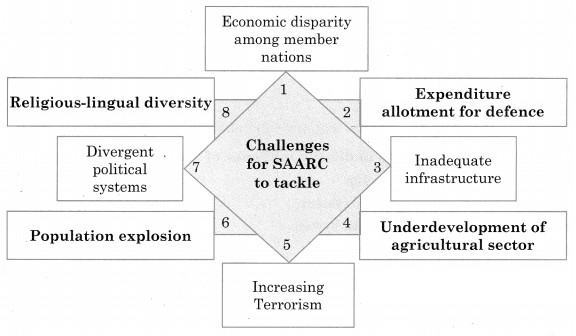
Answer: SAARC faces issues like economic disparity, high defense spending, inadequate infrastructure, rising terrorism, and political diversity. These challenges hinder effective cooperation among member nations.

9. How did the Commonwealth help former British colonies after World War II?
Answer: The Commonwealth supported independence movements, reduced resentment in Britain over losing colonies, and promoted cooperation. It provided a platform for sovereign nations to share ideas and resources.

10. Why were the Commonwealth Games of 1986 significant?
Answer: The 1986 Commonwealth Games were boycotted by 32 countries, led by India’s Rajiv Gandhi, to protest South Africa’s racist policies. This showed the Commonwealth’s role in addressing global issues like racism.

Notes Class 12 Chapter 10 History Maharashtra Board

Cold War


10.1 Cold War: Definition

What is the Cold War?

  • A period of tension and rivalry between Capitalist nations (led by the USA) and Communist nations (led by Soviet Russia) after World War II.
  • No direct fighting occurred, but there was a constant threat of conflict, creating a sense of a possible Third World War.
  • Term coined by Walter Lippmann, an American political columnist.

Key Features of the Cold War:

  • No Direct War: Countries avoided direct military conflict.
  • Arms Race: Intense competition to build weapons, especially nuclear ones.
  • Aggressive Policies: Nations used political tactics to gain influence.
  • Lack of Trust: Mutual suspicion among nations.
  • Political & Economic Pressure: Countries pressured each other to follow their ideologies.
  • Ideological Conflict: Clash between Communism (government ownership) and Capitalism (private ownership).

Background:

  • After World War II, Europe was divided:
  • Eastern Europe: Under Soviet influence, adopted Communism.
  • Western Europe: Under American influence, adopted Capitalism and Democracy.
  • This division created a political tension called the Iron Curtain (term by Winston Churchill), separating Communist and Democratic nations.
  • The Cold War spread beyond Europe to Asia (e.g., Sino-Soviet Treaty, Korean Conflict).

Progression of Cold War:

  • Marshall Plan: USA provided financial aid to rebuild Western Europe.
  • Soviet Russia supported freedom movements in Asia and Africa.
  • Key events:
  • Berlin Wall (1961): Built by Soviet Russia to separate East and West Berlin, increasing tensions.
  • Cuban Missile Crisis (1962): Soviet nuclear missiles in Cuba caused a major standoff with the USA.

Efforts to reduce tension:

  • Moscow-Washington Hotline: For instant communication.
  • Nuclear Missile Limits (1972): Agreement between USA and Soviet Russia to limit nuclear weapons.
  • Détente: A period of relaxed tensions, e.g., Paris Conference (1973), Helsinki Conference (1975).

Mikhail Gorbachev’s Era (1985 onwards):

  • Introduced Perestroika (restructuring) and Glasnost (openness) to reform Soviet Russia.
  • Democratized politics, gave more freedom to people, and decentralized the economy.
  • His policies led to the end of the Cold War and the dissolution of Soviet Russia (1991), creating 15 independent countries (e.g., Russia, Ukraine, Estonia).
  • Marked the rise of the Post-Cold War World with the USA as the sole superpower.

Aftermath:

  • The Cold War caused global fear due to nuclear threats, political misunderstandings, and neglect of basic issues like food and housing.
  • The Berlin Wall (called the “Wall of Shame”) was demolished in 1989-1990, reuniting Germany.

10.2 NATO, ANZUS, SEATO, CENTO, Warsaw Pact

NATO (North Atlantic Treaty Organization, 1949):

  • Formed to protect 29 European countries from Soviet expansion.
  • Members: USA, UK, France, West Germany, Italy, Canada, etc.

Key Terms:

  • An attack on one member is an attack on all.
  • Maintain peace and resolve issues through discussions.
  • Headquarters: Paris (later moved to Brussels).
  • USA had significant influence.

ANZUS Treaty (1951):

  • Signed by Australia, New Zealand, and the USA for collective security in the Pacific region.
  • Aimed to protect against Communist China.
  • First time Commonwealth nations (Australia, New Zealand) made a pact with the USA independently, bypassing UK and France.

SEATO (Southeast Asia Treaty Organization, 1954):

  • Members: USA, UK, France, Australia, New Zealand, Pakistan, Thailand, Philippines.
  • Signed in Manila to stop Communism in Southeast Asia.

Flaws:

  • Only three Asian countries included; others were Western nations with little understanding of Asian issues.
  • No dedicated military force.
  • Dissolved in 1977 after Pakistan withdrew (1973) and France stopped funding (1975).

CENTO (Central Treaty Organization, 1955):

  • Earlier called Baghdad Pact; members: Turkey, Pakistan, Iran, Iraq (later withdrew), UK.
  • Aimed to counter Soviet influence in the Middle East.
  • USA provided economic and military aid but didn’t fully support members’ needs.
  • Became non-operational after Iran and Pakistan withdrew due to dissatisfaction.

Warsaw Pact (1955):

  • Soviet Russia’s response to NATO, uniting Communist countries (e.g., East Germany, Poland, Hungary, Romania).
  • Aimed to strengthen the Eastern Bloc against Western policies.
  • Albania withdrew in 1968.

Sino-Soviet Security Pact (1950):

Soviet Russia agreed to provide China with economic, industrial, and technological aid.


10.3 Non-Aligned Movement (NAM) & India’s Policy

What is NAM?

  • A group of nations that refused to join either the USA or Soviet Russia’s alliances during the Cold War.
  • Focused on peace, progress, and independence rather than war or poverty.
  • Founders: Jawaharlal Nehru (India), Sukarno (Indonesia), Nkrumah (Ghana), Nasser (Egypt), Tito (Yugoslavia).

Non-Aligned Nations:

  • Adopt independent foreign policies based on peaceful coexistence.
  • Support independence movements and avoid military alliances with superpowers.

Key NAM Conferences:

  • Belgrade (1961): First summit, 25 countries, demanded end to aggression in Asia, Africa, and South America.
  • Cairo (1964): Opposed military groups and foreign military bases.
  • Lusaka (1970): Focused on unity, disarmament, and ending colonialism.
  • Algiers (1973): Demanded a new economic system.
  • Colombo (1976): Aimed to reduce superpower influence.
  • New Delhi (1983): Supported Palestinian cause and Namibia’s independence; emphasized Freedom, Development, Disarmament, Peace (Indira Gandhi’s speech).
  • Harare (1986): Created Africa Fund to aid South Africa’s neighbors.
  • Jakarta (1992): Demanded better trade facilities and UN restructuring.

NAM Criteria (Belgrade, 1961):

  • Independent policy based on coexistence.
  • Support national independence movements.
  • Not part of Cold War military alliances or foreign military bases.

10.4 India’s Anti-Colonial Policy

  • India opposed imperialism even before independence.
  • Post-independence, adopted active non-alignment:
  • Stayed neutral but engaged in global peace efforts.
  • Respected sovereignty and opposed foreign interference.
  • Examples:
  • Delhi Conference (1949): Supported Indonesia’s independence from Dutch rule.
  • Africa: Demanded independence for African colonies, spoke against mistreatment of Africans in the UN, and supported their struggles (e.g., Gandhi’s satyagraha in Africa).
  • India’s historical ties with Africa (trade, migration, railway projects) strengthened its anti-colonial stance.

10.5 South Asian Association for Regional Cooperation (SAARC)

  • Origin: Proposed by Zia-ur Rehman (Bangladesh President) for economic and social development in South Asia.
  • Established: 1985, Dhaka Summit.
  • Members: Bangladesh, India, Bhutan, Pakistan, Sri Lanka, Maldives, Nepal (later Afghanistan joined).

Objectives (Dhaka, 1985):

  • Promote rapid development of member nations.
  • Oppose terrorism and drug smuggling.
  • Resolve issues and build trust.
  • Cooperate with regional and international organizations.
  • Work for collective well-being globally.

Structure:

  • Secretariat in Kathmandu.
  • Annual meetings; rotating Principal Secretary (3-year term).

Challenges:

Economic disparity, high defense spending, poor infrastructure, underdeveloped agriculture, rising terrorism, population growth, limited trade, diverse politics, and religious-lingual differences.

Achievements:

  • Agro-information center in Bangladesh (seeds, animal husbandry, fisheries).
  • Meteorological research center in Dhaka.
  • Orthopedic center in Kathmandu.
  • Efforts to promote tourism and reduce poverty with ESCAP.
  • SAFTA (2004) and SAPTA (1993): Promote free trade among members.
  • Documentation center in Delhi, HRD center in Islamabad, agreements on narcotics, postal services, and transportation.

10.6 Commonwealth

What is the Commonwealth?

  • A voluntary group of sovereign nations, formerly British colonies, now called the Commonwealth of Nations.
  • Head: British King/Queen; Secretariat: London.
  • Principle: Voluntary cooperation.

History:

  • Statute of Westminster (1931): Granted autonomy to colonies (e.g., Canada, Australia).
  • Post-World War II, Asian and African colonies gained independence, partly due to Commonwealth’s influence.
  • Helped reduce resentment in the UK about granting independence.

India and Commonwealth:

  • Joined in 1948 (Jaipur Congress Session, Nehru’s decision) as an equal sovereign state.
  • Reasons: UK supplied arms, offered trade benefits, and provided a platform to counter Pakistan’s propaganda.

Commonwealth Games:

  • Started as British Empire Games (1911, King George V’s coronation).
  • Renamed in 1950; modeled after Olympics.
  • 1986 Games: Boycotted by 32 countries (including India, led by Rajiv Gandhi) to protest South Africa’s racist policies.
  • India has performed well in recent Commonwealth Games.

Question Answers Class 12 Chapter 10 History Maharashtra Board

Cold War


Exercise

Q.1 Choose the correct alternative and rewrite the statement.

1. The headquarters of SEATO were located at Thailand.
2. A fund named Harare was raised for providing necessary aid to neighbouring nations of South Africa.


Q.2 (A) Write names of historical places/persons/events.

1. On 30th June 1977, this organisation ceased to exist – SEATO.
2. The idea of Commonwealth Games was introduced by – Reverend Astley Cooper.


Q.2 (B) Choose a right reason from those given below and complete the sentence.

1. No country was included in the ANZUS treaty except Australia, New Zealand, and United States of America because they did not want to let United Kingdom and France have an upper hand.
Correct Answer: (a) They did not want to let United Kingdom and France to have an upper hand.
Completed Sentence: No country was included in the ANZUS treaty except Australia, New Zealand, and United States of America because they did not want to let United Kingdom and France have an upper hand.


Q.3 Complete the concept map.

Answer:


Q.4 Write short notes.

Cold War: The Cold War was a period of geopolitical tension between the United States and Soviet Russia, along with their respective allies, from the end of World War II until the early 1990s. It was characterized by ideological conflicts between capitalism and communism, an intense arms race, aggressive political policies, and mutual distrust, but no direct large-scale war. Key events included the division of Europe into Eastern (communist) and Western (capitalist) blocs, the Cuban Missile Crisis, and the construction of the Berlin Wall. The Cold War spread to Asia through events like the Korean Conflict and the Sino-Soviet Treaty. It ended with the dissolution of Soviet Russia in 1991, leaving the USA as the sole superpower.

Non-Alignment Movement (NAM): The Non-Aligned Movement was initiated by nations seeking to remain independent from the superpower blocs led by the USA and Soviet Russia during the Cold War. Pioneered by leaders like Pandit Jawaharlal Nehru (India), Sukarno (Indonesia), Nkrumah (Ghana), Nasser (Egypt), and Tito (Yugoslavia), NAM promoted peaceful coexistence, support for independence movements, and opposition to military alliances with superpowers. The first NAM summit was held in Belgrade in 1961, setting criteria for membership and advocating for global peace, anti-colonialism, and disarmament. Subsequent conferences, like those in Cairo, Lusaka, and New Delhi, emphasized economic development, equality in international relations, and support for causes like Palestinian rights and Namibia’s independence.


Q.5 Explain the following statements with reason.

CENTO became non-operational: CENTO (Central Treaty Organisation), initially known as the Baghdad Pact, became non-operational due to several reasons. Firstly, the member nations—Turkey, Pakistan, Iran, and the United Kingdom—lacked the military capacity to collectively counter a potential Soviet attack, which was a primary objective of the treaty. Secondly, except for the UK, the other members were economically and technologically dependent on the USA, which was preoccupied with other global issues and unable to fully address their needs. This led to dissatisfaction among members. Additionally, internal political changes, such as the 1958 military coup in Iraq that led to its withdrawal, weakened the alliance. By the late 1970s, Iran and Pakistan also withdrew, rendering CENTO ineffective and non-operational.

SAARC has achieved success in some fields: The South Asian Association for Regional Cooperation (SAARC) has achieved success in various areas despite facing numerous challenges. For instance, SAARC established a centre in Bangladesh for disseminating agricultural information, aiding seed research, animal husbandry, and fisheries. A meteorological research centre was set up in Dhaka, and an orthopedic centre was established in Kathmandu. SAARC has also promoted tourism and worked towards poverty alleviation in collaboration with the Economic and Social Commission for Asia and Pacific (ESCAP). Agreements like SAPTA (1993) and SAFTA (2004) have fostered trade among member nations. Additionally, SAARC has addressed issues like narcotic smuggling and development in postal services and transportation, demonstrating its effectiveness in fostering regional cooperation.


Q.6 State your opinion.

The Cold War began between America and Soviet Russia: The Cold War indeed began as a power struggle between the United States and Soviet Russia after World War II. This conflict arose due to ideological differences—capitalism versus communism—and mutual distrust. The division of Europe into Eastern and Western blocs, symbolized by the “Iron Curtain,” intensified tensions. Both superpowers engaged in an arms race, formed opposing military alliances (NATO and Warsaw Pact), and competed globally, as seen in events like the Cuban Missile Crisis and the Korean Conflict. However, their mutual awareness of the catastrophic potential of a nuclear war led to efforts like détente and treaties to limit nuclear weapons, preventing a direct conflict. The Cold War shaped global politics until the Soviet Union’s dissolution in 1991.

India has always opposed colonialism: India’s opposition to colonialism is a cornerstone of its foreign policy, rooted in its own struggle for independence from British rule. Even before independence, India protested imperialism, and post-1947, it actively supported anti-colonial movements worldwide. For example, India hosted a 1949 conference in Delhi to demand Indonesia’s independence from Dutch rule and strongly advocated for the liberation of African nations from European colonial powers. India’s leadership in the Non-Aligned Movement further emphasized its commitment to sovereignty and anti-colonialism. By raising issues of racial discrimination and colonial oppression in the United Nations and supporting movements like satyagraha in Africa, India consistently championed the cause of global decolonization and self-determination.

Important Questions Class 12 Chapter 9 History Maharashtra Board

World : Decolonisation


Short Questions

1. What was the Atlantic Charter?
Answer: A document by Winston Churchill and Franklin Roosevelt stating that nations should have the right to self-determination.

2. When did Maldives gain independence?
Answer: Maldives became independent on 26th July 1965.

3. Who led the Indian freedom movement mentioned in the document?
Answer: Mahatma Gandhi.

4. What was the Bandung Conference?
Answer: A 1955 conference in Indonesia discussing Afro-Asian problems and promoting world peace.

5. Who introduced the concept of African Unity?
Answer: H.S. Williams.

6. When did Sri Lanka become independent?
Answer: Sri Lanka gained independence in 1948.

7. What was the role of the League of Nations in decolonisation?
Answer: It introduced a trustee system for colonies of defeated nations like Germany and Turkey.

8. Who was appointed Vice President in Myanmar by the British?
Answer: Aung San.

9. Which African countries were independent before World War II?
Answer: Liberia and Ethiopia.

10. What was the Pan-African Congress?
Answer: A series of meetings to promote African unity and independence.


Long Questions

1. Why did decolonisation happen quickly in Asia and Africa in the 20th century?
Answer: Decolonisation was fast due to conflicts among European colonisers, the impact of World Wars, and strong anti-colonial movements. The Atlantic Charter supported self-determination, and European powers like Britain and France weakened, granting independence to colonies.

2. How did the Atlantic Charter influence the decolonisation process?
Answer: The Atlantic Charter, signed by Churchill and Roosevelt, promised self-determination for all nations. This inspired colonies to demand independence, weakened European justification for colonisation, and boosted global support for decolonisation.

3. Explain the role of the Bandung Conference in decolonisation.
Answer: The 1955 Bandung Conference united Asian and African nations to discuss common issues like colonialism and economic challenges. It promoted mutual cooperation, world peace, and strengthened independence movements across both continents.

4. How did the British rule impact Sri Lanka’s path to independence?
Answer: The British ruled Sri Lanka from 1798 to 1948, developing ports and plantations but facing uprisings. They introduced education and encouraged Buddhist studies, which fostered nationalism, leading to independence in 1948.

5. What was the significance of the Pan-African Congresses?
Answer: The Pan-African Congresses, starting in 1900, united African leaders to promote African unity and fight colonialism. They spread nationalism and inspired independence movements, especially after the 1945 Manchester Congress.

6. Why did Myanmar experience three wars with the British?
Answer: Myanmar’s expansionist policies threatened British India by conquering Assam and Manipur. This led to three wars (1826, later 19th century, and 1885), with Britain winning each, eventually annexing Myanmar as a province.

7. How did World War II contribute to African decolonisation?
Answer: World War II weakened European powers like Britain and France, who began granting rights to African colonies. Nationalism grew, inspired by global independence movements, leading to many African nations gaining freedom by 1965.

8. Describe the process of Maldives’ independence from colonial powers.
Answer: Maldives was under Portuguese, Dutch, and British rule, paying tributes and hosting British bases. Indian labourers worked there. A treaty signed in Colombo on 26th July 1965 granted Maldives independence.

9. How did education influence African independence movements?
Answer: European education introduced African leaders to ideas of nationalism, the American Revolution, and the French Revolution. This awareness inspired them to organise independence movements against colonial rule in the mid-20th century.

10. Why did the end of World War II speed up decolonisation globally?
Answer: World War II exhausted European colonisers, reducing their control. The rise of nationalism, support from the United Nations, and the Atlantic Charter’s principles encouraged colonies in Asia and Africa to gain independence quickly.

Ads

HSC आणि SSC महाराष्ट्र – मराठी माध्यम – महाराष्ट्र बोर्ड

📘 महाराष्ट्र बोर्ड परीक्षा साहित्य (मराठी माध्यम)

  • HSC आणि SSC प्रश्नसंच – मराठी माध्यमातील PDF
  • महाराष्ट्र बोर्ड नमुना प्रश्नपत्रिका व मॉडेल पेपर्स (मराठी माध्यमात)
  • SSC आणि HSC च्या मागील वर्षांच्या प्रश्नपत्रिका – मराठी माध्यम
  • SSC/HSC साठी मराठी माध्यमातील नोट्स आणि सराव चाचण्या (मॉक टेस्ट)
  • मराठी माध्यमातील MCQs (बहुपर्यायी प्रश्न) समाविष्ट
  • सर्व परीक्षा साहित्य मराठी माध्यमात उपलब्ध

📗 महाराष्ट्र बोर्ड पाठ्यपुस्तके व PDF (मराठी माध्यम)

  • इयत्ता 10 वी (SSC) चे पाठ्यपुस्तक PDF – मराठी माध्यमात
  • इयत्ता 12 वी (HSC) चे पाठ्यपुस्तक PDF – मराठी माध्यमात
  • मराठी डायजेस्ट – PDF डाउनलोड
  • SSC आणि HSC इयत्तांची पुस्तके – मराठी माध्यमातील PDF
  • डाउनलोडसाठी उपलब्ध पाठ्यपुस्तके व PDF – महाराष्ट्र बोर्ड

📒 महाराष्ट्र बोर्डासाठी मराठी अभ्यास साहित्य

  • प्रकरणनिहाय नोट्स – मराठी माध्यमात
  • प्रकरणनिहाय प्रश्नोत्तरे (प्रश्न व उत्तरे) – मराठी माध्यमात
  • SSC आणि HSC साठी महत्त्वाचे प्रश्न – मराठी माध्यम
  • महत्त्वाच्या सूत्रांचा सारांश (इयत्ता 6 वी ते 12 वी)
  • MCQs, प्रश्नसंच, नमुना प्रश्नपत्रिका आणि मागील वर्षांच्या प्रश्नपत्रिका

CBSE Board Englsih and हिंदी माध्यम

CBSE Board

Mathematics Class 6
Science Class 6
Social Science Class 6
हिन्दी Class 6
सामाजिक विज्ञान कक्षा 6
विज्ञान कक्षा 6

Mathematics Class 7
Science Class 7
SST Class 7
सामाजिक विज्ञान कक्षा 7
हिन्दी Class 7

Mathematics Class 8
Science Class 8
Social Science Class 8
हिन्दी Class 8

Mathematics Class 9
Science Class 9
English Class 9

Mathematics Class 10
SST Class 10
English Class 10

Mathematics Class XI
Chemistry Class XI
Accountancy Class 11

Accountancy Class 12
Mathematics Class 12

Learn English
English Through हिन्दी
Job Interview Skills
English Grammar
हिंदी व्याकरण - Vyakaran
Microsoft Word
Adobe PhotoShop
Adobe Illustrator
Learn German
Learn French
IIT JEE
Privacy Policies, Terms and Conditions, About Us, Contact Us
Copyright © 2026 eVidyarthi and its licensors. All Rights Reserved.