eVidyarthi
Menu
  • School
    • Close
    • CBSE English Medium
    • CBSE Hindi Medium
    • UP Board
    • Bihar Board
    • Maharashtra Board
    • MP Board
    • Close
  • English
    • Close
    • English Grammar for School
    • Basic English Grammar
    • Basic English Speaking
    • English Vocabulary
    • English Idioms & Phrases
    • Personality Enhancement
    • Interview Skills
    • Close
  • Sarkari Exam Preparation
    • Close
    • All Govt Exams Preparation
    • State Wise Competitive Exam Preparation
    • India – Notes for All Competitive Exams
    • MCQs & Notes for Competitive Exams
    • NCERT Syllabus for Competitive Exam
    • Close
  • Study Abroad
    • Close
    • Study in Australia
    • Study in Canada
    • Study in UK
    • Study in Germany
    • Study in USA
    • Close
  • Current Affairs
    • Close
    • Current Affairs
    • Current Affairs Quizzes
    • State Wise Current Affairs
    • Monthly Current Affairs
    • Close
Sociology Class 12 Maharashtra Board | Menu
  • MCQ Sociology Class 12 Maharashtra Board
  • Question Answers Sociology Class 12 Maharashtra Board
  • Notes Sociology Class 12 Maharashtra Board
  • Important Questions Sociology Class 12 Maharashtra Board
  • Book Sociology Class 12 Maharashtra Board
  • Sociology Class 12

Question Answers Class 12 Chapter 6 Sociology Maharashtra Board

Social Problems in India – Solutions

Q.1 (A) Complete the following statements by choosing the correct alternative given in the bracket and rewrite it.

(1) The Domestic Violence Act was passed in the year _____. (1995, 2005, 2011)

Answer: 2005

(2) One of the causes of farmer suicide is _____. (multi-cropping, indebtedness, climate change)

Answer: indebtedness


(B) Correct the incorrect pair and rewrite it.

(1) (i) Marijuana – Drug addiction
(ii) Violent films – Internet addiction
(iii) Selfitis syndrome – Substance addiction
(iv) Country liquor – Alcohol addiction

Answer:

Incorrect Pair: Selfitis syndrome – Substance addiction

Correct Pair: Selfitis syndrome – Mobile (Social media) addiction


(C) Identify the appropriate term from the given options in the box and rewrite it against the given statement.

(1) A problem faced by transgender persons: Gender discrimination

(2) It can lead to physical health problems: Narcotic drugs


(D) Correct the underlined words and complete the statement.

(1) Alcoholic Anonymous helps drug addicts.

Answer: Several government and private organizations (NGOs)/Narcotics Anonymous

(2) Ageing is an artificial process.

Answer: natural


Q.2 Write short notes.

(1) Effects of addiction

Answer: Addiction, whether to substances (alcohol, drugs, tobacco), the internet, or mobile phones, has profound effects on individuals and society:

  • Psychological Impact: Addicts develop dependency, leading to anxiety, depression, or aggression when access to the substance or device is restricted.
  • Impact on Family: Addiction disrupts family harmony, potentially causing domestic violence or emotional isolation due to lack of communication.
  • Health Consequences: Physical health deteriorates (e.g., cancer from tobacco, liver damage from alcohol), and mental health suffers from stress and anxiety.
  • Workplace Issues: Addiction reduces productivity, increases absenteeism, and may lead to workplace harassment or exploitation.
  • Economic Drain: Addictions are costly, with expenses on substances, internet, or devices, and treatment costs further strain finances.
  • Social Isolation: Addicts often withdraw from real-world interactions, preferring virtual or substance-induced experiences.

(2) Measures to tackle the problem of ageing.

Answer: To address the challenges faced by the ageing population, several measures can be implemented:

  • Government Role: The Ministry of Social Justice and Empowerment formulates policies like the National Policy on Older Persons (NPOP, 1999) to provide shelters, healthcare, and protection for the elderly.
  • NGO Contributions: Organizations like HelpAge India and Dignity Foundation offer support through care services and online communities.
  • Education: Schools can promote awareness through community service projects and NSS programs to instill respect and empathy for the elderly.
  • Family Support: Families should create an inclusive environment, valuing the elderly’s wisdom and involving them in activities.
  • Healthcare Access: Improving access to medical facilities for physical and mental health issues, including specialized care for diseases like Alzheimer’s, is crucial.
  • Old Age Homes: Increasing the availability of affordable, well-equipped homes for the elderly can provide a supportive living environment.

Q.3 Write differences.

(1) Social problem and Individual problem

Answer:

AspectSocial ProblemIndividual Problem
DefinitionA condition affecting a significant number of people, deviating from social norms.A problem experienced by an individual, not necessarily felt by others.
ScopeImpacts a large group or society, requiring collective action.Limited to the individual, often resolvable by personal effort.
CauseRooted in societal structures, norms, or external conditions (e.g., unemployment).May stem from personal traits, habits, or circumstances (e.g., laziness).
SolutionRequires collective efforts, policy changes, or social movements.Often solved through self-motivation or support from family/friends.
ExampleDomestic violence, farmers’ suicides.Personal loneliness, low academic performance.

(2) Mobile addiction vs. Drug addiction

Answer:

AspectMobile AddictionDrug Addiction
NaturePsychological dependence on mobile devices for social media, gaming, etc.Physical and psychological dependence on chemical substances (e.g., alcohol, narcotics).
Health ImpactCauses stress, anxiety, sleep disorders, and eye strain.Leads to severe physical damage (e.g., cancer, liver failure) and mental health issues.
AccessibilityEasily accessible, often socially accepted, and legal.Often illegal or restricted, requiring illicit means to obtain.
Social PerceptionSeen as a modern lifestyle issue, less stigmatized.Highly stigmatized, associated with criminality or moral failure.
ExampleObsessively checking social media or taking selfies.Habitual use of marijuana or heroin.

Q.4 Explain the following concepts with examples.

(1) Domestic violence

Answer: Concept: Domestic violence refers to psychological, emotional, verbal, or physical abuse within a family, involving a perpetrator and a victim. It is often normalized in patriarchal societies and may go unreported as a “personal matter.” Victims can include women, men, children, the elderly, or transgender persons. Domestic violence stems from power imbalances, such as those created by patriarchy, insecurity, or dysfunctional relationships.

  • Example: A husband verbally abusing his wife due to suspicions of infidelity, or a parent physically disciplining a child excessively, causing trauma. Such acts reflect patriarchal control or emotional insecurity.

(2) Skill development

Answer: Concept: Skill development involves cultivating practical, employment-worthy abilities to enhance employability and promote self-employment. It addresses the gap between educational training and industry needs, focusing on vocational and technical skills to adapt to a changing economy. Programs like Rashtriya Uchchatar Shiksha Abhiyan (RUSA) emphasize capacity building for employment.

  • Example: A student trained in computer programming through a vocational course secures a job in the IT sector, or a farmer learning modern irrigation techniques to improve crop yield, demonstrating how skills align with market demands.

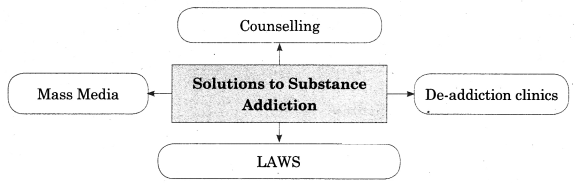
Q.5 (A) Complete the concept map.
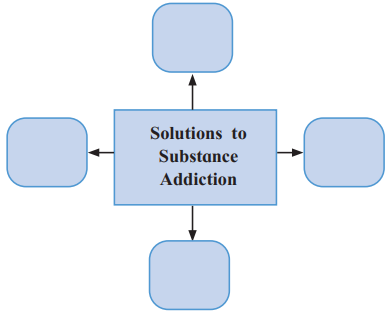
Answer:

(B) State whether the following statements are True or False with reasons.

 (1) Technology is always useful for social progress.

Answer: False.

  • Reasons: While technology drives advancements (e.g., improved communication, healthcare), it can also create social problems. For instance, excessive mobile or internet use leads to addiction, reducing interpersonal relationships and causing stress. Technology’s benefits depend on its responsible use; otherwise, it may hinder social progress by fostering isolation or misinformation.

(2) There is a strong causal relationship between addiction and socialisation.

Answer: True.

  • Reasons: Socialisation influences addiction through peer pressure, social status, or lack of positive role models. For example, teenagers may start smoking due to peer influence to “fit in,” or individuals may develop mobile addiction seeking validation on social media. Social expectations and interactions shape behaviors that can lead to addictive habits.

Q.6 Give your personal response.

(1) Why do you think women are usually the victims in most reported cases of domestic violence?

Answer: Women are often victims in reported domestic violence cases due to the deeply rooted patriarchal structure of Indian society, which places men in positions of power within families. This imbalance normalizes male authority, leading to the acceptance of violence against women as a means of control. Cultural norms, such as gender socialization, reinforce women’s subservience, making them vulnerable to abuse. Additionally, economic dependence and fear of social stigma discourage women from reporting abuse, though increased awareness is gradually changing this. Transgender persons and children also face violence, but women’s systemic disempowerment makes them the most reported victims.

(2) There is a strong causal relationship between addiction and socialisation.

Answer:

Positive Consequences: Placing aged parents in a Home for the Aged can provide professional care tailored to their physical and mental health needs, which families may struggle to offer. These homes offer social engagement with peers, reducing loneliness, and ensure safety from abuse or neglect. For families with demanding schedules, this arrangement can relieve caregiving stress, allowing better focus on work or personal life.

Negative Consequences: Such homes may lead to emotional isolation if the elderly feel abandoned by their families, fostering guilt or depression. Many homes lack adequate facilities or personalized care, and commercial greed can result in substandard conditions. The elderly may lose their sense of belonging, missing family interactions and their role in the household, which can negatively impact their emotional well-being.


Q.7 Answer the following question in detail. (About 150-200 words)

Discuss why farmers’ suicide is a social problem today. Suggest suitable socioeconomic measures to support the farmers.

Answer: Farmers’ suicides are a pressing social problem in India, particularly in regions like Vidarbha and Marathwada, due to their widespread impact on society. The primary causes include indebtedness, as farmers borrow heavily for expensive seeds (e.g., BT cotton) and face crop failure due to irregular monsoons or inadequate irrigation. Environmental deterioration, such as droughts and floods, destroys crops, while globalization and free-trade policies lead to price drops from imported produce. Ignorance of modern farming techniques and disparities in land holdings exacerbate economic insecurity, particularly for small farmers. Social pressures like the dowry system also divert funds, deepening debt. These suicides devastate families, leaving widows and children in economic and emotional distress, discourage youth from farming, and hinder agricultural contributions to the economy, creating a cycle of despair in rural communities.

Socioeconomic Measures:

  • Crop and Life Insurance: Provide insurance to protect against crop failure and ensure family support post-suicide.
  • Direct Sales: Eliminate middlemen to ensure fair profits for farmers.
  • Water Management: Promote water harvesting to address irrigation issues.
  • Subsidized Inputs: Supply affordable seeds, fertilizers, and training in multi-cropping.
  • Counseling Services: Offer mental health support to alleviate despair and prevent suicides.
  • Debt Relief: Simplify bank loan processes and implement effective debt-waiver schemes to reduce reliance on private moneylenders.

Question Answers Class 12 Chapter 5 Sociology Maharashtra Board

Social Movements in India – Solutions

Q.1 (A) Complete the following statements by choosing the correct alternative given in the bracket and rewrite it.

(1) The Chipko Movement is for ___. (women’s empowerment, labour rights, saving the environment)

Answer: saving the environment.

(2) The Bhartiya Lok Dal was started in the year ___. (1954, 1964, 1974)

Answer: 1974


(B) Correct the incorrect pair and rewrite it.

(1) (i) Women’s Movement – Gender equality
(ii) International Decade of Women – From 1991-2001
(iii) Towards Equality – Report on the Status of Women in India
(iv) Feminist Movements – India after Independence

Answer:

Wrong pair – International Decade of Women – From 1991 – 2001

Correct pair – International Decade of Women – From 1975 – 1985


(C) Identify the appropriate term from the given option in the box and rewrite it against the given statement.

(1) Leader of Narmada Bachao Andolan: Medha Patkar

(2) Significant role in the Trade Union Movement: S. A. Dange


(D) Correct underlined words and complete the statement.

(1) The first Kisan Congress held in 1935 led to the establishment of the United Trade Union Congress.

Answer: All India Kisan Sabha.

(2) The Women’s Indian Association was formed in Bombay.

Answer: Madras


Q.2 Write short notes.

(1) Farmers’ Movement

Answer: The Farmers’ Movement in India reflects the struggles of agricultural communities against exploitation and unfair policies. It began during the British period (1857–1921) with revolts like the Deccan riots and Champaran Struggle, driven by oppressive revenue systems and Zamindari practices. The emergence of Kisan Sabhas (1922–1946) marked organized resistance against landlords, with the All India Kisan Sabha formed in 1936. Post-Independence, the movement gained momentum in the 1970s in states like Punjab and Maharashtra, focusing on issues like fair prices, land rights, and government apathy. Leaders like Charan Singh and Sharad Joshi played key roles. Recent events, such as the 2018 Maharashtra farmers’ march and “Farmers’ Strike,” highlight ongoing grievances, including farmer suicides due to debt and poor conditions. The movement continues to demand equitable agricultural policies and sustainable livelihoods.

(2) Characteristics of Social Movement

Answer: Social movements are organized efforts to promote or resist societal change, characterized by:

  • Collective Nature: They involve group action, not individual efforts, uniting people for a common cause.
  • Planned and Deliberate Action: Movements are preplanned, strategic initiatives, not spontaneous outbursts.
  • Ideology and Objectives: Guided by a clear ideology, they aim to achieve specific goals, such as equality or environmental protection.
  • Social Change: They seek to alter or resist changes in the existing social order, addressing issues like injustice or exploitation. For example, the Women’s Movement in India, driven by the ideology of gender equality, collectively worked to abolish practices like Sati and promote women’s education.

Q.3 Write differences.

(1) Pre-Independence and PostIndependence periods of the Women’s Movement in India.

Answer:

Pre-Independence period of women’s movementPost-Independence period of women’s movement
(i) Pre-Independence period of the women’s movement overlapped with the Social Reform Movement in many ways.(i) Post-Independence period of the women’s movement witnessed several issues like tribal unrest, economic crisis, which took away the singular focus of the women’s movement.
(ii) Pre-Independence movements challenged the customary practices which were discriminatory and revolted mainly against human rights violations in the form of Sati and ill-treatment of widows.(ii) Post-Independence movements focused more on violence against women, sex stereotyping, and further legislative demands for equality of women.
(iii) Pre-Independence movements were led by social reformers like Raja Rammohan Roy, Jyotiba Phule, Maharshi Karve, and so on.(iii) Post-Independence movements have mobilised masses in the form of women’s organisation, NGOs, SEWA, etc.
(iv) Pre-Independence movement needed the voice of others (social reformers) for the problems to be spoken.(iv) Post-independence movement women are educated and aware and are ready to speak up for themselves.
(v) Pre-Independence movement lacked revolutionary social media.(v) Social media plays a major role during the Post-Independence movement where these movements can reach across the globe and mobilised the youth on a large scale.
(vi) The Pre-Independence movement was more of a socio-religious movement.(vi) The Post-Independence movement was more progressive in nature.

Q.4 Explain the following concepts with examples.

(1) Social Movement

Answer: A social movement is a collective, organized effort to promote or resist change in society, driven by a shared ideology and objectives. It involves planned actions to address social injustices or inequalities, often challenging established norms or authorities. Social movements are distinct from spontaneous protests due to their structured nature and long-term goals.

  • Example: The Women’s Movement in India began in the 19th century with reformers like Raja Rammohan Roy campaigning against Sati, leading to the Sati Abolition Act (1829). It evolved post-Independence to tackle issues like dowry deaths and workplace harassment, influencing laws like the Vishaka Guidelines (1997).

(2) Environmental Movement

Answer: The Environmental Movement is an organized effort to promote sustainable use of natural resources, halt environmental degradation, and restore ecological balance. It addresses issues like deforestation, pollution, and biodiversity loss, often using non-violent methods to influence policy and public awareness.

  • Example: The Chipko Movement (1973) in Uttarakhand, led by Sunderlal Bahuguna, saw villagers, especially women, hugging trees to prevent deforestation. This non-violent protest raised awareness about forest conservation and influenced environmental policies in India.

Q.5 Complete the concept map.

Answer:


Q.6 Give your personal response.

(1) Has the study of Environmental Education had any effect on your behaviour?

Answer: Studying environmental education has significantly influenced my behavior. Learning about issues like deforestation, pollution, and climate change has made me more conscious of my ecological footprint. I now prioritize reducing waste by recycling, using reusable items, and conserving water and electricity. For instance, I carry a reusable water bottle and avoid single-use plastics. Additionally, understanding movements like the Chipko Movement has inspired me to support local conservation initiatives and spread awareness about sustainable practices among peers. This knowledge has instilled a sense of responsibility to protect the environment for future generations.

(2) Why is it important to raise social concerns through social movements?

Answer: Raising social concerns through social movements is crucial because they amplify marginalized voices and challenge systemic injustices. Movements like the Women’s Movement and Farmers’ Movement highlight issues such as gender inequality and economic exploitation, which might otherwise be ignored. They foster collective action, uniting people to demand policy changes, as seen in the abolition of Sati or the formation of Kisan Sabhas. Social movements also educate society, shift cultural norms, and promote inclusivity. For example, the Environmental Movement has increased global awareness about climate change, encouraging sustainable practices. By addressing root causes of social issues, movements drive long-term change, ensuring a more equitable and just society.


Q.7 Answer the following question in detail. (About 150-200 words)

‘Social movements play an important role in bringing about changes in society.’ With reference to this statement, choose any two different social movements that you have studied and comment on:

(i) the issues related to the movement, and

(ii) how the movement has brought about changes in Indian society.

Answer: Social movements are pivotal in transforming society by addressing injustices and advocating for change. Two significant movements in India are the Women’s Movement and the Environmental Movement.

Women’s Movement:

  • Issues: This movement tackled gender-based discrimination, including practices like Sati, widow remarriage bans, and lack of education for women. Post-Independence, it focused on violence against women (e.g., dowry deaths, rape cases like Nirbhaya), workplace harassment, and patriarchal norms.
  • Changes in Society: The movement led to landmark legislations like the Sati Abolition Act (1829), Widow Remarriage Act (1856), and Vishaka Guidelines (1997) for workplace safety. The Towards Equality report (1974) highlighted women’s invisibility, spurring feminist activism. It empowered women through education, political participation, and rural outreach, fostering gender equality and shifting societal attitudes toward women’s rights.

Environmental Movement:

  • Issues: It addresses ecological degradation due to deforestation, industrialization, and large-scale projects like dams, which displace communities and harm biodiversity. Key concerns include forest conservation, water resource management, and pollution.
  • Changes in Society: Movements like the Chipko Movement (1973) and Narmada Bachao Andolan (1985) raised awareness about sustainable development. Chipko’s non-violent protests influenced forest conservation policies, while NBA highlighted displacement issues, prompting debates on development models. These movements encouraged eco-friendly practices and compelled policymakers to prioritize environmental sustainability.

Question Answers Class 12 Chapter 4 Sociology Maharashtra Board

Processes of Social Change in India

Q.1 (A) Complete the following statements by choosing the correct alternative givenin the bracket and rewrite it.

(1) The use of computers to streamline job applications is called ___ . (industrialisation, globalisation, digitalisation)

Answer: digitalisation

(2) An urban way of life is characterised by ___. (cohesiveness, uniformity, impersonality)

Answer: impersonality


(B) Correct the incorrect pair and rewrite it.

(i) Competitive market – Computerisation
(ii) Growth of cities – Urbanisation
(iii) Increase in production – Industrialisation
(iv) Radical transformative use of technology – Digitalisation

Answer:

(i) Competitive market – Globalisation


(C) Identify the appropriate term from the given options in the box and rewrite it against the given statement.

(1) The FYJC On-line Admission process in metropolitan cities – Digitalisation

(2) Mechanisation of the process of production – Industrialisation


(D) Correct the underlined words and complete the statement.

(1) The Industrial Revolution took place in the sixteenth century.

Answer: seventeenth and eighteenth centuries.

(2) The LPG Policy was started by Smt. Indira Gandhi.

Answer: Dr. Manmohan Singh.


Q.2 Write short notes.

(1) Negative effects of digitalisation

Answer: Digitalisation, while transformative, has several negative consequences. It has led to concerns about individual privacy due to data collection and surveillance in the web-world. The rise of big industries leveraging digital tools has adversely impacted smaller businesses, creating market imbalances. Digitalisation has also influenced consumer behaviour, promoting materialism through easy access to e-commerce. Additionally, it poses challenges to job prospects, as automation replaces certain roles, requiring workers to constantly upskill. Social networking, a byproduct of digitalisation, can foster superficial relationships and reduce face-to-face interactions, impacting social cohesion.

(2) Consequences of industrialisation

Answer: Industrialisation has significantly altered Indian society by fostering the growth of factories, which spurred migration from rural to urban areas, leading to the emergence of towns and cities. This migration contributed to the breakdown of joint families, with nuclear families becoming more common. Industrialisation introduced mechanisation, resulting in mass production and cheaper goods but also worker alienation due to repetitive tasks. It created economic classes through differential wages and spurred the trade union movement. However, it also led to environmental degradation and urban overcrowding, posing challenges to sustainable development.


Q.3 Write differences.

(1) Industrialisation and Urbanisation

Answer:

IndustrialisationUrbanisation
(i) Meaning: It means the use of unbiotic power such as electricity and steam for the mass production of goods.(i) Meaning: Urbanisation consists of an inward flow of a large number of people from scattered rural areas to urban communities.
(ii) Origin: Industrialization started in England due to the impact of the industrial revolution.(ii) Origin: Urbanization is the consequence of industrialization.
(iii) Nature: Industrialisation reflects mechanisation of workplaces and spurt in the growth of factories and industries.(iii) Nature: Urbanisation reflects the migration of people from all over the country continuously, in search of work.
(iv) Characteristics: The adoption of the revolutionary changes occurred in the production system i.e. use of heavy machinery and automation.(iv) Characteristics: The adoption of the civil administration like law and city police for the urban area.
(v) Impact: Due to industrialisation impact of scientific and technical knowledge has been increasing. So, people are accepting rationalism and secularism.(v) Impact: Due to urbanisation, the traditional belief system has been changed and become more secular in their outlooks, new educational fields are created in cities.
(vi) Effect: Industrialisation has led to the breakdown of joint families and the shrinking size of families.(vi) Effect: Urbanisation has led to the notion of being “lonely in a crowd”.

(2) Modernisation and Globalisation

Answer:

ModernisationGlobalisation
(i) Meaning: “Modernisation is the current term of an old process of social change whereby less developed societies acquire the characteristics common to more developed societies.”(i) Meaning: Globalisation refers to “all those processes by which the people of the world are incorporated into a single world society.”
(ii) Characteristics: Modernisation reflects a rational outlook and scientific temperament and discarding traditional ways as these hinder the progress of the society.(ii) Characteristics: Globalisation reflects the new economic policy means LPG policy which opens the door for the Indian economy and India became part of a wider global economy.
(iii) Manifestations: The adoption of the progressive ideas of the developed countries such as industrialisation and computerisation are its manifestations.(iii) Manifestations: It leads to the transfer of resources, goods, and capital across the country.
(iv) Impact: Modernisation in every walk of life has contributed to the material progress of society and the well-being of individuals.(iv) Impact: Globalisation has promoted industrialisation, expanded market, increase export as well as export area. Globalisation has created various new opportunities of employment.

Q.4 Explain the following concepts with examples.

(1) Digitalisation

Answer: Digitalisation refers to the integration of digital technologies into everyday life to enhance processes, improve efficiency, and transform business models. It involves computerisation, frequent technological updates, and data-driven decision-making. For example, the FYJC online admission process in metropolitan cities allows students to apply for colleges through a digital platform, streamlining the process and reducing paperwork. Another example is e-commerce platforms like Amazon, where digitalisation enables faster transactions, inventory management, and personalised customer experiences, revolutionising retail.

(2) Urbanisation

Answer: Urbanisation is the process of migration from rural to urban areas, resulting in the growth of cities and the adoption of an urban way of life. It is characterised by industrial growth, heterogeneity, and specialised division of labour. For instance, Mumbai’s transformation into a metropolitan city due to industrial opportunities in textiles and trade exemplifies urbanisation. People migrated from rural areas for jobs, leading to population growth, diverse communities, and the development of municipal governance systems to manage urban challenges like traffic and housing.


Q.5 (A) Complete the concept map.

Answer:


(B) State whether the following statements are True or False with reasons.

(1) The clothes one wears is indicative of an individual’s level of modernisation.

Answer: False.

  • Reasons: Modernisation is about adopting scientific temperament, rational thinking, and openness to new ideas, not merely external appearances like clothing. While clothing may reflect personal style or cultural trends, it does not necessarily indicate a person’s level of modernisation, which is rooted in intellectual and behavioural changes.

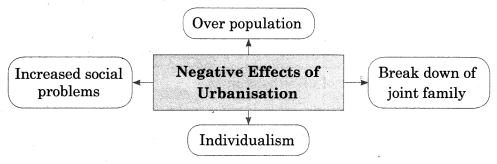
(2) Urbanisation can have negative effects on our social relationships.

Answer: True.

  • Reasons: Urbanisation fosters an urban way of life characterised by impersonality and secondary relationships, which can weaken traditional social bonds. The fast-paced, materialistic urban environment often leads to reduced community cohesion and feelings of being “lonely in a crowd,” as people prioritise individual goals over collective ties.

Q.6 Give your personal response.

(1) Shagufta Ranawat and her joint family have been living in Nagpur city for almost three generations. Their grandchildren are uninclined to want to settle down in their grandparent’s
village. Give two possible reasons for the grandchildren’s views.

Answer: Reasons for grandchildren’s reluctance to settle in their grandparent’s village:

  • Urban Opportunities: The grandchildren, having grown up in Nagpur, are accustomed to urban amenities like better education, healthcare, and job prospects. Villages often lack such infrastructure, making urban life more appealing.
  • Lifestyle Preferences: Urbanisation has shaped their mindset, favouring a fast-paced, independent lifestyle over the traditional, community-oriented village life, which they may find restrictive or less dynamic.

(2) Some people feel insecure about digitalisation processes, for example, in banking or online purchasing. Why do you think this is the case?

Answer: People may feel insecure about digitalisation, such as in banking or online purchasing, due to fears of data breaches and cyber fraud, which compromise personal and financial information. Additionally, a lack of digital literacy among some individuals, especially older generations, makes navigating complex online systems challenging, leading to mistrust and apprehension about adopting digital processes.


Q.7 Answer the following question in detail. (About 150-200 words)

‘The World Wide Web is a source of information and misinformation.’ Discuss this statement with regard to the impact of internet on:

(i) Parents

Answer: Impact of the Internet on Parents:

  • Parents know that the internet is a window opening to the whole world and as a tool to get information.
  • Parents are aware of the positive and negative effects of internet use.
  • Parents know that the internet is useful for attaining information.
  • They mainly consider it as an effective means of communication due to instant messaging services that can communicate to any part of the world.
  • It improves business, interactions, transactions saving vital time.
  • Banking, shopping online has made life less complicated for parents.

(ii) Children

Answer: Impact of the Internet on Children:

  • Maximum children are busy playing games online.
  • Increased use of the internet among children is making them feel lonely and depressed.
  • More time spent online means children spent less time with family and friends or working on hobbies.
  • Internet allows children to participate actively in a self-learning environment.

(iii) School

Answer: Impact of the Internet on School:

  • The internet has not only increased the amount of learning possibilities in the classroom but it has created infinite amounts of learning opportunities for students and teachers.
  • Use of internet in the school improves the quality of education in many ways.
  • Teachers can use online materials to prepare lessons.
  • The Internet plays a very vital role in education.

Question Answers Class 12 Chapter 3 Sociology Maharashtra Board

Diversity and Unity in Indian Society

Q.1 (A) Complete the following statements by choosing the correct alternative given in the bracket and rewrite it.

(1) Gender is ___. (innate, genetic, learnt)

Answer: learnt.

(2) “Social disparity encourages ___. (unity, divisiveness, homogeneity)

Answer: divisiveness.


(B) Correct the incorrect pair and rewrite it.

(1) (i) Conflict based on language – Linguism
(ii) Conflict based on religion – Terrorism
(iii) Conflict based on caste – Casteism
(iv) Conflict based on region – Regionalism

Answer:

Incorrect Pair – Conflict based on religion – Terrorism
Correct Pair – Conflict based on religion – Communalism


(C) Identify the appropriate term from the given options in the box and rewrite it against the given statement.

1. It is an achieved status: Class

2. Promotes healthier relationships: Egalitarianism


(D) Correct the underlined words and complete the statement.

(1) Conflict based on caste is called communalism.

Answer: casteism

(2) Sarvadharmasmabhava denotes the Indian concept of unity amidst diversity.

Answer: secularism


Q.2 Write short notes.

(1) Gender Diversity

Answer: Gender diversity refers to the recognition and acceptance of diverse gender identities and expressions beyond the binary of male and female. It encompasses concepts like gender binary, gender expression, sexuality, and sexual orientation, including identities such as lesbian, gay, bisexual, and transgender (LGBT). In India, gender diversity is rooted in cultural traditions, with references to gender-fluid deities in Hinduism. The decriminalization of homosexuality in 2018 and recognition of transgender rights reflect progress. However, societal norms often enforce heteronormativity, marginalizing non-binary individuals. Awareness and sensitivity to gender diversity can dispel myths, reduce discrimination, and promote inclusivity.

(2) Importance of Unity in Diversity

Answer: Unity in diversity signifies the coexistence of diverse groups in India—based on race, religion, language, caste, class, and gender—while fostering a sense of oneness. This unity strengthens India’s cultural heritage, protects human rights, and promotes peaceful coexistence. It enhances workplace morale, facilitates effective communication, and aids conflict resolution. Geographical, religious, political, linguistic, and cultural factors contribute to this unity, as seen in shared festivals like Diwali and harvest celebrations like Pongal. India’s ability to assimilate diverse traditions while maintaining its identity, as noted by scholars like D.P. Singhal, underscores its civilizational strength and resilience.


Q.3 Write differences.

(1) Regionalism and Linguism

Answer:

RegionalismLinguism
(i) Meaning: Regionalism refers to loyalty to one’s own State or region before one’s nation.(i) Meaning: Linguism is a form of excess loyalty towards one’s own language.
(ii) Causes: Regionalism emerges due to the desire of people speaking one language to have one State. Differences in states and regions create the problem of regionalism.(ii) Causes: Differences in State and regions creates the problem of regionalism linguism emerges if the minorities begin to feel that their interests are being disregarded and their welfare ignored.
(iii) Origin: It was developed by the British government.(iii) Origin: It develops from the idea of separation and division of people on the basis of language.
(iv) Impact: Regionalism is a divisive force that creates disrespect for people from other regions of the same country.(iv) Impact: Linguism has led to a definite form of linguistic nationalism which can provide enough fuel for separatism in India.
(v) Example: Regionalism has led to regional movements for State rights and militant movements for separatism. For example, the Jammu and Kashmir issue, the Punjab problem, Assam issue, etc.(v) Example: Linguism has led to the unacceptance of Hindi as an official language of the Union across the country. For example, the atrocities committed on linguistic minorities.

(2) Casteism and Communalism

Answer:

CasteismCommunalism
(i) Meaning: Casteism refers to loyalty to One’s own caste before loyalty to the nation.(i) Meaning: Communalism refers to loyalty to one’s own religion before the nation.
(ii) Manifestations: Caste ties may lead to caste members protecting their own caste group through social service, education, medical and other welfare schemes.(ii) Manifestations: Religious fundamentalists try to impose their religious practices on others, which leads to communal conflict and antagonism between members of different religious communities.
(iii) Effects: Caste conflict has led to caste and Caste prejudices.(iii) Effects: Religious fundamentalism can lead to, acts of terrorism which can create a fear psychosis in the minds of people.
(iv) Impact: Casteism leads to excessive caste-based loyalty, particularly evident at the time of elections.(iv) Impact: Communal conflict weakens democracy, for example, Mumbai riots, etc. riots during India Pakistan partition.

Q.4 Explain the following concepts with examples.

(1) Heteronormativity

Answer: Heteronormativity is the societal norm that assumes and reinforces the gender binary (male/female, masculine/feminine) as the standard, marginalizing non-binary or non-heterosexual identities. It influences institutions like family, marriage, and economy, promoting the idea that heterosexual relationships are “normal.” For example, traditional Indian marriage customs often prioritize heterosexual unions, sidelining same-sex or transgender relationships. This norm can lead to discrimination against LGBT individuals, such as social exclusion or lack of legal recognition for same-sex partnerships before the 2018 decriminalization of homosexuality.

(2) Communalism

Answer: Communalism refers to excessive loyalty to one’s religion over national interests, leading to conflicts and divisions. It fosters hatred, insecurity, and economic setbacks due to communal riots. For example, historical religious conflicts between Hindus and Muslims have led to riots, such as those during partition. Politicians may exploit communal sentiments to gain power, projecting one religion against another, which undermines national unity. Religious fundamentalism, like imposing one’s beliefs on others, can escalate into acts of terrorism, creating fear and distrust.


Q.5 (A) Complete the concept map.

Answer:


(B) State whether the following statements are True or False with reasons.

(1) Economic inequality has no effect on society.

Answer: False.

  • Reasons: Economic inequality significantly impacts society by creating tensions, limiting access to opportunities, and widening the gap between rich and poor. It influences choices like education and healthcare access, as seen in the disparity between private school education for the wealthy and inadequate anganwadis for the poor. This inequality fosters social unrest and hinders national integration.

(2) Constitutional and legal provisions provide hope to weaker sections in Indian society.

Answer: True.

  • Reasons: The Indian Constitution offers affirmative action through reservations for Scheduled Castes (SCs), Scheduled Tribes (STs), Other Backward Classes (OBCs), and Economically Weaker Sections (EWS). These provisions ensure access to education and employment, uplifting marginalized groups. Special concessions for minorities and welfare schemes further promote inclusivity and social equity.

Q.6 Give your personal response.

(1) How can participation in sports foster national integration?

Answer: Sports can foster national integration by bringing together individuals from diverse backgrounds—regardless of caste, religion, language, or region—to work as a team toward a common goal. National events like the Indian Premier League (IPL) or Olympic contingents showcase players from various states, promoting camaraderie and mutual respect. For instance, when athletes from rural and urban areas compete together, they bridge cultural gaps, fostering a sense of shared identity and pride in representing India.

(2) What is the significance of school uniforms in Indian schools, with regard to the value of unity?

Answer: School uniforms in Indian schools symbolize equality and unity by eliminating visible distinctions based on economic class, caste, or religion. They create a sense of belonging among students, fostering a shared identity. For example, students from diverse backgrounds wearing the same uniform during school events like Republic Day celebrations feel united as part of a single community, reducing social barriers and promoting inclusivity.


Q.7 Answer the following question in detail. (About 150-200 words)

What does unity mean to you? Discuss any three factors which hinder unity. Describe two ways in which tribal and urban people can benefit each other to promote unity. Give examples to illustrate your points.

Answer: Unity, to me, means a sense of oneness and mutual respect among diverse groups, fostering a collective identity despite differences in caste, religion, language, or region. It is about embracing India’s pluralistic heritage while working together for shared prosperity.

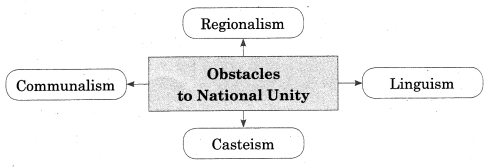
Three factors that hinder unity are:

  • Casteism: Loyalty to one’s caste over the nation leads to discrimination and vote-bank politics, as seen in caste-based atrocities reported in rural areas.
  • Communalism: Religious conflicts, like communal riots, create distrust and weaken national solidarity.
  • Economic Inequalities: The gap between rich and poor, evident in urban “mall culture” versus rural poverty, fosters social tension.

Check your progress

Page No. 56

1. Identify two Constitutional provisions to protect weaker sections in Indian society.

Answer:

  • Affirmative Action through Reservations: The Indian Constitution provides reservations in education and employment for Scheduled Castes (SCs), Scheduled Tribes (STs), Other Backward Classes (OBCs), and Economically Weaker Sections (EWS). For example, 15% of seats are reserved for SCs, 7.5% for STs, and 27% for OBCs in government-run institutions.
  • Special Concessions for Weaker Sections: The Constitution grants special concessions for the amelioration of SCs, STs, Denotified Tribes, OBCs, and religious, linguistic, and sexual minorities, ensuring their social and economic upliftment through welfare schemes and protective measures.

2. What do you understand by threelanguage formula?

Answer: The Three-Language Formula (TLF), devised in 1961 and recommended by the Kothari Commission (1964-66), is a policy to promote linguistic unity in India. It mandates that students learn three languages:

  • First Language: The regional language or mother tongue (home language).
  • Second Language: English or a modern Indian language (Hindi in Hindi-speaking states; Hindi or English in non-Hindi-speaking states).
  • Third Language: English or a modern Indian language not studied as the second language.

This formula aims to connect students with their state, the nation (via Hindi/English), and the global world (via English), fostering linguistic diversity and national integration. Most Indian states have implemented it, though challenges remain.

3. Identify three factors that hinder national unity.

Answer:

  • Casteism: Loyalty to one’s caste over the nation leads to discrimination, social exclusion, and political manipulation, as seen in caste-based atrocities and vote-bank politics.
  • Communalism: Excessive loyalty to one’s religion fosters conflicts, hatred, and distrust, weakening democracy through communal riots and religious fundamentalism.
  • Regionalism: Prioritizing one’s state or region over the nation fuels inter-state rivalries and separatist movements, such as the Jammu and Kashmir or Punjab issues, undermining national solidarity.

Question Answers Class 12 Chapter 2 Sociology Maharashtra Board

Segments of Indian Society – Solutions

Q.1 (A) Complete the following statements by choosing the correct alternative given in the bracket and rewrite it.

(1) Secondary type relations are significant in ___ society. (rural, tribal, urban)

Answer: urban

(2) Over 55% of the tribal population in India is found in the ___ region of the country. (Western, Central, Southern)

Answer: Central


(B) Correct the incorrect pair and rewrite it.

(1) (i) Landlord – Zamindar

(ii) Initiative for rural development
programme – Community
Development Programme

(iii) Three-tier system of governance – Integrated Rural Development Programme.

(iv) Primary occupations – traditional societies

Answer:

Incorrect pair: (iii) Three-tier system of governance – Integrated Rural Development Programme.

Corrected pair:

(i) Landlord – Zamindar

(ii) Initiative for rural development programme – Community Development Programme

(iii) Three-tier system of governance – Panchayati Raj System

(iv) Primary occupations – traditional societies


(C) Identify the appropriate term from the given option in the box and rewrite it against the given statement.

(1) Sacred groves in the tribal community.

Answer: Devrai

(2) Instances of white collar crime

Answer: Urban society


(D) Correct the underlined words and complete the statement.

(1) Individual status in urban society is mostly ascribed.

Answer: achieved.

(2) The custom of worshipping non-living bodies is called animism.

Answer: animatism


Q.2 Write short notes.

(1) Problems of tribal society.

Answer: Tribal societies face economic marginalization due to reliance on subsistence agriculture and limited access to markets. They lack infrastructure like healthcare, education, and clean water, resulting in poor living conditions. Land alienation from industrialization and deforestation threatens their livelihoods and cultural identity. Social discrimination and exploitation by non-tribals exacerbate their marginalization. Limited integration with mainstream society restricts opportunities, perpetuating poverty.

(2) Characteristics of urban society.

Answer: Urban society features high population density, diverse occupations, and complex social structures. Relationships are secondary, often formal and impersonal. Social mobility is high, with status achieved through education and skills. Advanced infrastructure, technology, and services define urban areas. Cultural diversity and individualism dominate, but challenges like crime, pollution, and social isolation persist due to fast-paced lifestyles.


Q.3 Write differences.

(1) Rural economy and Urban economy.

Answer:

Rural economyUrban economy
(i) Occupation: The main occupation of the rural community is agriculture which is in a state of backwardness.(i) Occupation: The occupation in urban areas is mainly non-agricultural, i.e. based on manufacturing, trade and commerce, professional and governance, services, etc.
(ii) Technology: Rural economy is dependent on the use of plough, animal power, seeds, fertilizers for agricultural activities.(ii) Technology: The urban economy is dependent on advanced technology and up-to-date machinery for economic activities.
(iii) Division of Labour: There is less scope for division of labour and specializations in rural communities.(iii) Division of Labour: Occupations are more specialized and based on the division of labour.
(iv) Markets: Rural weekly market is the main economic institution as rural economy is associated with various crafts like pottery, carpentry, etc.(iv) Markets: Marketisation is an essential feature of urban centers today – E-marketing, E-biz, etc.
(v) Nature of Employment: Unemployment such as educated, total unemployment seasonal unemployment, underemployment are found in the rural community.(v) Nature of Employment: All types of unemployment like literate, illiterate, skilled unemployment, unskilled unemployment are found in cities.
(vi) Dependence on Nature: Rural economy depends upon natural factors like a monsoon for agriculture.(vi) Dependence on Nature: The problem of unemployment has intensified other problems like poverty, malnutrition, beggary, prostitution, etc.

(2) Tribal community and Urban community.

Answer:

Tribal CommunityUrban Community
(i) Size: According to in 2011 census, the tribal population constitutes about 8.6 percent of the total population.(i) Size: According to the 2011 Census, 31% of the population lives in urban agglomerations/towns.
(ii) Density of Population: They are located in remote forests and hilly areas and the density of population is low.(ii) Density of Population: An urban area is a human settlement with a high population density.
(iii) Occupation: They are engaged in varied occupations such as hunting, fishing, and food gathering of forest produce, basket making, weaving, iron-smith, etc.(iii) Occupation: The occupation in urban areas is mainly non-agricultural, i.e. based on manufacturing, trade and commerce, professional and governance, services, etc.
(iv) Nature of Social Control: In tribal communities informal means of social control like Customs, traditions, religion, magic are effective social control mechanisms.(iv) Nature of Social Control: In urban community formal means of social control like laws, police, court, maintain law and order.
(v) Way of Life: Tribal community has its own culture i.e common way of life, they share common behavior patterns dialect traditions, norms, and values.(v) Way of Life: Urban community consists of people coming from different socio-cultural backgrounds belonging to different religions, caste, languages, etc, hence wide difference is found in the ways of living of urban people.


Q.4 Explain the following concepts with examples.

(1) Urban crime

Answer: Urban crime encompasses illegal activities in cities, driven by population density, anonymity, and socio-economic disparities. Examples include white-collar crimes like fraud (e.g., corporate embezzlement) and street crimes like theft (e.g., pickpocketing in crowded markets). Cybercrime, such as online scams, is also prevalent due to widespread internet use in urban areas.

(2) Sacred groves

Answer: Sacred groves, or Devrai, are forest patches protected by tribal communities for religious reasons. Dedicated to deities or spirits, they are conserved through customs prohibiting destruction. For example, the Warli tribe in Maharashtra preserves Devrai for worship, maintaining biodiversity and reflecting their belief in nature’s spiritual significance.


Q.5 (A) Complete the concept map.

Answer:


Q.5 (B) State whether the following statements are True or False with reasons.

(1) Division of labour is complex in urban community.

Answer: True

  • Reasons: Urban economies support diverse, specialized roles (e.g., engineers, teachers) due to industrialization and service sectors. This complexity contrasts with rural areas, where labour is primarily agricultural and less specialized.

(2) The traditional influence of caste has changed today.

Answer: True.

  • Reasons: Urbanization, education, and legal reforms have diminished caste-based roles. Merit-based opportunities and inter-caste interactions are more common, though some rural areas retain traditional caste influences.

Q.6 Give your personal response.

(1) Why is there lack of community feeling in cities?

Answer: Cities lack community feeling due to secondary, impersonal relationships and high population diversity. Individualistic pursuits, long work hours, and reliance on technology reduce meaningful interactions. Unlike rural areas with strong kinship ties, urban anonymity and cultural differences weaken collective bonds.

(2) Explain the need for rural development

Answer: Rural development is essential to bridge urban-rural disparities. It enhances access to healthcare, education, and infrastructure, improving living standards. Modernizing agriculture and creating local industries reduce poverty and urban migration. Empowering rural communities preserves cultural heritage and promotes balanced national growth.


Q.7 Answer the following question in detail. (About 150-200 words)

‘Traditional societies tend to hold on to their customs, traditions and beliefs. Using examples of your own, explain the statement with special reference to either family or religion. Also, discuss any three ways by which change is introduced into traditional societies.

Answer: Traditional societies are deeply rooted in customs, traditions, and beliefs, which provide stability and identity. With reference to family, these societies emphasize extended family structures, where multiple generations live together, sharing responsibilities and upholding values like respect for elders. For example, in rural Indian families, practices such as joint family living and arranged marriages are prevalent, reflecting adherence to traditional norms that prioritize collective well-being over individual choice. These customs reinforce familial bonds and cultural continuity.

However, change is introduced into traditional societies through various means. Education plays a significant role by exposing individuals to new ideas, encouraging critical thinking, and promoting gender equality, which may challenge traditional practices like early marriages. Urbanization introduces modern lifestyles, as migration to cities for work weakens traditional family structures, leading to nuclear families and individualistic values. Technology, particularly access to the internet and media, spreads global perspectives, influencing younger generations to adopt contemporary practices, such as love marriages or questioning rigid customs.


Check your progress

Page No. 28

1. Name one tribe in South India, Western India and North-East region.

Answer:

  • South India: Kota
  • Western India: Warli
  • North-East region: Bodo

2. Identify any three tribal occupations.

Answer:

  • Hunting and fishing.
  • Simple agriculture and shifting cultivation.
  • Food gathering of forest products.

3. Give examples of tribal belief systems.

Answer: Animism, Animatism, Totemism, Manaism and Naturism.


Check your progress

Page No. 30

1. Why are tribal people slow to change? Give two reasons.

Answer:

  • Strong adherence to traditions: Tribal communities deeply value their customs, beliefs, and practices, which are passed down through generations. This cultural attachment, such as maintaining sacred groves or traditional family structures, resists external influences and fosters continuity over change.
  • Geographical and social isolation: Many tribal groups live in remote areas with limited access to modern education, technology, or urban influences, which slows their exposure to new ideas and lifestyles, keeping them rooted in traditional ways.

2. Identify three forms of tribal religion.

Answer:

  • Animism: A belief system where tribes, like the Santhal, worship spirits residing in natural elements such as trees, rivers, and hills, considering them sacred.
  • Donyi-Poloism: Practiced by tribes like the Adi in Arunachal Pradesh, this involves worshipping celestial bodies, such as the sun (Donyi) and moon (Polo), as divine entities.
  • Sarnaism: Followed by tribes like the Munda in Jharkhand, it centers on worshipping village deities at a designated sacred place called Sarna.

3. State two problems caused by cultural contact with non-tribal people.

Answer:

  • Land alienation: Contact with non-tribal people often leads to tribal lands being taken for industrial or developmental projects, displacing tribes and threatening their livelihoods, as seen with mining projects in Central India.
  • Cultural erosion: Exposure to non-tribal cultures can dilute tribal traditions, languages, and practices, as younger generations adopt mainstream lifestyles, leading to the loss of cultural identity.

Check your progress

Page No. 35

1. State three characteristics of rural community.

Answer:

  • Primary relationships: Rural communities are characterized by close-knit, personal relationships based on kinship and long-term interactions, fostering a strong sense of community.
  • Agriculture-based economy: The economy primarily relies on agriculture and allied activities, such as farming, animal husbandry, and fishing, with limited diversification.
  • Traditional social structure: Rural societies adhere to traditional norms, customs, and practices, with social roles often influenced by caste, family, and community traditions.

2. Enumerate three changes in rural community.

Answer:

  • Improved infrastructure: Access to better roads, electricity, and communication networks has connected rural areas to urban centers, enhancing economic opportunities.
  • Shift in occupations: While agriculture remains dominant, rural communities are diversifying into non-agricultural activities like small-scale industries, retail, and services due to education and market access.
  • Changing social norms: Traditional practices, such as caste-based roles and early marriages, are weakening due to education, awareness, and exposure to modern values, promoting gender equality and social mobility.

3. Identify any three programmes started by the Government for rural development.

Answer:

  • Community Development Programme (CDP): Launched to promote holistic rural development through improvements in agriculture, education, and infrastructure.
  • Mahatma Gandhi National Rural Employment Guarantee Act (MGNREGA): Provides guaranteed wage employment to rural households, ensuring economic security and infrastructure development.
  • Pradhan Mantri Gram Sadak Yojana (PMGSY): Aims to provide all-weather road connectivity to rural areas, enhancing access to markets and services.

Check your progress

Page No. 37

1. State three characteristics of urban life.

Answer:

  • High population density: Urban areas are characterized by large, concentrated populations, leading to diverse social interactions and complex infrastructure.
  • Diverse occupations: Urban life features a variety of professions in industries, services, and technology, with a complex division of labour driven by specialization.
  • Cultural diversity: Urban societies are melting pots of different cultures, religions, and lifestyles, fostering individualism and exposure to global influences.

2. Why are nuclear families more common in urban than rural societies?

Answer: Nuclear families are more common in urban societies due to the demands of urban life. The fast-paced lifestyle and economic pressures require mobility and flexibility, which are easier for smaller family units to manage. Limited living space in cities, with high housing costs, discourages large, extended families common in rural areas. Additionally, urban emphasis on individualism and career-oriented goals leads to smaller households, as younger generations prioritize personal aspirations over traditional joint family structures.

3. Why are secondary relationships a significant characteristic of urban areas?

Answer: Secondary relationships are significant in urban areas due to the large, diverse population and impersonal nature of interactions. Unlike rural communities with close-knit, primary relationships based on kinship, urban life involves formal, role-based contacts, such as those with colleagues, service providers, or acquaintances. The high population density and transient nature of urban living limit deep personal bonds, making interactions brief and functional. This characteristic reflects the fast-paced, individualistic urban environment where anonymity and professional relationships dominate.

Question Answers Sociology Class 12 Maharashtra Board

Sociology – Solutions

Chapter 1 – Introduction to Indian Society

Chapter 2 – Segments of Indian Society

Chapter 3 – Diversity and Unity in Indian Society

Chapter 4 – Processes of Social Change in India

Chapter 5 – Social Movements in India

Chapter 6 – Social Problems in India

Question Answers Class 12 Chapter 1 Sociology Maharashtra Board

Introduction to Indian Society

Q.1 (A) Complete the following statements by choosing the correct alternative given in the bracket and rewrite it.

(1) Monks in Buddhist monasteries were called ……….. . (Bhikkus, Bhikkunis, Rishis)

Answer: Bhikkus.

(2) The Special Marriage Act was passed in the year ……….. . (1950, 1952, 1954)

Answer: 1954.


(B) Correct the incorrect pair and rewrite it.

(i) Raj Marg – Hinduism
(ii) Teerthankar – Jainism
(iii) Saint Thomas – Sikhism
(iv) Eight-fold Path – Buddhism

Answer:

Incorrect Pair: Saint Thomas – Sikhism
Correct Pair: Saint Thomas – Christianity


(C) Identify the appropriate term from the given option in the box and rewrite it against the given statement.

(1) An association established by Raja Rammohan Roy.

Answer: Brahmo Samaj.

(2) Head of the Drafting Committee of the Constitution of India

Answer: Dr. B. R. Ambedkar.


(D) Correct the underlined words and complete the statement.

(1) Elementary education was imparted in Khanqahs during the medieval period.

Answer: Maktabs

(2) The Satya Shodhak Samaj was the initiative of Radhakant Deb.

Answer: Jyotiba Phule


Q.2 Write short notes.

(1) Education during the Early Vedic period.

Answer: During the Early Vedic period, education was based on sacred literature written in Sanskrit, primarily the Vedas. It was imparted orally through rote-learning, focusing on enunciation and pronunciation. The Upanayana ceremony was a prerequisite for students of the first three varnas (Brahmins, Kshatriyas, Vaishyas) to enter Vedic schools, where they observed Brahmacharya (celibacy). Education aimed to sharpen intellect and build character, emphasizing values like truthfulness, duty (dharma), and devotion to the guru. Brahmins studied the Vedas extensively, Kshatriyas learned warfare and administration, Vaishyas focused on trade, and Shudras were trained in agriculture and animal husbandry. Women also had access to Vedic education, with notable scholars like Gargi and Maitreyi.

(2) Status of women during the Medieval period.

Answer: The status of women in Medieval India deteriorated significantly due to invasions and rigid Brahmanical laws. Women’s freedom was curtailed, and they were denied education and knowledge of scriptures. Practices like child marriage, sati, purdah, and the Devadasi system emerged, reducing women to objects of exploitation. Widow remarriage, once permitted, became taboo, and women were excluded from inheritance. Only upper-caste and aristocratic women received private education. Patriarchal norms reinforced dependency on men throughout their lives, with women subjected to the authority of fathers, husbands, and sons.


Q.3 Write differences.

(1) Status of women in the Early Vedic period and Later Vedic period.

Answer:

AspectEarly Vedic PeriodLater Vedic Period
EducationWomen had access to Vedic education and the Upanayana ceremony; scholars like Gargi existed.Women were denied Upanayana and education; restricted to household duties.
Social ParticipationWomen could participate in social assemblies (vidath) and choose their life partners.Barred from social assemblies; marriage became the only sacrament, often as children.
StatusRelatively higher status; considered productive members of society.Reduced to subordinate status; subjected to patriarchal control and dowry practices.
MarriageMonogamy was common; marriage was a sacrament, not compulsory.Child marriage became prevalent; women lost the right to choose partners.

(2) Education in the Ancient Period and Colonial period in Indian society.

Answer:

AspectAncient0.6Ancient PeriodColonial Period
Medium of InstructionSanskrit (Vedic period); Pali, Ardhamagadhi (Jainism/Buddhism); Arabic, Persian (Medieval).English became the medium in high schools and colleges.
AccessibilityLimited to specific varnas initially; later restricted; open to all in Buddhist viharas.Open to all, irrespective of caste, creed, or gender.
ContentFocused on Vedas, sacrifices, trade, warfare; later included astronomy, arts (Sangham).Secular, including Mathematics, Science, Philosophy, Sociology, History.
InstitutionsGurukuls, viharas, maktabs, madrasas, khanqahs.Schools, colleges, universities (e.g., Calcutta, Bombay, Madras Universities).

Q.4 Explain the following concepts with examples.

1. Varna

Answer: Varna refers to the social order or class system during the Vedic period, dividing society into four groups based on occupation and function: Brahmins (priests, teachers), Kshatriyas (rulers, warriors), Vaishyas (merchants, farmers), and Shudras (menial workers). Initially fluid, it later became rigid, evolving into the jati (caste) system based on purity and pollution. For example, a Brahmin was expected to study and teach the Vedas, while a Kshatriya was responsible for governance and protection.

2. Social legislation

Answer: Social legislation refers to laws enacted to promote social justice, welfare, and protection of vulnerable sections. These laws aim to eradicate social evils and foster equality. Examples include the Sati Prohibition Act (1829), which banned the practice of widow burning, and the Special Marriage Act (1954), which allowed inter-caste and inter-religious marriages, promoting social integration.


Q.5 (A) Complete the concept map.

Answer:


(B) State whether the following statements are True or False with reasons.

(1) Colonial rule has significant impact on Indian society.

Answer: True

  • Reasons: Colonial rule introduced English education, secular curricula, and new administrative systems, fostering rationality and nationalism. It led to social reforms, such as the abolition of sati, and economic changes like commercialization of agriculture, significantly transforming Indian society.

(2) Buddhism spread to several parts of India and beyond.

Answer: True

  • Reasons: Buddhism, under the patronage of Emperor Ashoka, spread across India and to countries like Tibet, China, Japan, and Sri Lanka. Its missionary nature and inclusive teachings attracted followers, establishing it as a global religion.

Q.6 Give your personal response.

(1) Jainism and Buddhism provided hope to all people.

Answer: Jainism and Buddhism offered hope by challenging the rigid Vedic caste system and ritualism. Their emphasis on non-violence, equality, and personal salvation through ethical living resonated with marginalized groups. For instance, Buddhism’s monastic orders welcomed all, regardless of caste, fostering inclusivity and spiritual empowerment.

(2) Social reform movements are present even in 21st century India.

Answer: Social reform movements continue in modern India, addressing issues like gender equality, caste discrimination, and environmental sustainability. For example, movements like #MeToo and campaigns for Dalit rights highlight ongoing efforts to combat systemic inequalities, reflecting the persistence of reformative zeal.


Q.7 Answer the following question in detail. (About 150-200 words)

Discuss with relevant examples, how the following factors have changed Indian society today.

(i) English medium of instruction

Answer: English education has empowered Indians to access global opportunities, fostering a new class of professionals in IT, medicine, and academia. For example, India’s IT sector thrives due to English proficiency, boosting economic growth. However, it has also created a linguistic divide, marginalizing non-English speakers.

(ii) Lowering the age for voting

Answer: Reducing the voting age to 18 has empowered youth to influence India’s political landscape. Young voters drive campaigns on education and unemployment, as seen in the 2019 elections where youth turnout was significant. This fosters democratic participation but requires addressing youth-specific issues.

(iii) Social legislations

Answer: Laws like the Right to Education Act (2009) and the Domestic Violence Act (2005) have promoted education and women’s safety. These legislations empower marginalized groups, but enforcement remains a challenge, as seen in persistent gender-based violence.’

(iv) Transport and Communication

Answer: Improved railways, metro systems, and internet connectivity have enhanced mobility and information access. For instance, UPI and digital platforms like Aadhaar have revolutionized transactions and governance. However, digital divides persist in rural areas, limiting equitable access.


Check your progress

Page No. 15

1. What was the nature of education during the Early Vedic period?

Answer: During the Early Vedic period, education was primarily based on sacred literature written in Sanskrit, focusing on the Vedas. It was imparted orally through rote-learning, with emphasis on enunciation and pronunciation. The Upanayana (thread) ceremony was a prerequisite for students of the first three varnas (Brahmins, Kshatriyas, Vaishyas) to enter Vedic schools, where they observed Brahmacharya (celibacy). The aim was to sharpen intellect and foster character, instilling values like truthfulness, duty (dharma), devotion to the guru, hospitality, and generosity. Brahmins studied the Vedas extensively, Kshatriyas learned warfare and administration, Vaishyas focused on trade and commerce, and Shudras were trained in agriculture and animal husbandry. Women also had access to Vedic education, with notable scholars like Gargi and Maitreyi. Education was conducted in gurukuls, and the art of writing was largely unknown, relying on oral transmission by rishis and sages.

2. State two indicators of the declining status of women during the Later Vedic period.

Answer:

  • Denial of Education and Upanayana Ceremony: In the Later Vedic period, women were denied access to the Upanayana ceremony, which had previously allowed them entry into Vedic education. This restricted their learning opportunities, confining them to household roles.
  • Rise of Child Marriage and Dowry Practices: Marriage became the only permissible sacrament for women, often as child marriages. The practice of dowry emerged, and the birth of daughters began to be viewed negatively, indicating a decline in their social status.

3. Mention any two characteristics of the Indian society in Medieval period.

Answer:

  • Synthesis of Indian and Islamic Culture: The Medieval period, particularly during the Delhi Sultanate, saw a blending of Indian and Islamic cultural elements, evident in Indo-Islamic architecture, the use of Hindi-Urdu (Hindustani), and advancements in mechanical technology.
  • Rigid Caste System and Feudal Hierarchy: Society was marked by a rigid caste system based on purity and pollution, alongside a feudal hierarchy comprising aristocrats (Sultans, nobles), priests (Ulemas, Brahmins), townspeople (merchants, artisans), and peasants, with limited social mobility.

Check your progress

Page No. 18

With reference to the Colonial period:

1. Name two educational changes

Answer:

  • Introduction of English as the Medium of Instruction: The British established a system where English became the medium of instruction in high schools, facilitating communication among the educated elite and introducing Western values.
  • Establishment of Secular Universities: In 1857, the Universities of Calcutta, Bombay, and Madras were founded, offering secular education in subjects like Mathematics, Science, Philosophy, Sociology, and History, accessible to all regardless of caste, creed, or gender.

2. State two economic changes.

Answer:

  • Commercialization of Agriculture: The British introduced a market-driven economy, promoting cash crops over food crops, which led to famines like those in Bengal and Odisha in 1856, adversely affecting peasants.
  • Industrial Growth and Urbanization: The rise of factories transformed the economic system, weakening caste-based occupations and fostering the emergence of economic and educated classes.

3. Cite two administrative changes.

Answer:

  • Creation of New Administrative Services: The British introduced services like the Economic Service, Education Service, Revenue Service, and Administrative Service, employing English-educated Indians to assist in governance.
  • Establishment of a Secular Judiciary System: A new judiciary was created, considering earlier Indian legal traditions but implemented on a secular basis, judging individuals equally regardless of caste or creed, with laws like the Indian Councils Act and Indian High Court Act of 1861.

Notes Class 12 Chapter 6 Sociology Maharashtra Board

Social Problems in India

6.1 Meaning and Nature of Social Problems

Individual Problem

  • Definition: A problem experienced by an individual, not necessarily felt by others.
  • Characteristics:
    • The cause may lie with the individual (e.g., habits, lethargy, personality traits) or external factors (e.g., lack of job opportunities, societal mindsets).
    • The individual must take initiative to resolve it, though external support (family, friends, professionals) may be needed.
    • Solving individual problems requires self-motivation but can be challenging without help.

Social Problem

  • Definition: A condition affecting a significant number of people, seen as undesirable and requiring collective action to address.
  • Key Definitions:
    • Fuller and Myers: A condition defined by many as a deviation from cherished social norms.
    • Broom and Selznick: A problem in human relationships threatening society or impeding aspirations.
    • Horton and Leslie: A condition considered undesirable by many, solvable through collective action.
  • Characteristics:
    • Involves behavior unacceptable to many, violating social norms or aspirations.
    • Prompts a need for collective action to resolve.
  • Focus: This chapter examines prevalent social problems in 21st-century India, including ageing, unemployment, farmers’ suicide, domestic violence, and addiction.

6.2 Ageing

Definition

  • Hess: An inevitable and irreversible biological process.
  • Birren and Renner: Regular changes in mature organisms as they advance in chronological age.
  • Chronological Age: Measured by years lived since birth; in India, 60+ years is considered the ageing population (per Census of India).

Characteristics (Strehler)

  1. Universal: Occurs in all members of a population, unlike diseases.
  2. Progressive: A continuous process.
  3. Intrinsic: Internal to the organism.
  4. Degenerative: Leads to deterioration over time.

Context in India

  • Increasing ageing population due to higher longevity and lower mortality.

Problems of Ageing

  1. Health Concerns:
    • Physical: Deterioration of body parts (e.g., dental, bones, heart, vision).
    • Mental: Feelings of alienation, anxiety, loneliness.
    • Emotional: Issues affecting well-being.
  2. Loneliness:
    • Common among single, childless, or isolated elderly.
    • Exacerbated by loss of spouse, inability to perform tasks, or neglect by family/community.
  3. Abuse:
    • Physical, emotional, or financial abuse within families or by outsiders.
    • Examples: Forced labor, cruelty, harassment, or abandonment.
  4. Economic Insecurity:
    • Many elderly depend on family or limited pensions, particularly in patriarchal setups where sons are expected to provide.
  5. Lack of Empathy:
    • Busy lifestyles and materialistic priorities reduce attention to elderly needs.
    • Caregivers may use coercive methods or fail to understand their issues.
  6. Mental Health Issues:
    • Anxiety, depression, guilt, or feeling like a burden.
    • Social stigma around seeking professional help persists.
  7. Inadequate Healthcare:
    • Limited access to treatment for conditions like Parkinson’s, Alzheimer’s, or mental health disorders.
  8. Lack of Old Age Homes:
    • Insufficient facilities, often unaffordable or lacking basic amenities.
  9. Weaker Sections:
    • Women, LGBTQ+ individuals, and disabled elderly face compounded challenges due to societal biases.
  10. Exploitation:
    • Dependency increases vulnerability to exploitation in personal or financial matters.

Measures to Address Ageing Problems

  1. Government Role:
    • The Ministry of Social Justice and Empowerment formulates policies and collaborates with states, NGOs, and civil society.
  2. National Policy on Older Persons (NPOP, 1999):
    • Focuses on well-being through shelters, healthcare, sensitization programs, and protection for vulnerable groups.
  3. Inter-Ministerial Committee:
    • Ensures effective implementation of NPOP across ministries.
  4. NGOs:
    • Organizations like HelpAge India, Dignity Foundation, and Nightingales Medical Trust provide support.
    • Online communities also offer assistance.
  5. Education:
    • Schools can promote awareness through community service, NSS, and SUPW, fostering empathy and care for the elderly.
  6. Family Role:
    • Create an enriching, respectful home environment, involving elderly in family and community activities.

6.3 Unemployment

Definition

  • Refers to people aged 15-59 who are jobless, actively seeking work, and available for jobs.
  • NSSO (PLFS, 2018): Rural unemployment at 5.3%, urban at 7.8%, overall at 6.1%.
  • Unemployed: Those with less than 14 hours of paid work per week.

Causes

  1. Inadequate Skills:
    • Mismatch between individual skills and industry needs.
    • Technological advances render some skills obsolete (e.g., manual typing vs. online exams).
  2. Frequent Job Shifts:
    • Temporary unemployment during job transitions.
    • Example: Farmers unemployed post-harvest, seeking urban jobs.
  3. Changing Economy:
    • Economic fluctuations (e.g., construction sector booms and lulls) affect job availability.
  4. Seasonal Shifts:
    • Seasonal employment in agriculture, banking, or shipping leads to periodic unemployment.
    • Monsoon-dependent agriculture causes rural-to-urban migration.
  5. Demand-Supply Gap:
    • More job seekers than available positions, especially for white-collar jobs.

Consequences

  1. Unutilized Human Resources:
    • Unemployed adults become dependent, straining the working population.
  2. Educational Stagnation:
    • Education often fails to equip students with employable skills, wasting resources.
  3. Underemployment:
    • Skilled individuals in unrelated or low-skill jobs (e.g., PhD holders working as clerks).
  4. Anti-Social Activities:
    • Lack of opportunities may lead to crime or undesirable activities, especially among dropouts.
  5. Mental Health Impact:
    • Frustration, depression, or suicidal tendencies due to unemployment.
  6. Adverse National Development:
    • High youth unemployment hinders long-term societal progress.

Measures to Tackle Unemployment

  1. Educational Reform:
    • Develop need-based, learner-centered curricula aligned with community and industry needs.
  2. Skill Development:
    • Focus on employment-worthy skills to foster entrepreneurship (e.g., RUSA initiatives).
  3. Vocational Training:
    • Integrate vocational programs at all educational levels (per NEP 2020).
  4. Industry-Education Symbiosis:
    • Promote collaborations in fields like science, engineering, and media studies.
  5. Entrepreneurship and Self-Employment:
    • Government support for startups (e.g., OLA, Flipkart) encourages self-reliance.
  6. Government Schemes:
    • MGNREGS (2009), PMKVY (2015), Startup India (2016).

6.4 Farmers’ Suicide

Context

  • India is an agrarian society with over 70% of the population in primary/secondary sectors.
  • Rising farmer suicides are a serious social issue, particularly in regions like Vidarbha and Marathwada.

Causes

  1. Environmental Deterioration:
    • Deforestation, resource overexploitation, and climate change cause crop failures due to floods or droughts.
  2. Impact of Globalization:
    • Free-trade policies lead to dumping of cheap agricultural produce, lowering local prices.
  3. Indebtedness:
    • Farmers borrow for seeds, equipment, or personal needs but struggle to repay due to crop failures.
    • Expensive BT cotton seeds and lack of irrigation exacerbate debt.
  4. Ignorance:
    • Lack of awareness about modern farming techniques hinders progress.
  5. Disparity in Land Holdings:
    • Small and medium farmers face economic insecurity compared to large landholders (zamindars).
    • Landless laborers are most vulnerable.
  6. Dowry System:
    • Borrowing for dowry payments diverts funds from agriculture, contributing to debt and suicides.

Consequences

  1. Impact on Families:
    • Loss of the main earner causes economic and emotional trauma.
  2. Impact on Spouse:
    • Widows often take up hard labor with inadequate skills.
  3. Impact on Children:
    • Children may drop out of school, assuming premature responsibilities.
  4. Impact on Economy:
    • Suicides deter youth from agriculture, leading to urban migration and reduced agricultural output.
  5. Impact on Social Environment:
    • Creates despair, guilt, and fear in farming communities, dampening morale.

Measures to Tackle Farmers’ Suicide

  1. Support Systems:
    • Provide aid for crop failures, failed monsoons, or indebtedness.
  2. Insurance:
    • Offer life and crop insurance to protect against losses.
  3. Direct Sales:
    • Eliminate middlemen to ensure farmers receive fair profits.
  4. Water Harvesting:
    • Implement water management to address floods and droughts.
  5. Role of Banks:
    • Simplify loan processes and promote savings to reduce reliance on private moneylenders.
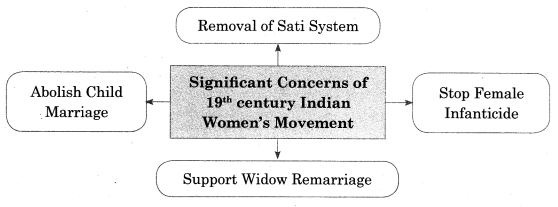
  6. Multi-Cropping:
    • Encourage growing multiple crops to reduce risks, with government support for seeds and training.

6.5 Domestic Violence

Definition

  • Abuse within the family, including psychological, emotional, verbal, or physical torture.
  • Involves perpetrators and victims; often unreported due to being seen as a private matter in patriarchal setups.

Causes

  1. Patriarchy:
    • Male dominance creates power imbalances, marginalizing women, transgender persons, and children.
  2. Insecurity:
    • Male insecurity (e.g., suspicion, ego threats) triggers violence.
  3. Dysfunctional Relationships:
    • Personal insecurities, cultural differences, or incompatibility lead to conflicts.
  4. Traditional/Religious Outlook:
    • Norms in marriage and family normalize male supremacy, encouraging violence.
  5. Heteronormativity:
    • Social expectation of binary gender roles (male/female) leads to discrimination against non-conforming individuals.
  6. Vulnerability:
    • Youth, women, elderly, and disabled are exploited due to economic or power disparities.

Consequences

  1. Psychological Trauma:
    • Long-term emotional scars requiring counseling or psychiatric care.
  2. Unfulfilled Lives:
    • Victims lose hope, develop cynicism, and distrust others.
  3. Health Effects:
    • Psycho-somatic disorders (e.g., bed-wetting, depression, irregular menstruation).
  4. Perpetration of Abuse:
    • Children exposed to violence may normalize abusive behaviors.
  5. Decline in Productivity:
    • Poor mental/physical health reduces individual potential.

Measures to Address Domestic Violence

  1. Creating Awareness:
    • Promote that domestic violence is unacceptable through education and rational thinking.
  2. Personal Empowerment:
    • Support vulnerable groups via SHGs, NGOs, and social workers.
  3. Role of Media:
    • Sensitize public through real-life stories and awareness campaigns.
  4. NGOs:
    • Provide legal and emotional support to victims (e.g., women, children, transgender persons).
  5. Role of Law:
    • Legal provisions (e.g., Section 377 decriminalization) empower victims.
  6. Role of Police:
    • Train police to handle domestic violence sensitively, with specialized women’s units.

6.6 Addiction (Substance, Internet, Mobile)

Definition

  • Psychological and/or physical dependence on substances (alcohol, drugs), internet, or mobile phones, leading to withdrawal symptoms and harmful behaviors.

Types of Addiction

  1. Substance Addiction:
    • Dependence on alcohol, tobacco, marijuana, cocaine, gutka, whiteners, or narcotics.
    • Tobacco: Nicotine-driven; causes cancers; prevalent across tribal, rural, and urban areas.
    • Alcohol: Depressant slowing brain functions.
    • Whitener: Contains addictive trichloroethane.
    • Gutka: Carcinogenic chewing tobacco.
    • Narcotics: Highly addictive drugs requiring medical supervision.
    • Statistics: 20 million children (10-14 years) addicted to tobacco; 1-5 million heroin addicts in India.
  2. Internet Addiction:
    • Compulsive need to access gaming, adult sites, or social media, not for professional purposes.
    • Impacts all age groups; causes stress, health issues, and strained relationships.
  3. Mobile Addiction:
    • Obsession with mobile phones (e.g., selfies, social media, gaming).
    • Leads to anxiety, injuries (e.g., distracted driving), and reduced real-world interactions.

Causes

  1. Personal Factors:
    • Gradual development of habits (e.g., occasional drinking becoming habitual).
  2. Peer Pressure:
    • Friends encourage habits like smoking or drug use to fit in.
  3. Social Status:
    • Certain addictions (e.g., narcotics, imported alcohol) are seen as prestigious.
  4. Validation of Self:
    • Social media obsession (e.g., “selfitis”) for validation.
  5. Psychological Factors:
    • Insecurities, anxiety, or loneliness drive addiction.
  6. Inadequate Role Models:
    • Lack of positive influences leads to adopting harmful behaviors.

Consequences

  1. Psychological Impact:
    • Dependency and obsession with validation (e.g., social media likes).
  2. Impact on Family:
    • Addiction (e.g., alcohol) causes domestic violence or communication breakdowns.
  3. Health Impact:
    • Stress, anxiety, or physical ailments (e.g., cancer from tobacco).
  4. Work Impact:
    • Reduced efficiency, absenteeism, or workplace harassment.
  5. Economic Impact:
    • Financial drain due to addiction costs and treatment.
  6. Isolation:
    • Addicts withdraw from social interactions, preferring virtual or substance-based escapes.

Measures to Tackle Addiction

  1. Creating Awareness:
    • Educate through programs and camps about addiction risks.
  2. Counseling:
    • Professional intervention by psychologists or counselors.
  3. De-Addiction Clinics:
    • Centers like Muktangan (Pune) or Jeevan Jyot (Nagpur) offer support.
  4. Laws:
    • Enforce anti-smoking laws, age restrictions, and regulations against drug peddling.
  5. Mass Media:
    • Use platforms for awareness via helplines, FAQs, and campaigns.
  6. NGOs:
    • Organizations like Alcoholics Anonymous and Narcotics Anonymous provide support.
  7. Group Activities:
    • Promote hobbies, sports, or community engagement to reduce isolation.

Notes Class 12 Chapter 5 Sociology Maharashtra Board

Social Movements in India

5.1 Meaning and Nature of Social Movements

Meaning and Definitions

  • Introduction: The term “Social Movement” was coined by Lorenz Von Stein in 1850 in his book History of the French Social Movement from 1789 to the Present. It gained prominence in Europe during the early 19th century.
  • Definitions:
    • Turner and Killian: A collectivity acting with continuity to promote or resist change in society or a group.
    • Herbert Blumer: Collective enterprises to establish a new order of life.
    • Sidney Tarrow: Collective challenges to authority, cultural codes by people with common purposes and solidarity in sustained interactions with elites, opponents, and authorities.

Characteristics of Social Movements

  1. Collective in Nature: Involves group action, not individual efforts.
  2. Planned and Deliberate: Requires preplanning and is not spontaneous.
  3. Ideology and Objectives: Guided by a specific ideology with clear objectives.
  4. Social Change: Aims to bring about or resist change in the established societal order.

Types of Social Movements

  • David Aberle’s Classification (based on target group and extent of change):
    1. Alternative Social Movements: Seek limited change for specific groups (e.g., prohibition movements).
    2. Reformative Social Movements: Aim for partial societal change (e.g., women’s suffrage).
    3. Redemptive Social Movements: Focus on individual transformation (e.g., religious movements).
    4. Revolutionary Social Movements: Seek radical societal transformation (e.g., communist movements).
  • Herbert Blumer’s Classification:
    1. General Social Movements: Broad, loosely organized (e.g., environmentalism).
    2. Specific Social Movements: Focused on particular issues (e.g., trade union movements).
    3. Expressive Social Movements: Focus on personal expression (e.g., cultural movements).

Social Reform Movements in India

  • Historical Context: Organized social reform movements began in the 19th century, driven by intellectuals addressing issues like caste, women’s rights, and untouchability.
  • Key Reformers and Contributions:
    • Raja Rammohan Roy: Founded Brahmo Samaj (1828); campaigned against Sati, leading to the Sati Abolition Act (1829).
    • Swami Dayanand Saraswati: Established Arya Samaj (1875); opposed caste system, idol worship, and promoted women’s progress.
    • Mahatma Jotiba Phule: Founded Satya Shodhak Samaj (1873); focused on women’s education, widow remarriage, and child marriage prohibition.
    • Rajarshi Shahu Maharaj: Fought caste system and untouchability in Kolhapur.
    • Maharshi Karve: Promoted women’s education through Mahila Vidyalaya (1907) and SNDT University (1916).
    • Dr. B.R. Ambedkar: Advocated for marginalized communities; founded Depressed Classes Education Society (1928).
    • Mahatma Gandhi: Led campaigns for poverty eradication, women’s rights, and ending untouchability.

Causes of Social Movements

  1. Cultural Drift: Rapid changes in values and expectations create societal conflicts.
  2. Social Disorganization: Uneven growth due to industrialization and urbanization causes norm conflicts.
  3. Perceived Social Injustice: Frustration from unjust decisions by authorities fuels movements.
  4. Rigidity in Normative Structure: Inflexible societal norms mismatch with public expectations.

Social Movements and Social Change

  • Interconnection: Social movements aim to alter society, but not all social changes result from movements.
  • Differences:
    • Social movements have a life cycle (emerge, operate, decline); social change does not.
    • Movements are planned and organized; social change may be spontaneous.
    • Movements are not universally present; social change is inevitable and universal.

5.2 Women’s Movement in India

Phases of the Women’s Movement

  1. Impact of Social Reformers (19th Century):
    • Overlapped with social reform movements; addressed unequal status of women.
    • Key Figures: Raja Rammohan Roy, Ishwarchandra Vidyasagar, Mahadev Govind Ranade, Behramji Malbari.
    • Organizations: Brahmo Samaj and Arya Samaj formed Mahila Mandals for women’s platforms.
    • Legislations: Prevention of Sati Act (1829), Widow Remarriage Act (1856), Female Infanticide Prevention Act (1870), Age of Consent Act (1891).
    • Developments: Women’s Indian Association (1917) by Margaret Cousins; All India Women’s Conference (1926).
    • Impact: British liberalism encouraged women’s education, though mainly for upper-caste elites.
  2. Impact of Nationalist Movement:
    • Increased women’s participation in the independence struggle, influenced by Gandhi.
    • Key Leaders: Kasturba Gandhi, Vijayalakshmi Pandit, Annie Besant (Home Rule Movement), Sarojini Naidu (Women’s Suffrage), Aruna Asaf Ali, Sucheta Kriplani.
    • Role: Women managed protests when male leaders were imprisoned; Quit India Resolution (1942) recognized women as “Disciplined Soldiers.”
  3. Post-Independence Era:
    • Slowed due to focus on political independence and other issues like tribal unrest.
    • International Women’s Decade (1975-85): UN declared 1975 as International Women’s Year; Towards Equality report (1974) highlighted patriarchy and violence against women.
    • Key Cases: Mathura Rape Case (1972), Roop Kanwar Sati Case (1987), Nirbhaya Rape Case (2012).
    • Developments: Rise of women’s organizations in Mumbai, Pune, Delhi; publications like Baija, Manushi.
    • Focus: Violence against women, dowry deaths, domestic violence, and legislative equality demands.
    • Dalit Feminist Movement: Emerged to address specific issues of Dalit women.
  4. Towards Women’s Empowerment:
    • Expanded to rural and tribal areas; includes women as beneficiaries and participants.
    • Participants: Women activists, enlightened men, NGOs, and government.
    • Objectives: Equal rights, elimination of discrimination, and women’s empowerment.
    • Vishaka Guidelines (1997, revised 2013): Address workplace sexual harassment for a safe work environment.

5.3 Workers’ Movement in India

Historical Context

  • Triggered by industrialization, which introduced factory systems and class divisions (industrialists vs. laborers).
  • Exploitation (low wages, long hours, poor conditions) led to worker protests.

Phases of the Workers’ Movement

  1. Emergence (1850-1918):
    • Spontaneous protests without organization.
    • Key Figures:
      • Shapurji Bengalee: Led to the First Factories Act (1881).
      • Narayan Meghaji Lokhande: Founded Bombay Mill Hands Association (1884); recognized as the Father of the Indian Workers’ Movement.
    • Early movements were moderate, led by philanthropists for workers’ welfare.
  2. Rise of Pressure Groups (1918-1947):
    • Post-World War I economic changes increased costs but not wages, leading to strikes (e.g., Bombay textile workers, Kanpur jute mills).
    • Trade Unions: All India Trade Union Congress (AITUC) formed in 1920 under Lala Lajpatrai; Bombay Textile Labour Union recognized in 1926 under the Indian Trade Union Act.
    • Leftist Influence: Marxist ideology encouraged workers to challenge capitalism.
    • Great Depression: Increased strikes; leaders like Muzaffer Ahmed and Shripad Amrut Dange were prominent.
    • National Trade Union Federation (NTUF): Formed to coordinate efforts.
  3. Role of INTUC (1948-1960):
    • Organizations: Indian National Trade Union Congress (INTUC, 1947), Hind Mazdoor Sabha (HMS, 1948), United Trade Union Congress (UTUC, 1949), Bharatiya Mazdoor Sangh (BMS, 1955).
    • Issues: Shifted from wages to suspension, unfair dismissal, and workers’ rights.
    • Politicization: Political parties developed trade union wings, leading to splits (e.g., CPI-CPM split led to Centre for Indian Trade Unions, CITU).
  4. Consolidation and Diversification (After 1960):
    • Successes: Improved remuneration and work conditions until the 1950s.
    • Industrial Disputes Act (1947): Provided mechanisms for resolving conflicts.
    • Great Bombay Textile Strike (1982): Led by Datta Samant; involved 250,000 workers demanding wage hikes and scrapping of the Bombay Industrial Act. Resulted in industry losses and worker pauperization.
    • Current Status: 16,154 trade unions (2012); Bharatiya Mazdoor Sangh is the largest. Prominent unions include AITUC, INTUC, and SEWA.

5.4 Farmers’ Movement in India

Context

  • India’s agricultural predominance makes farmers a significant group, though geographically scattered.
  • Movements arose due to exploitation and unrest.

Phases of the Farmers’ Movement

  1. Early Agitations (1857-1921):
    • British exploitative revenue systems and Zamindari system led to land loss and indebtedness.
    • Revolts: Deccan riots, Bengal tenant upsurges, Punjab Kisan struggles.
    • Congress-Led Struggles: Champaran Struggle (1917-18) against indigo planters; Kaira Satyagraha against land revenue.
  2. Emergence of Kisan Sabhas (1922-1946):
    • Congress support for landlords sparked farmer backlash.
    • Kisan Sabhas: Formed in Bengal, Punjab, Uttar Pradesh; led by Swami Sahajanand Saraswati in Bihar against Zamindari.
    • All India Kisan Sabha (AIKS): Established in 1936 at Lucknow Congress session.
    • Key Struggles: Bardoli (1928-29, 1930-31), Punjab under Raja Mahendra Pratap, Andhra Pradesh against Forest Law.
  3. Post-Independence Period:
    • Unrest in agriculturally developed states (e.g., Punjab, Maharashtra).
    • Key Figures:
      • Charansingh: Formed Bharatiya Kranti Dal and Bharatiya Lok Dal (1974); opposed mechanization.
      • Sharad Joshi: Led Shetkari Sangatana (1980).
      • M.D. Nanjundaswamy: Led Karnataka Rajya Ryot Sangh.
    • Developments: 1973 and 1978 farmer conventions; 20-point demand charter.
    • Recent Issues: Farmers’ suicides, 2018 Maharashtra farmers’ march, “Farmers’ Strike” with produce discarded on roads.

5.5 Environmental Movement in India

Definition

  • Gadgil and Guha: Organized social activity to promote sustainable resource use, halt environmental degradation, or restore the environment.
  • Also called Green Movement or Conservation Movement.

Emergence

  • Began in the 1960s with global awareness; US Environmental Policy Act (1970) established Earth Day (April 22).
  • UN Conference on Human Environment (1972, Stockholm) and Green Movement in Germany/North America spread awareness.

Unique Features in India

  • Aims for collective human good, unlike specific group-focused movements.
  • Inclusive of marginalized groups (tribals, farmers, women).
  • Uses non-violent, assertive methods.
  • Influences policy for ecological benefits.

Causal Issues

  • Rapid environmental degradation due to industrialization, urbanization, and technology.
  • Population growth and resource overuse.
  • Issues: Deforestation, air pollution, soil pollution, marine problems.
  • Ideological conflict: Gandhian self-sufficiency vs. Marxist views on inequality-driven degradation.

Significant Movements

  1. Chipko Movement (1973):
    • Origin: Chamoli district, Himalayan region; led by Sunderlal Bahuguna, started by Amrita Devi.
    • Features: Non-violent “hug-the-tree” protests against deforestation; strong women’s participation.
    • Cause: Industrialization and development threatened local livelihoods dependent on forests.
    • Impact: Boosted similar protests; authorities retreated after mass action in Mandal village.
  2. Narmada Bachao Andolan (1985):
    • Context: Sardar Sarovar Dam on Narmada River promised benefits but caused displacement.
    • Leader: Medha Patkar; became an international movement.
    • Actions: Indefinite dharna (1994); advocated alternative energy methods and rehabilitation.
    • Impact: Highlighted sustainable development and questioned policy decisions.

Categories of Environmental Struggles (Harsh Sethi)

  • Forest and forest resources.
  • Land use.
  • Water.
  • Anti-dam movements.
  • Pollution and marine resources.

Notes Class 12 Chapter 4 Sociology Maharashtra Board

Processes of Social Change in India

Introduction

Social change refers to significant transformations in the social structure, institutions, and behaviours of a society over time. This chapter examines five key processes driving social change in India: Industrialisation, Urbanisation, Modernisation, Globalisation, and Digitalisation. These processes are influenced by factors such as demographic shifts, natural phenomena, education, economic developments, and socio-cultural dynamics. The chapter highlights how these processes have reshaped Indian society and continue to do so, with both positive and negative consequences. Understanding these changes requires recalling the characteristics and factors of social change studied in Class 11, such as the impact of economic, cultural, and educational factors.


4.1 Industrialisation

Definition

Industrialisation is the process of transitioning from traditional, manual production methods to mechanised, large-scale production using advanced technology and non-human energy sources. It fundamentally transforms the economic and social fabric of a society.

  • B. Kuppuswamy: “Industrialisation means the use of unbiotic power such as electricity and steam for the mass production of goods and easy transportation and communication.”
  • Fairchild: “Industrialisation is the process of technological development by the use of applied science, characterized by the expansion of large-scale production with the use of power machinery, for a wide market.”
  • General Definition: A process of social and economic change transforming a pre-industrial society into an industrial one.

Characteristics

  1. Growth of Industries:
    • Industrialisation is marked by a significant increase in factories and industries, replacing traditional guilds and cottage industries.
    • Example: The Industrial Revolution in 17th-18th century Europe shifted production from homes to factories, a trend later adopted in India.
    • In India, this led to the decline of handmade goods and the rise of machine-made products.
  2. Mechanisation:
    • Involves the use of machines to enhance precision, accuracy, and mass production.
    • Machine-made goods became cheaper than handmade ones, but mechanisation caused worker alienation and job displacement as machines replaced human labour.
  3. Capital-Intensive:
    • Modern industries rely heavily on automation and advanced technology, requiring substantial financial investment.
    • Example: Automated assembly lines in car manufacturing plants.
  4. Labour-Intensive:
    • Early industries required both skilled and unskilled workers, leading to the establishment of specialised training institutes.
    • Example: Engineering colleges, management schools, and institutes for industrial psychology.
  5. Division of Labour:
    • Tasks are assigned based on specific skills, training, and expertise, leading to differential wages.
    • This fostered economic class formation and the growth of trade unions to protect workers’ rights.

4.2 Urbanisation

Definition

Urbanisation is the process of population migration from rural to urban areas, driven by industrial and economic opportunities, resulting in the growth of towns, cities, and metropolises. It also involves changes in lifestyle and social organisation.

  • Anderson: Urbanisation is a two-way process involving movement from villages to cities, a shift from agricultural to non-agricultural occupations (business, trade, services), and changes in migrants’ attitudes, beliefs, and behaviours.
  • Thomas Warren: Defines it as the movement from agriculture-focused communities to larger communities centred on government, trade, manufacturing, or allied interests.
  • Marvin Olsen: Describes urbanisation as the inward flow of large numbers of people from rural to urban areas.

Characteristics

  1. Migration to Urban Centres:
    • Industrial growth attracts rural and tribal populations to factory locations, increasing urban populations.
    • Over time, this leads to the development of towns into cities and metropolises (e.g., Mumbai, Pune, Nagpur).
    • Example: Migration to Bengaluru for IT job opportunities.
  2. Industrial Growth and Commutation:
    • Urban centres are hubs of industrial activity, causing spatial segregation (separation of residence and workplace).
    • Example: Long commutes (3-4 hours) in cities like Delhi due to urban sprawl.
  3. Heterogeneity:
    • Urban areas host diverse populations in terms of gender, caste, class, language, and religion, breaking down traditional social barriers.
    • Example: Mumbai’s cosmopolitan population includes people from various cultural backgrounds.
  4. Urbanism as a Way of Life:
    • Coined by Louis Wirth, this describes the urban mindset: distant, calculative, rational, independent, and less influenced by traditions, family, or religion.
    • Example: Urban residents prioritise career over traditional family obligations.
  5. Civil Administration:
    • Urban areas are governed by municipal corporations, not traditional bodies like panchayats, with formal systems like city police and traffic signals.
    • Example: Mumbai’s Brihanmumbai Municipal Corporation (BMC) manages urban planning.
  6. Specialised Division of Labour:
    • Work is divided based on skills and expertise, with specialised roles in industries.
    • Example: In a factory, separate managers handle production, finance, marketing, and sales.

4.3 Modernisation

Definition

Modernisation, a term introduced by Daniel Lerner, refers to the adoption of modern scientific knowledge, rational thinking, and technological advancements to improve various aspects of life, including economic, social, cultural, and political domains.

  • Daniel Lerner: “Modernisation is the current term of an old process of social change whereby less developed societies acquire the characteristics common to more developed societies.”
  • Rustow and Ward: “Modernisation is the application of modern science to human affairs.”
  • Alatas: “Modernisation is a process by which modern scientific knowledge is introduced in the society with the ultimate purpose of achieving a better and more satisfactory life in the broadest sense of the term, as accepted by the society concerned.”

Characteristics

  1. Scientific Temperament:
    • Emphasis on scientific methods and empirical evidence to understand and explain phenomena.
    • Example: Use of data-driven research in policy-making.
  2. Rational Outlook:
    • Shift from spiritual-religious to secular, rational values, focusing on logical explanations and cause-and-effect relationships.
    • Example: Questioning traditional superstitions through education.
  3. Technological Advancement:
    • Adoption of advanced technology for precision and efficiency, a hallmark of industrial societies.
    • Example: Use of automated machinery in agriculture.
  4. Openness to New Ideas:
    • Willingness to explore creative solutions, examine alternatives, and innovate.
    • Example: Adoption of renewable energy sources like solar power.
  5. Critical Thinking:
    • Ability to critically evaluate events, culture, beliefs, and practices, including self-criticism.
    • Example: Debating the relevance of traditional customs in modern society.

4.4 Globalisation

Definition

Globalisation is the process of integrating economies, cultures, and societies into a global network through free trade, capital flow, and resource sharing. In India, it gained momentum in 1991 with the New Economic Policy (LPG: Liberalisation, Privatisation, Globalisation), introduced by Dr. Manmohan Singh.

  • Martin Albrow and Elizabeth King: “Globalisation refers to all those processes by which the peoples of the world are incorporated into a single world society.”
  • Anthony Giddens: “Globalisation can be defined as the intensification of worldwide social relations which link distant localities in such a way that local happenings are shaped by events occurring many miles away and vice versa.”
  • Roland Robertson: “Globalisation is the compression of the world and the intensification of the consciousness of the world as a whole.”

Characteristics

  1. Liberal Principle:
    • Based on the laissez-faire doctrine (French for “let do”), advocating free trade and minimal government interference.
    • Liberalisation opens the economy to private players.
    • Example: Entry of foreign companies like Coca-Cola into India.
  2. Private Enterprise:
    • Privatisation transfers government-controlled services (e.g., healthcare, education, media) to private providers.
    • Example: Private hospitals like Apollo expanding in India.
  3. Profit Motive:
    • Increased competition drives profiteering, with private entities focusing on financial gains.
    • Example: Private educational institutions operating like businesses.
  4. Marketisation:
    • Large-scale production leads to diverse product availability, fostering consumerism and materialism.
    • Example: Shopping malls offering a wide range of global brands.
  5. Interdependence:
    • Global economy creates interdependence among nations.
    • Example: Car parts manufactured in China, assembled in India.
  6. Knowledge Distribution:
    • Sharing of technological know-how and outsourcing across borders.
    • Example: Indian BPOs serving American and British firms.

4.5 Digitalisation

Definition

Digitalisation is the integration of digital technologies into various aspects of life to transform processes, operations, and customer relationships, enhancing efficiency and reach. It involves the process of digital transformation, as defined by CapGemini and MIT’s Centre for Digital Business.

  • General Definition: The integration of digital technologies into everyday life by digitising everything that can be digitised.
  • Brennen and Kreiss: “Digitalisation is the way in which many domains of social life are restructured around digital communication and media infrastructures.”
  • Gartner: “Digitalisation is the use of digital technologies to change a business model and provide new revenue and value-producing opportunities.”

Characteristics

  1. Computerisation:
    • Widespread use of computers simplifies processes in sectors like education, banking, taxation, and marketing.
    • Example: Online banking replacing manual transactions.
  2. Frequent Change:
    • Rapid technological advancements (e.g., AI in manufacturing, robotics, surgery) drive frequent changes in business models.
    • Example: Use of AI chatbots in customer service.
  3. Speed and Accuracy:
    • Digitalisation enhances the speed and accuracy of processes like data mining, analysis, and management.
    • Example: Real-time stock market trading platforms.
  4. Technology-Driven:
    • Relies on innovation, research, and development.
    • Example: Evolution from 386 microprocessors in the 1980s to 5G technology today.
  5. Spurred Creativity:
    • Encourages innovation and problem-solving.
    • Example: Cockpit simulators for pilot training.
  6. Importance to Customers:
    • Provides utility to end-users through simplified processes.
    • Example: Online tax filing, e-admissions, and digital election results.

4.6 Impact of Processes of Social Change on Indian Society

Overview

The processes of industrialisation, urbanisation, and modernisation were significantly influenced by British colonial rule, while globalisation and digitalisation are more recent phenomena, particularly post-1991. These processes have unevenly impacted different regions and communities in India, bringing both opportunities and challenges.

Specific Impacts

  1. Impact of Industrialisation:
    • Urban Growth: Factory growth led to migration, transforming towns into cities and metropolises.
    • Family Structure: Breakdown of joint families and rise of nuclear families, reducing traditional support systems but also eliminating some disadvantages of large families.
    • Example: Migration to industrial hubs like Chennai disrupted traditional family ties.
  2. Impact of Urbanisation:
    • Cultural Shifts: Reduced influence of customs, traditions, and religion, promoting a materialist, individualistic, and non-conforming lifestyle.
    • Social Challenges: Urbanisation leads to “loneliness in a crowd” due to impersonal relationships.
    • Example: Urban residents in Delhi often face isolation despite living in crowded areas.
  3. Impact of Modernisation:
    • Scientific Temperament: Education has dismantled superstitions and obsolete beliefs, fostering rational thinking.
    • Tradition vs. Modernity: Ongoing debates about balancing traditional values with modern ideals.
    • Example: Campaigns against caste-based discrimination reflect modern values.
  4. Impact of Globalisation:
    • Economic Integration: Post-1991, India became part of the global economy, enabling knowledge and resource sharing.
    • Positive Effects: Access to global markets and technology.
    • Negative Effects: Increased economic disparities and cultural homogenisation.
    • Example: Growth of IT industries in Hyderabad vs. challenges faced by local artisans.
  5. Impact of Digitalisation:
    • Transformative Changes: Revolutionised access to knowledge, governance, commerce, and education through e-platforms (e-governance, e-commerce, e-learning).
    • Challenges: Impact on small industries, privacy concerns, changes in consumer behaviour, and increased social networking.
    • Example: E-commerce platforms like Amazon affect small retailers, while social media influences youth culture.

Ads

HSC आणि SSC महाराष्ट्र – मराठी माध्यम – महाराष्ट्र बोर्ड

📘 महाराष्ट्र बोर्ड परीक्षा साहित्य (मराठी माध्यम)

  • HSC आणि SSC प्रश्नसंच – मराठी माध्यमातील PDF
  • महाराष्ट्र बोर्ड नमुना प्रश्नपत्रिका व मॉडेल पेपर्स (मराठी माध्यमात)
  • SSC आणि HSC च्या मागील वर्षांच्या प्रश्नपत्रिका – मराठी माध्यम
  • SSC/HSC साठी मराठी माध्यमातील नोट्स आणि सराव चाचण्या (मॉक टेस्ट)
  • मराठी माध्यमातील MCQs (बहुपर्यायी प्रश्न) समाविष्ट
  • सर्व परीक्षा साहित्य मराठी माध्यमात उपलब्ध

📗 महाराष्ट्र बोर्ड पाठ्यपुस्तके व PDF (मराठी माध्यम)

  • इयत्ता 10 वी (SSC) चे पाठ्यपुस्तक PDF – मराठी माध्यमात
  • इयत्ता 12 वी (HSC) चे पाठ्यपुस्तक PDF – मराठी माध्यमात
  • मराठी डायजेस्ट – PDF डाउनलोड
  • SSC आणि HSC इयत्तांची पुस्तके – मराठी माध्यमातील PDF
  • डाउनलोडसाठी उपलब्ध पाठ्यपुस्तके व PDF – महाराष्ट्र बोर्ड

📒 महाराष्ट्र बोर्डासाठी मराठी अभ्यास साहित्य

  • प्रकरणनिहाय नोट्स – मराठी माध्यमात
  • प्रकरणनिहाय प्रश्नोत्तरे (प्रश्न व उत्तरे) – मराठी माध्यमात
  • SSC आणि HSC साठी महत्त्वाचे प्रश्न – मराठी माध्यम
  • महत्त्वाच्या सूत्रांचा सारांश (इयत्ता 6 वी ते 12 वी)
  • MCQs, प्रश्नसंच, नमुना प्रश्नपत्रिका आणि मागील वर्षांच्या प्रश्नपत्रिका

CBSE Board Englsih and हिंदी माध्यम

CBSE Board

Mathematics Class 6
Science Class 6
Social Science Class 6
हिन्दी Class 6
सामाजिक विज्ञान कक्षा 6
विज्ञान कक्षा 6

Mathematics Class 7
Science Class 7
SST Class 7
सामाजिक विज्ञान कक्षा 7
हिन्दी Class 7

Mathematics Class 8
Science Class 8
Social Science Class 8
हिन्दी Class 8

Mathematics Class 9
Science Class 9
English Class 9

Mathematics Class 10
SST Class 10
English Class 10

Mathematics Class XI
Chemistry Class XI
Accountancy Class 11

Accountancy Class 12
Mathematics Class 12

Learn English
English Through हिन्दी
Job Interview Skills
English Grammar
हिंदी व्याकरण - Vyakaran
Microsoft Word
Adobe PhotoShop
Adobe Illustrator
Learn German
Learn French
IIT JEE
Privacy Policies, Terms and Conditions, About Us, Contact Us
Copyright © 2026 eVidyarthi and its licensors. All Rights Reserved.