eVidyarthi
Menu
  • School
    • Close
    • CBSE English Medium
    • CBSE Hindi Medium
    • UP Board
    • Bihar Board
    • Maharashtra Board
    • MP Board
    • Close
  • English
    • Close
    • English Grammar for School
    • Basic English Grammar
    • Basic English Speaking
    • English Vocabulary
    • English Idioms & Phrases
    • Personality Enhancement
    • Interview Skills
    • Close
  • Sarkari Exam Preparation
    • Close
    • All Govt Exams Preparation
    • State Wise Competitive Exam Preparation
    • India – Notes for All Competitive Exams
    • MCQs & Notes for Competitive Exams
    • NCERT Syllabus for Competitive Exam
    • Close
  • Study Abroad
    • Close
    • Study in Australia
    • Study in Canada
    • Study in UK
    • Study in Germany
    • Study in USA
    • Close
  • Current Affairs
    • Close
    • Current Affairs
    • Current Affairs Quizzes
    • State Wise Current Affairs
    • Monthly Current Affairs
    • Close
Geography Class 9 Maharashtra Board | Menu
  • MCQ Geography Class 9 Maharashtra Board
  • Book Geography Class 9 Maharashtra Board
  • Question Answers Geography Class 9 Maharashtra Board
  • Notes Geography Class 9 Maharashtra Board
  • Important Questions Geography Class 9 Maharashtra Board
  • Geography Class 9

Geography Important Questions Chapter 5 Precipitation Class 9 Maharashtra Board

Short Questions


1. What is precipitation?

  • Water falling from clouds to the ground as rain, snow, or hail.

2. What covers 70.8% of Earth’s surface?

  • Water.

3. What process turns water vapor into snowflakes?

  • Sublimation.

4. Where does snowfall commonly occur?

  • In high-latitude and high-altitude areas.

5. What happens when snow layers get pressed?

  • They turn into hard, transparent ice.

6. What causes hailstones to form?

  • Strong upward air flows freeze water droplets into hail.

7. Why don’t hailstones occur in equatorial areas?

  • It’s too hot for water droplets to freeze.

8. What is convectional rainfall?

  • Rain caused by hot air rising and cooling in equatorial areas.

9. Which side of a mountain gets more rain in orographic rainfall?

  • The windward side.

10. What is the rain shadow area?

  • The dry leeward side of a mountain with less rain.

11. What causes cyclonic rainfall?

  • Air rising in a low-pressure cyclone area.

12. How is rainfall measured?

  • Using a rain gauge in millimeters.

13. What does 1 mm of rain over 1 sq.km give?

  • 10 lakh liters of water.

14. What is fog?

  • Tiny water droplets floating in the air near the ground.

15. When does dew form?

  • When moist air touches cold objects at night.

16. What is frost?

  • Frozen dew when temperature drops below 0°C.

17. What is acid rain?

  • Rain mixed with acids from air pollution.

18. How does too much rain affect people?

  • It causes floods and damages crops and homes.

19. Why is rainfall important for India?

  • It supports agriculture and the economy.

20. What tool measures wind speed?

  • An anemometer.

Long Questions


1. How does snow form and where is it found?

  • Snow forms when water vapor turns into snowflakes below 0°C through sublimation, skipping the liquid stage. It’s common in cold, high-latitude places like Kashmir or high-altitude mountains, but not in warm tropical areas like Maharashtra.

2. Why do hailstones grow bigger and cause damage?

  • Hailstones grow as water droplets freeze in layers due to strong upward winds, making them heavy and solid. When they fall, they can destroy crops and property because of their size and speed.

3. What happens in convectional rainfall and where does it occur?

  • Convectional rainfall happens when the sun heats the ground, making air rise, cool, and form rain clouds, often with thunder. It occurs daily in equatorial areas like the Congo and Amazon basins in the afternoons.

4. How does orographic rainfall work and give an example?

  • Orographic rainfall occurs when moist winds rise over mountains, cool, and drop rain on the windward side, leaving the leeward side dry. In Maharashtra, the Western Ghats get more rain on the west side than the east.

5. What is cyclonic rainfall and why is it stormy?

  • Cyclonic rainfall happens when air moves to a low-pressure center, rises, cools, and rains, often over large areas. It’s stormy because cyclones bring strong winds and heavy rain, common in temperate zones.

6. How do we measure rainfall with a rain gauge?

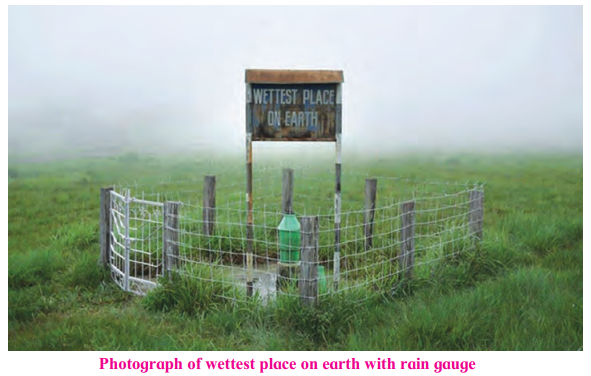
  • A rain gauge collects rain in a funnel and bottle, and the water is measured in millimeters using a jar. It’s placed 30 cm above ground in an open area to get accurate readings, checked every 3 hours in heavy rain.

7. What is the difference between dew and frost?

  • Dew forms as liquid water droplets when moist air touches cold objects, like grass, at night. Frost is when these droplets freeze below 0°C, turning into solid ice on surfaces, seen in winter.

8. Why does fog reduce visibility and affect transport?

  • Fog forms when water vapor condenses into tiny droplets near the ground, making the air thick and hard to see through. It slows down or stops roads, railways, and flights, sometimes causing accidents.

9. How does acid rain form and why is it harmful?

  • Acid rain forms when polluted gases like sulfur or nitrogen mix with water vapor, creating acids that fall as rain. It harms plants, animals, and buildings because the acids damage living things and materials.

10. Why is rainfall important for India’s economy?

  • Rainfall, especially monsoons, waters crops that farmers grow, supporting food production and income. Without good rain, droughts hurt farming and the economy, while too much causes floods.
Geography Notes Chapter 5 Precipitation Class 9 Maharashtra Board

Introduction


What is Precipitation?

  • Precipitation is when water falls from clouds to the ground in solid or liquid forms.
  • Examples: Snow, hailstones, rainfall.
  • It happens because of water vapor in the air changing due to temperature and pressure.

Water on Earth

  • 70.8% of Earth’s surface is covered with water.
  • Water is not spread evenly-some places have a lot, some have very little.
  • Water vapor in the air turns into different forms like dew, fog, snow, or rain depending on the weather.

Forms of Precipitation


Snow


How it Forms:

  • When the air temperature drops below 0°C (freezing point), water vapor turns directly into snowflakes (called sublimation).
  • This happens without becoming liquid first-gas turns straight to solid.

Where it Happens:

  • Common in high-latitude areas (like Kashmir) and high-altitude places above the snowline.
  • Tropical areas like Maharashtra don’t get snow at sea level because it’s too warm.

Features:

  • Snow is soft, flaky, and opaque (not see-through).
  • It piles up in layers and doesn’t flow like water.

Effects:

  • Heavy snow can block roads and communication.
  • People need protection from frostbite (cold injury).
  • Melting snow provides water to the region.

Snow vs. Ice:

  • Snow turns into ice when lower layers get pressed by upper layers, becoming hard and transparent.

Hail


How it Forms:

  • Hot air rises fast from the Earth’s surface, carrying water vapor upward.
  • The air cools at higher altitudes, forming dark clouds.
  • Water droplets freeze into hailstones due to cold temperatures and strong winds.
  • Hailstones grow bigger as more layers of ice form around them.

Where it Happens:

  • Seen in summers in India, Africa, and Southeast Asia.
  • Doesn’t happen in equatorial areas (too hot) or cold zones (no strong upward air).

Features:

  • Hailstones are heavy and solid, falling fast to the ground.
  • They have concentric layers (like onion rings) from repeated freezing.

Effects:

  • Can destroy crops and damage property or even hurt people.

Rainfall


How it Forms:

  • Warm air with water vapor rises, cools, and condenses into tiny water droplets.
  • These droplets join dust particles to form clouds.
  • When droplets get too heavy, they fall as rain.

Types of Rainfall:


Convectional Rainfall:

  • Happens in hot equatorial areas (e.g., Congo Basin, Amazon Basin).
  • Sun heats the ground, warm air rises, cools, and causes rain, often with thunder and lightning.
  • Common in afternoons daily in these regions.

Orographic Rainfall:

  • Moisture-laden winds from seas or lakes hit mountains and rise.
  • Air cools as it rises, condenses, and rains on the windward side (facing the wind).
  • The leeward side (opposite) gets less rain, called the rain shadow area.
  • Example: Western Ghats in Maharashtra get more rain on the west side.

Cyclonic Rainfall:

  • Occurs in low-pressure areas called cyclones.
  • Air moves to the center, rises, cools, and rains.
  • Common in temperate zones, often with stormy winds and floods.

Other Forms of Condensation (Near the Surface)


Fog

How it Forms:

  • Air near the ground cools, and water vapor turns into tiny floating droplets.
  • When these droplets get dense, fog forms, reducing visibility.

Where it Happens:

  • Seen in winter, e.g., London has thick fog till afternoon.
  • Less dense in tropical areas like India due to warmer weather.

Dew

How it Forms:

  • Moist air touches cold objects (like grass) at night, turning vapor into small water droplets.

Where it Happens:

  • Common on winter mornings in many places.

Frost

How it Forms:

  • When temperature drops below 0°C, dew droplets freeze into frost.

Where it Happens:

  • Seen in cold winter areas on surfaces like grass or roads.

How to Measure Precipitation


Rain Gauge

What it is:

  • A tool to measure rainfall, with a funnel and a bottle to collect water.

How it Works:

  • Rain falls into the funnel and collects in the bottle.
  • Water is measured in millimeters (mm) using a measuring jar.
  • In heavy rain areas, readings are taken every 3 hours.

Precautions:

  • Place it in an open area, 30 cm above ground, to avoid obstructions.

Fun Fact:

  • 1 mm rain over 1 sq.km = 10 lakh liters of water!

Measuring Snowfall

Melt the snow in the rain gauge container and measure the water.

120 mm of snow equals 10 mm of rainfall.


Special Rainfall: Acid Rain


What it is:

  • Rainfall mixed with acids (like nitric or sulfuric acid) due to air pollution.

How it Forms:

  • Polluted gases from industries mix with water vapor, forming acidic rain.

Effects:

  • Harms plants, animals, buildings, and human health.

Effects of Precipitation


Positive Effects:

  • Main source of drinking water.
  • Good rainfall at the right time boosts crop growth (important for India’s farmers).
  • Melting snow provides water in some regions.

Negative Effects:

  • Too Much Rain:
    • Floods destroy homes, crops, and lives.
  • Too Little Rain:
    • Droughts cause food shortages and economic problems.
  • Fog:
    • Reduces visibility, causing transport delays or accidents.
  • Frost:
    • Damages crops and makes roads slippery.
  • Hail:
    • Breaks crops and property.

India’s Rainfall:

  • Monsoons are key for agriculture, but rain is uneven and unpredictable.
  • Good rain helps; untimely rain harms crops.

Why Rainfall Varies


Factors Affecting Rainfall:

  • Amount of water vapor in the air.
  • Air pressure (low pressure = more rain).
  • Temperature (cooler air holds less moisture).
  • Topography (mountains cause orographic rain).
  • Latitude (tropical areas get more rain).

Examples:

  • High rain in tropical areas due to heat and moisture.
  • Less rain in eastern Europe due to distance from oceans.
  • Eastern Australia gets more rain due to coastal winds.

Activities and Experiments


Make Rain Experiment:

  • Materials: Glass container with metal lid, nail, hammer, hot water, ice cubes, salt.
  • Steps:
    • Punch small dents in the lid (no holes).
    • Fill 1/3 of the container with steamed water.
    • Close lid tightly, add ice cubes, salt, and a little water on top.
    • Wait 10-15 minutes to see “rain” droplets fall inside.
  • Explanation:
    • Steam rises, cools on the cold lid, forms droplets, and falls like rain.

Measure Rainfall:

  • Use a rain gauge at school for one week.
  • Record daily rain in mm and make a bar graph.

Geography Question Answers Chapter 5 Precipitation Class 9 Maharashtra Board

Questions Answers For All Chapters – Geography Class 9th

Exercise

Solutions


Q1. Identify the type of precipitation from the statement:


(a) A white cotton-like layer spreads on the earth’s surface. Because of this form of precipitation, the State of Jammu and Kashmir has to change its capital in winters. In Maharashtra, it does not precipitate like this.

Answer: Rainfall

This description refers to rainfall, which is the most common form of precipitation. It is the main source of water and is very important for farming, especially in India. It can be heavy (torrential) or light and steady (continuous).

(b) It seems as if water droplets are floating in the atmosphere. In London, one cannot see the Sun till the afternoon during winters because of this phenomenon.

Answer: Fog

This describes fog, which looks like floating water droplets in the air. In cities like London during winter, fog can be so thick that sunlight is not seen until later in the day.

(c) It never precipitates like this in equatorial areas. Precipitation in the solid form sometimes causes damage to the crops.

Answer: Hail

This is hail, which occurs in the form of ice balls falling from the sky. Hail does not happen in equatorial regions and can damage crops when it falls heavily.

(d) A white cotton-like layer spreads on the earth’s surface. Because of this form of precipitation, the State of Jammu and Kashmir has to change its capital in winters. In Maharashtra, it does not precipitate like this.

Answer: Snowfall

This describes snowfall, which covers the ground like a white cotton sheet. Due to heavy snowfall, Jammu and Kashmir changes its capital in winter, while places like Maharashtra do not experience snowfall.


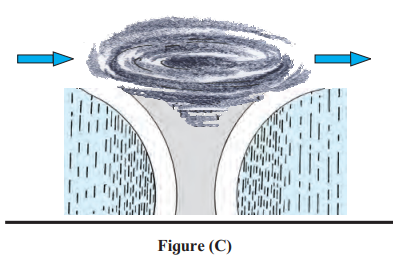
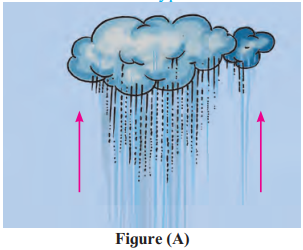
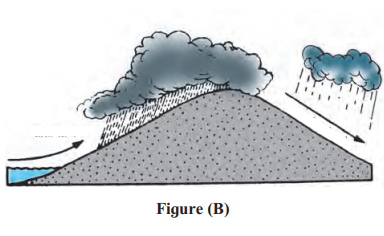
Q2. Look at the following pictures and identify the correct rainfall type:


  • This matches the description of convectional rainfall (Figure 5.4 in the document).
  • Hot air rises, cools, condenses, and forms clouds that lead to rain, typical in equatorial areas.
  • Answer: Convectional rainfall

  • This matches orographic rainfall (Figure 5.5(A) in the document).
  • Moisture-laden winds rise over mountains, cool, condense, and cause rain on one side.
  • Answer: Orographic rainfall

  • This matches cyclonic rainfall (Figure 5.6 in the document).
  • Air moves toward a low-pressure center, rises, cools, and causes rain, often with storms.
  • Answer: Cyclonic rainfall

Q3. Look at the figures above and answer the following questions:

(1) In fig B, on which side of the mountain is it raining more?

  • In Figure B (orographic rainfall), rain occurs more on the windward side.
  • Winds carrying moisture hit the mountain, rise, cool, and drop rain on the side facing the wind.
  • Answer: Windward side

(2) Shade the rain shadow region in fig B and name it.

  • The rain shadow region is on the leeward side of the mountain in Figure B.
  • After winds drop rain on the windward side, the leeward side gets less rain, forming the rain shadow.
  • Answer: Leeward side (rain shadow region)

(3) What is the difference between A and C?

  • Figure A shows convectional rainfall, caused by heated air rising and cooling in equatorial areas.
  • Figure C shows cyclonic rainfall, caused by low-pressure systems where air converges and rises.
  • Convectional is heat-driven and local, while cyclonic involves larger weather systems and storms.
  • Answer: Convectional (A) is heat-induced; Cyclonic (C) is pressure-induced with storms.

(4) Stormy winds and floods are associated with which rainfall type?

  • Cyclonic rainfall (Figure C) involves stormy winds and heavy rain that can cause floods.
  • The document mentions cyclones bringing rain with strong winds over affected areas.
  • Answer: Cyclonic rainfall

(5) What type of rainfall occurs in Singapore?

  • Singapore is near the equator, where convectional rainfall occurs daily in the afternoons.
  • The document explains this type for equatorial areas like the Congo and Amazon basins.
  • Answer: Convectional rainfall

Q4. Identify the odd man out:


(1) Orographic rainfall, acid rain, cyclonic rainfall, convectional rainfall

  • Orographic, cyclonic, and convectional are natural rainfall types caused by atmospheric processes.
  • Acid rain is not a natural type but a result of pollution (chemical reaction with gases).
  • Answer: Acid rain

(2) Snowfall, rainfall, hailstones, dew

  • Snowfall, rainfall, and hailstones are precipitation forms falling from clouds to the ground.
  • Dew is condensation near the surface, not falling precipitation.
  • Answer: Dew

(3) Thermometer, rain gauge, anemometer, measuring jar

  • Thermometer measures temperature, anemometer measures wind speed, and rain gauge measures rainfall.
  • Measuring jar is a tool used with the rain gauge, not an independent instrument.
  • Answer: Measuring jar

Q5. Answer in brief:


(1) In what ways does precipitation occur on the earth?

Precipitation is the process by which water falls from the atmosphere to the earth. It occurs in different forms such as rain, snow, hail, sleet, and drizzle. These forms depend on the temperature and moisture in the atmosphere.

(2) Comment on the rainfall occurring in the rain shadow area.

The rain shadow area receives very little rainfall. This happens because the mountains block the moist winds and force them to rise. By the time the winds cross the mountain, they have lost most of their moisture, so the other side remains dry.

(3) Which type of rainfall occurs in most of the world? Why?

Convectional rainfall is the most common type of rainfall in the world, especially in tropical areas. It happens when the land gets very hot during the day, causing warm air to rise and cool down, leading to rainfall. This kind of rain often occurs in the afternoon.

(4) If condensation occurs closer to the earth’s surface, what types of forms become visible?

When condensation happens close to the earth’s surface, forms like dew, fog, and frost become visible. These are tiny water droplets or ice crystals that appear early in the morning. They form when the air near the ground cools down and water vapor turns into liquid or solid.

(5) What precautions should be taken while measuring rainfall?

To measure rainfall correctly, a standard rain gauge should be used and placed in an open area. It must not be near buildings or trees which can block the rain. The reading should be taken daily at the same time to ensure accuracy.


Q6. Distinguish between:


(1) Dew and Frost

DewFrost
Formed when water vapour condenses into water droplets.Formed when water vapour freezes into ice crystals.
Occurs when temperature is above 0°C.Occurs when temperature is below 0°C.
Appears as drops on surfaces like grass.Appears as white icy coating.

(2) Snow and Hail

SnowHail
Formed when water vapour freezes directly into ice crystals in clouds.Formed when raindrops freeze while moving up and down in thunder clouds.
Falls gently as soft flakes.Falls as hard, round pellets.
Common in cold regions.Occurs during storms.

MCQ Geography Chapter 12 Tourism Class 9 Maharashtra Board

1. What special feature do vistadome coaches have?

Question 1 of 20

2. What natural feature attracts tourists to India according to the document?

Question 2 of 20

3. What precaution should tourists take at seaside locations?

Question 3 of 20

4. How does tourism contribute to the economy directly?

Question 4 of 20

5. What is an indirect economic benefit of tourism?

Question 5 of 20

6. How does ecotourism benefit the environment?

Question 6 of 20

7. What health tourism activity is mentioned in the document?

Question 7 of 20

8. Why do foreign patients come to India for medical tourism?

Question 8 of 20

9. What social program is linked to tourism in the document?

Question 9 of 20

10. What type of tourism is Hemant Kumar’s trip to Mexico for Mayan architecture?

Question 10 of 20

11. What type of tourism is the Char Dham Yatra by Pundalikrao?

Question 11 of 20

12. What type of tourism is Rameshwari’s Hurda party and agricultural learning?

Question 12 of 20

13. What matches Tadoba in the correlation table?

Question 13 of 20

14. What matches Taj Mahal in the correlation table?

Question 14 of 20

15. What is an objective of tourism according to the questions?

Question 15 of 20

16. What opportunity develops with tourism according to the questions?

Question 16 of 20

17. What should a notice board for tourists include?

Question 17 of 20

18. What does "Atithi Devo Bhava" relate to in tourism?

Question 18 of 20

19. What is a problem at tourist places that needs measures?

Question 19 of 20

20. What is an example of a model village mentioned for social tourism?

Question 20 of 20

Loading... Loading...


MCQ Geography Chapter 12 Tourism Class 9 Maharashtra Board

Please go to MCQ Geography Chapter 12 Tourism Class 9 Maharashtra Board to view this quiz

MCQ Geography Chapter 11 Transport and Communication Class 9 Maharashtra Board

Please go to MCQ Geography Chapter 11 Transport and Communication Class 9 Maharashtra Board to view this quiz

MCQ Geography Chapter 11 Transport and Communication Class 9 Maharashtra Board

Please go to MCQ Geography Chapter 11 Transport and Communication Class 9 Maharashtra Board to view this quiz

MCQ Geography Chapter 10 Urbanisation Class 9 Maharashtra Board

Please go to MCQ Geography Chapter 10 Urbanisation Class 9 Maharashtra Board to view this quiz

MCQ Geography Chapter 10 Urbanisation Class 9 Maharashtra Board

Please go to MCQ Geography Chapter 10 Urbanisation Class 9 Maharashtra Board to view this quiz

MCQ Geography Chapter 9 Trade Class 9 Maharashtra Board

Please go to MCQ Geography Chapter 9 Trade Class 9 Maharashtra Board to view this quiz

Ads

HSC आणि SSC महाराष्ट्र – मराठी माध्यम – महाराष्ट्र बोर्ड

📘 महाराष्ट्र बोर्ड परीक्षा साहित्य (मराठी माध्यम)

  • HSC आणि SSC प्रश्नसंच – मराठी माध्यमातील PDF
  • महाराष्ट्र बोर्ड नमुना प्रश्नपत्रिका व मॉडेल पेपर्स (मराठी माध्यमात)
  • SSC आणि HSC च्या मागील वर्षांच्या प्रश्नपत्रिका – मराठी माध्यम
  • SSC/HSC साठी मराठी माध्यमातील नोट्स आणि सराव चाचण्या (मॉक टेस्ट)
  • मराठी माध्यमातील MCQs (बहुपर्यायी प्रश्न) समाविष्ट
  • सर्व परीक्षा साहित्य मराठी माध्यमात उपलब्ध

📗 महाराष्ट्र बोर्ड पाठ्यपुस्तके व PDF (मराठी माध्यम)

  • इयत्ता 10 वी (SSC) चे पाठ्यपुस्तक PDF – मराठी माध्यमात
  • इयत्ता 12 वी (HSC) चे पाठ्यपुस्तक PDF – मराठी माध्यमात
  • मराठी डायजेस्ट – PDF डाउनलोड
  • SSC आणि HSC इयत्तांची पुस्तके – मराठी माध्यमातील PDF
  • डाउनलोडसाठी उपलब्ध पाठ्यपुस्तके व PDF – महाराष्ट्र बोर्ड

📒 महाराष्ट्र बोर्डासाठी मराठी अभ्यास साहित्य

  • प्रकरणनिहाय नोट्स – मराठी माध्यमात
  • प्रकरणनिहाय प्रश्नोत्तरे (प्रश्न व उत्तरे) – मराठी माध्यमात
  • SSC आणि HSC साठी महत्त्वाचे प्रश्न – मराठी माध्यम
  • महत्त्वाच्या सूत्रांचा सारांश (इयत्ता 6 वी ते 12 वी)
  • MCQs, प्रश्नसंच, नमुना प्रश्नपत्रिका आणि मागील वर्षांच्या प्रश्नपत्रिका

CBSE Board Englsih and हिंदी माध्यम

CBSE Board

Mathematics Class 6
Science Class 6
Social Science Class 6
हिन्दी Class 6
सामाजिक विज्ञान कक्षा 6
विज्ञान कक्षा 6

Mathematics Class 7
Science Class 7
SST Class 7
सामाजिक विज्ञान कक्षा 7
हिन्दी Class 7

Mathematics Class 8
Science Class 8
Social Science Class 8
हिन्दी Class 8

Mathematics Class 9
Science Class 9
English Class 9

Mathematics Class 10
SST Class 10
English Class 10

Mathematics Class XI
Chemistry Class XI
Accountancy Class 11

Accountancy Class 12
Mathematics Class 12

Learn English
English Through हिन्दी
Job Interview Skills
English Grammar
हिंदी व्याकरण - Vyakaran
Microsoft Word
Adobe PhotoShop
Adobe Illustrator
Learn German
Learn French
IIT JEE
Privacy Policies, Terms and Conditions, About Us, Contact Us
Copyright © 2026 eVidyarthi and its licensors. All Rights Reserved.