1. Meaning of Culture
Culture refers to the shared way of life of a group of people. It is passed down from one generation to another and influences how people think, interact, and live.
Culture includes:
- Values, morals, customs, and traditions.
- Art, music, dance, and literature.
- Philosophy, science, and knowledge systems.
- Languages, food, clothing, and architecture.
Indian culture and its continuity
Indian culture is one of the most ancient cultures in the world. It developed over thousands of years and includes rich traditions of languages, literature, art, food, architecture, knowledge, and values.
Indian culture remained strong despite invasions and political instability because of its deep roots, timeless values, scientific outlook, and rich philosophical and artistic traditions.
India welcomed people from Greece, Persia, Central Asia, East Asia, and other regions. Merchants, scholars, diplomats, and other visitors brought their customs, food, clothing, languages, religions, art, and literature. These influences interacted with Indian traditions, enriching both Indian society and its culture.
2. Cultural Developments from the 13th to the 17th Centuries
From the 13th century onwards, India came under the influence of rulers who brought different political ideas, administrative systems, architectural styles, religious beliefs, and worldviews.
Despite political disturbances, Indian culture continued to develop.
The three important patterns of this period were:
- Continuity of traditions: Traditional practices continued in Indian communities.
- Patronage by rulers: Rulers from different backgrounds supported art, languages, literature, and philosophy.
- Participation of people: People from different sections of society actively participated in cultural activities.
Persian and Arabic influences also became visible in several aspects of Indian culture, often resulting in new artistic and cultural forms.
3. Belief Systems: Bhakti and Sufism
During this period, India experienced religious differences and conflicts. Some invasions led to the destruction and plundering of sacred sites and temples. However, Indian belief systems continued to survive, and different religions continued to be practised.
Two important spiritual traditions that encouraged devotion and brought people together were Bhakti and Sufism.
A. The Bhakti Tradition
Bhakti means devotion to God. The bhakti marga, or path of devotion, was one of the paths towards moksha, meaning the realisation of Truth or release from the cycle of birth and death.
The Bhakti tradition had become established by the 6th century. During the 13th–17th centuries, it gained renewed popularity and helped maintain cultural continuity.
Main features of the Bhakti tradition:
- It emphasised love and devotion to God.
- It did not require rituals or priests.
- Saints composed devotional verses and songs in local languages.
- Its messages included love, compassion, equality, and the oneness of God.
- Bhajans were sung with musical instruments and accompanied by dance.
- People from different sections of society participated in devotional gatherings.
- It helped connect communities and maintain cultural unity during political and religious upheavals.
B. Important Bhakti Saints
Kabirdas (Kabir)
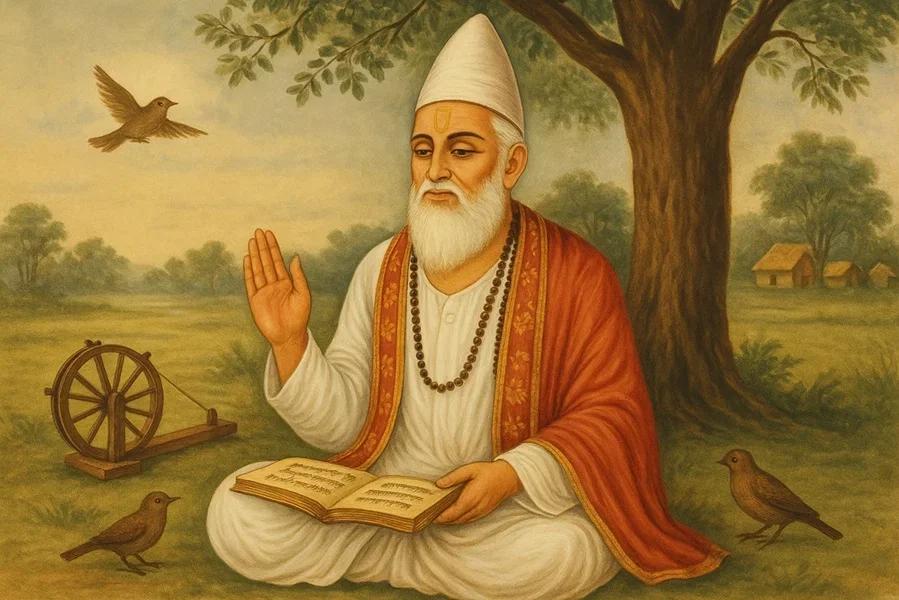
- Lived in the 15th century in the region of present-day Uttar Pradesh.
- Was popularly associated with a weaver couple who raised him.
- His compositions spoke of one God.
- He criticised rituals in both Hinduism and Islam.
- His teachings appealed to many people and became popular.
Ravidas
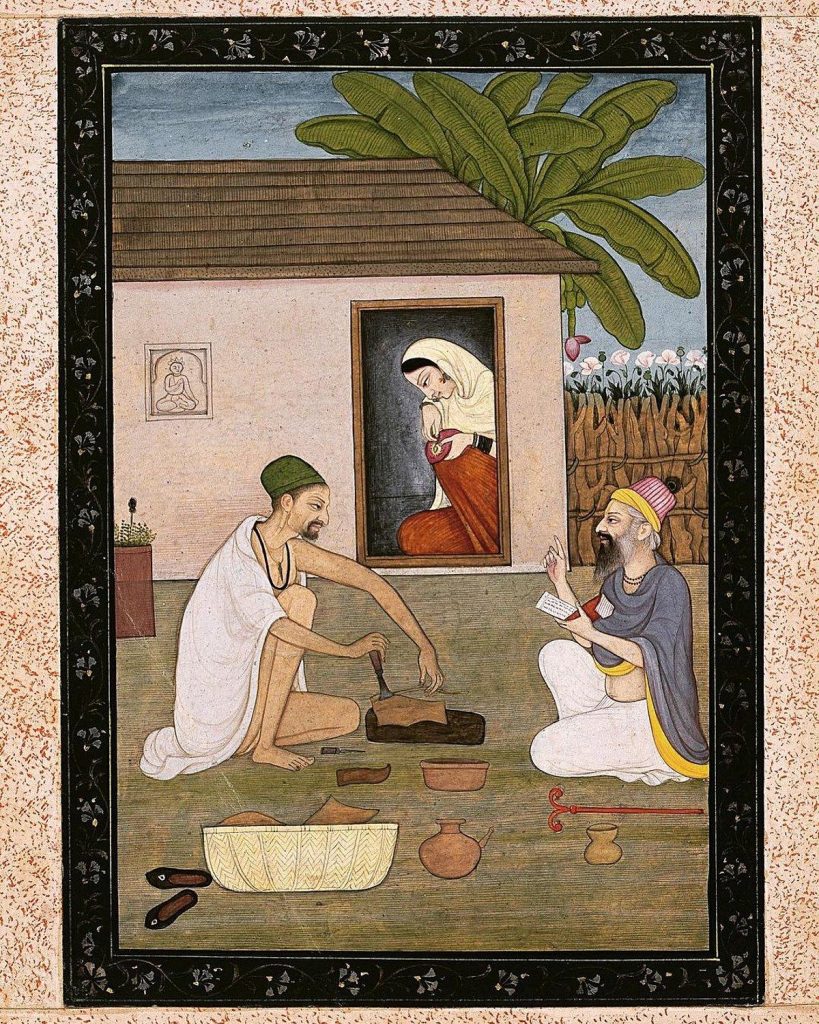
- Lived in the early 16th century.
- Was born into a family of leather-workers.
- Composed poetry promoting equality and the oneness of all people.
- Opposed rigid social divisions based on varna and jati.
Guru Nanak
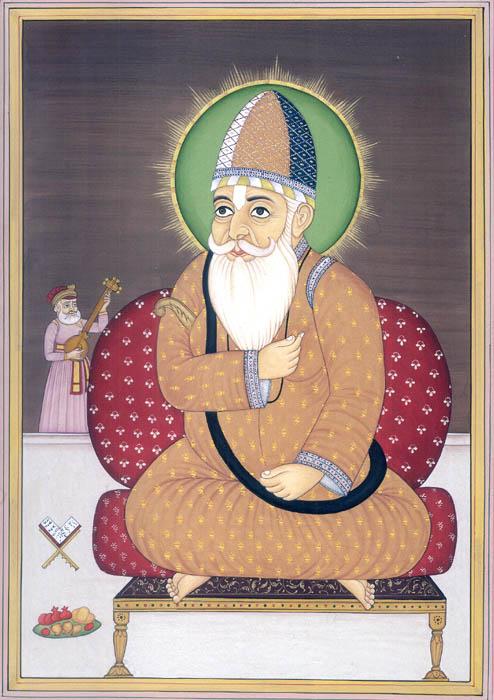
- Travelled across different regions.
- Spread the message of one God and the equality of all people.
- His teachings, along with hymns of several Hindu saints, are preserved in the Guru Granth Sahib, the sacred text of the Sikhs.
Mirabai
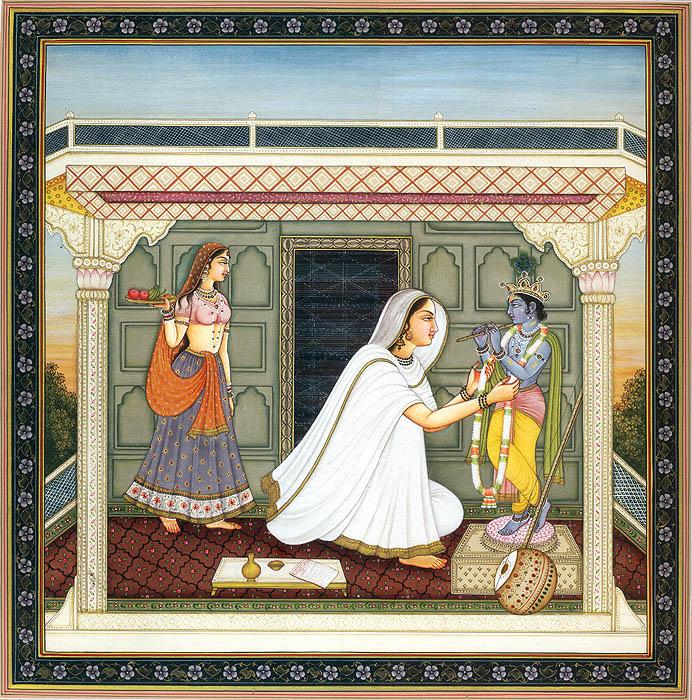
- Was an important Bhakti saint associated with Rajasthan.
- Continued the tradition of expressing devotion through devotional songs and poetry.
Chaitanya Mahaprabhu
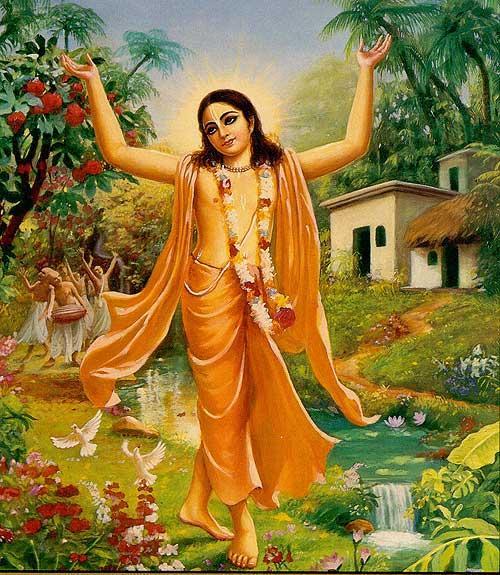
- Was an important Bhakti saint associated with eastern India.
- His devotion and teachings influenced Bengali literature and devotional music.
Other important Bhakti saints mentioned in the chapter include Tukaram, Dnyaneshwar, Namdev, Purandaradasa, and Kanakadasa.
C. Sufism
Sufism is a path within Islam that emphasises devotion and an inner, personal search for God.
Main features of Sufism:
- Sufis emphasised love of God and spiritual devotion.
- They used devotional music to bring people closer to the divine.
- Their devotional songs, called qawwalis, combined local classical musical styles with their own traditions.
- Their songs expressed love, faith, and unity.
- Some Sufis adopted yogic and Vedantic practices such as inner silence, asceticism, and meditation.
- Bhakti and Sufi traditions often overlapped, bringing different religious ideas into conversation.
Important Sufi saints and personalities:
- Khwaja Moinuddin Chishti: Encouraged music as a means of connecting with God.
- Nizamuddin Auliya: Also encouraged devotional music.
- Amir Khusro: An Indo-Persian Sufi poet and singer credited with developing qawwali by combining Indian, Persian, and Arabic singing traditions.
- Dara Shikoh: Promoted the unity of spiritual traditions and saw connections between Vedanta and Sufism.
Dara Shikoh also supported the translation of Upanishads into Persian, helping ideas move between different intellectual and religious traditions.
D. Bhakti and Sufism: Their Shared Influence
Bhakti and Sufi traditions both gave importance to devotion, spiritual experience, and the relationship between people and God.
Their interaction:
- Encouraged themes of unity and devotion in poetry.
- Helped connect people from different backgrounds.
- Enriched Indian music and literature.
- Supported cultural continuity while allowing new ideas to develop.
The devotional hymns of the Alvars and Nayanars also continued to be recited in homes and temples in Tamil Nadu. The Divya Prabandham of the Alvars praised Vishnu, while the Tiruvachakam of the Nayanars praised Shiva.
4. Musical Traditions — Continuity and Evolution
Music and dance-drama had been important parts of Indian culture since ancient times. Different regions developed their own forms, even when the themes of their compositions were similar.
A. Music, Dance, and Storytelling
- The Natyashastra brought together dance, drama, music, science, mathematics, aesthetics, and mythology.
- Traditional stories were performed through songs, dance, drama, and puppetry.
- Puppetry was practised in Rajasthan.
- Pattachitra painting traditions were found in Odisha, West Bengal, and Andhra Pradesh.
- Pattachitra paintings commonly depicted stories from the Ramayana, Mahabharata, and Puranas.
- Travelling performers narrated stories during village gatherings, often accompanied by songs.
- Music and dance were performed in temples, social gatherings, and village fairs.
B. Two Streams of Indian Classical Music
Indian classical music developed in two related streams.
Hindustani Music
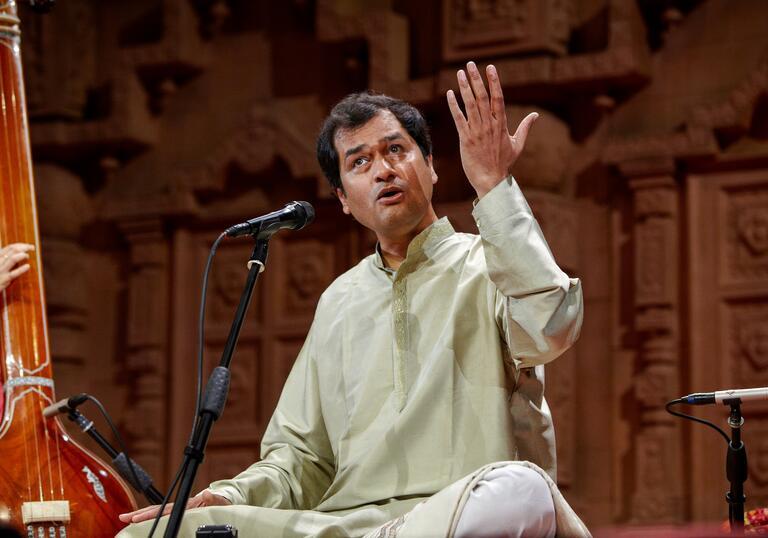
- Developed in northern India.
- Dhrupad, an ancient musical genre, reached new heights under Raja Mansingh Tomar of Gwalior in the late 15th century.
- Tansen, also known as Ramtanu Pandey, became one of the nine ratnas in Akbar’s court.
- Tansen was reportedly influenced by a Sufi saint while continuing to compose music in praise of Krishna and Shiva.
Carnatic Music
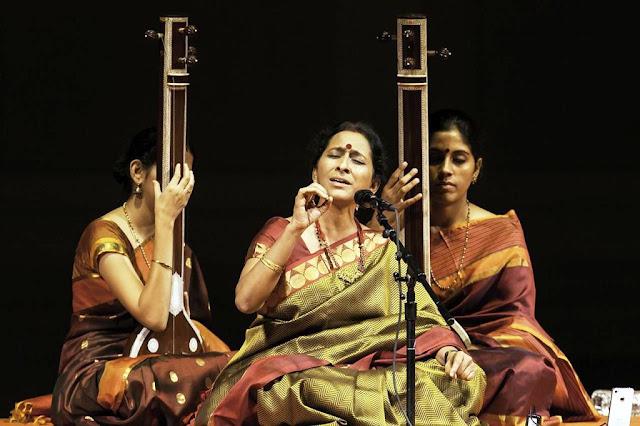
- Developed in southern India.
- Continued to develop largely independently of Persian and Arabic influences.
- Purandaradasa was an important contributor to this tradition and is described in the chapter as the father of Carnatic music.
C. Important Musicians
Purandaradasa
- Lived during the 15th–16th centuries.
- Gave up his diamond business and became a devotee of Krishna.
- Is said to have composed as many as 4,75,000 kirtanas, or musical compositions.
- His fame reached Krishnadevaraya’s court in the Vijayanagara Empire.
Amir Khusro
- Was an Indo-Persian Sufi poet and singer.
- Lived from the mid-13th century to the early 14th century.
- Is credited with developing qawwali by combining Indian, Persian, and Arabic singing traditions.
D. Musical Instruments
The modern forms of instruments such as the sitar and tabla evolved during these centuries through experimentation by musicians and instrument makers from different backgrounds.
Their musical traditions also drew upon older Indian instruments. For example, the tabla’s musical repertoire was connected with the ancient pakhawaj.
5. From Walls to Paper — Miniature Paintings
Painting had been an important way of expressing human experiences since ancient times. Cave paintings, Ajanta murals, frescoes, and wall paintings formed part of India’s artistic heritage.
After paper reached India in the 10th or 11th century, artists increasingly transferred paintings from walls to paper. Miniature painting developed into an important art form.
A. Rajput Paintings
The Rajput painting tradition flourished from the 15th century to the late 19th century.
Main features:
- Depicted traditional Hindu themes.
- Illustrated stories from religious texts such as the Bhagavata Purana and Ramayana.
- Showed lotus flowers, banyan trees, elephants, cows, and peacocks.
- Included women with large eyes and people with different skin colours.
- Preserved traditional religious and cultural themes.
Abul Fazl praised the skill of Hindu painters in his account, the Ain-i-Akbari.
B. Mughal Miniature Paintings
Mughal miniature painting developed as a distinct style shaped by Persian influences.
Main features:
- Depicted landscapes, court scenes, portraits, and other secular subjects.
- Developed with support from Mughal rulers.
- Reached great heights under Akbar.
- Was produced in royal workshops called ateliers.
- Often involved teamwork, with different artists drawing outlines, filling colours, and adding finishing touches.
- Appeared in manuscripts, including Persian translations of the Mahabharata.
C. Interaction Between Rajput and Mughal Painting
The two traditions influenced each other through exchanges of artistic styles, techniques, and colours.
- Rajput paintings sometimes incorporated gardens, plants, animals, court scenes, and hunting scenes.
- Some Mughal court painters moved to Bikaner, contributing to a blending of styles.
- Rajput paintings continued to preserve traditional Hindu themes.
- Persian translations of Indian texts helped introduce Indian stories into illustrated manuscripts.
Thus, artistic exchange encouraged innovation without ending older traditions.
6. Changing Landscapes — Gardens
Gardens had been an important part of Indian urban landscapes for thousands of years. Words such as udyana, vatika, and nandana appear in ancient Indian texts, including the Rigveda, Mahabharata, and Ramayana.
Traditional gardens were often built around temples and included ponds or tanks.
Mughal Gardens
With the arrival of the Mughals, garden design acquired new features influenced by the Persian charbagh style.
Main features of charbagh gardens:
- Gardens divided into four parts.
- Water channels and fountains.
- Terraces and carefully arranged spaces.
- A design representing the rivers of Paradise mentioned in the Quran.
- Gardens developed around forts, tombs, and mosques.
The Mughal Gardens at Rashtrapati Bhavan and Nishat Bagh in Srinagar are examples mentioned in the chapter.
Influence on Regional Gardens
Some 17th-century gardens adopted elements of Mughal design. The gardens at Amer Fort, Jaipur, followed geometric patterns and used water channels for both irrigation and beauty.
Important point: Garden development reflected the interaction of Persian designs with local traditions, available materials, the skills of craftsmen, and the preferences of rulers.
7. Women in Society — Changes in Roles and Status
Women’s roles and status varied across regions and social groups during this period.
The chapter describes how invasions and military campaigns from the 12th century onwards affected women’s lives. Women and children were sometimes imprisoned and sold as slaves. In response to such dangers, protective practices became more widespread in certain regions.
A. Purdah and Ghungat
- Purdah is a Persian word meaning curtain or veil.
- In parts of northern India, the ghungat became part of women’s attire.
- The veil was used to avoid public attention and sometimes covered the head rather than the entire face.
- Some scholars suggest that veiling was also regarded as a symbol of nobility.
- The practice was largely confined to northern India, with much less evidence of it elsewhere.
Women in royal Muslim households generally lived in seclusion and followed purdah, although some participated in political, educational, and public activities.
B. Razia Sultan
Razia Sultan was the first and only female ruler of the Delhi Sultanate during the first half of the 13th century.
Her achievements and activities:
- Personally led military campaigns.
- Used political methods against conspirators.
- Established educational institutions across Delhi.
- Prioritised merit-based administration.
- Appeared unveiled at court and addressed the public directly.
She faced strong opposition from nobles who objected to a woman ruler. A conspiracy eventually ended her brief reign.
C. Nur Jahan
Nur Jahan was one of the most influential women of the Mughal Empire in the early 17th century.
- She was married to Emperor Jahangir.
- Participated actively in governance.
- Issued royal orders and attended court meetings.
- Coins were minted in her name.
- Supported art, architecture, and trade.
- Was known for her intelligence, leadership, and sense of style.
D. Women in Southern India
The chapter explains that many older social norms continued in southern India. However, elite women continued to participate in administration and public life.
Women:
- Exercised political influence and issued grants.
- Participated in decisions affecting kingdoms.
- Worked as writers, accountants, musicians, singers, and performers in royal establishments.
- Made donations to temples.
- Supported the construction of community halls and wells.
- Helped provide resources for public use.
Some women associated with royal families were educated, skilled in the arts, and poets. Inscriptions record donations of villages and portions of agricultural produce to temples.
Conclusion: Women contributed to administration, education, cultural life, religious institutions, and economic prosperity, although their opportunities and social status differed by region and social position.
8. Education and Knowledge Traditions
Political invasions and military campaigns disrupted education during this period. Nevertheless, the traditions of learning continued through the support of kings, saints, poets, scholars, temples, and local communities.
A. Institutions of Learning
Education took place in several types of institutions:
- Gurukulas: Places where students studied under teachers.
- Mathas: Religious and learning centres.
- Temple schools: Institutions associated with temples.
- Buddhist viharas: Centres of Buddhist learning.
- Jain pallis: Centres of Jain learning.
- Pathshalas: Village schools.
- Madrasas: Institutions that taught Arabic, Persian, Hindavi, and Islamic studies under Muslim rule.
Students studied subjects such as Sanskrit and Prakrit grammar, astronomy, law, medicine, and sacred texts.
B. Important Centres of Learning
- Kanchipuram and Sringeri: Renowned centres in southern India for advanced learning in philosophy and mathematics.
- Kerala School of Mathematics: Known for important contributions to mathematics, including early work related to infinite series and calculus.
- Vikramaśila and Nalanda: Major universities whose destruction during invasions in the late 12th century caused significant cultural loss and the dispersal of scholars.
An Italian traveller, Pietro Della Valle, mentioned schools in the coastal regions of Karnataka in 1623, where children learned reading, writing, and arithmetic.
C. Education at Vijayanagara
The rulers of Vijayanagara followed purvamaryade, a Kannada term referring to established practices of dharma and social norms.
Their support for institutions such as temples and mathas helped education continue.
D. Vocational Education and Knowledge Sharing
Practical skills were taught through hands-on training, often beginning at a young age.
- Knowledge was transferred through apprenticeships within families or under masters in guilds.
- The jati and shreni systems for arts, crafts, and trade continued.
- Traditional skills were preserved through established rules, practices, and training systems.
E. Textile Weaving
India had a long tradition of weaving, with different regions developing their own textile specialities. Ancient weaving communities were broadly associated with the name Koshtis.
Banarasi silk saris:
- Weavers from Gujarat moved to Banaras with Akbar’s encouragement.
- They brought specialised weaving skills.
- Zari or zardozi work and brocade became important features of Banarasi silk saris.
- Designs included floral, animal, and geometric patterns.
- Knowledge continued to pass from one generation to another through traditional training.
The chapter also notes that Banarasi saris have a Geographical Indication (GI) tag and that efforts were being made to replace chemical dyes with vegetable dyes because of pollution concerns.
F. Pashmina Shawls
Pashmina shawls are known for their softness and warmth.
- They are woven from cashmere wool obtained from goats in Ladakh and Kashmir.
- Mughal emperors supported their production.
- They became symbols of nobility.
- They were exported to other Asian countries and were popular among fashionable Europeans.
- Their embroidery showed Persian influence, particularly through floral designs and the buteh or buta motif.
9. Growth of Literature and Language
The period from the 13th to the 17th centuries witnessed the growth of literature in several Indian languages. Sanskrit, Tamil, Telugu, Kannada, Odia, Hindavi, Bengali, and Marathi flourished in everyday communication and poetry.
A. Growth of Regional Literature
- Bhakti literature spread religious and spiritual ideas through accessible poetry and songs.
- Chaitanya Mahaprabhu influenced 16th-century Bengali literature.
- Bengali biographies and a folk-song style called Dhamali developed around Krishna and episodes from his life.
- These themes also became part of Kathak performances.
- Kavindra Paramesvara translated the Mahabharata into Bengali in the early 16th century.
- Persian poetry was also translated into Bengali.
- The Gajapati kings of Odisha supported literary and spiritual thought.
- Krishnadevaraya patronised poets in southern India.
- Kings and queens in Vijayanagara also contributed to literary activities.
Tirumalamba was a celebrated poet at the court of Achyutadevaraya. She wrote Varadambika Parinaya, a Sanskrit poem about the wedding of Achyutadevaraya and Princess Varadambika.
B. Persian Language and Literature
Persian became the language of Mughal administration and courtly culture.
It was used to produce histories, poetry, and other writings. Persian scholars, poets, and astronomers became part of the Mughal court and nobility.
The interaction between Persian and Indian intellectual traditions led to translations in both directions.
Important examples include:
- Bhaskara’s Lilavati was translated into Persian three times. The first translation was made by Abu al-Faiz ibn Mubarak, popularly known as Faizi.
- Kalhana’s Rajatarangini was also translated into Persian.
- Sanskrit texts were translated into Persian, helping preserve and communicate knowledge.
C. Dara Shikoh and Cultural Exchange
Dara Shikoh was the elder brother of Aurangzeb and an advocate of Hindu-Muslim harmony in the 17th century.
- He interacted with yogis, pandits, and Muslim scholars.
- With the help of scholars in Varanasi, he translated 52 Upanishads from Sanskrit into Persian.
- His translations later reached Europe and influenced philosophers and thinkers in the 19th century.
- He was eventually captured and executed after Aurangzeb accused him of heresy.
His work illustrates how translation helped ideas travel across languages and cultures.
D. Development of Urdu
Urdu developed in the Ganga-Yamuna plains from Hindi/Hindavi spoken in the region, incorporating words from Arabic and Persian.
- Urdu developed through the mixing of different linguistic traditions.
- Amir Khusro, who wrote mainly in Hindavi, is known in the chapter as the father of Urdu literature.
- He also had knowledge of Sanskrit and wrote in Punjabi and Braj Bhasha.
- In the Deccan, Urdu developed into Dakhini, incorporating words from local languages such as Telugu and Marathi.
- The mixing of languages enriched poetry, literature, and popular culture.
10. Developments in Science and Technology
Scientific enquiry, experimentation, and learning remained important parts of Indian society during this period. Regional courts and temple institutions often supported scientific and technological work.
A. Mathematics and Astronomy
Narayana Pandita
- Authored Ganitakaumudi in the 14th century.
- The work was a major mathematical treatise containing important original developments.
Madhava
- Made pioneering contributions to the study of calculus.
- Developed series expansions for trigonometric functions.
- Established an infinite-series expression for the value of pi (\(\pi\)).
- His work became part of the achievements associated with the Kerala School of Astronomy and Mathematics.
Nilakantha Somayaji
- Was an important scholar of the Kerala School.
- In 1500, he developed a planetary model in which Mercury and Venus revolved around the Sun in orbits that did not enclose the Earth.
- His model was formulated several decades before Copernicus’s heliocentric model of 1543.
B. Chemistry and Technology
- The production of pure zinc reached a high point, using a special distillation process described in the chapter as a world first.
- Applied chemistry was used to develop refrigeration techniques and new perfumes.
- Indian saltpetre was used during Akbar’s time to make gunpowder and cool water and beverages.
- Itr Jahangir, a rose-based perfume, was developed.
C. Medical Systems
Three important systems of medicine were widely practised:
| Medical system | Main details |
|---|---|
| Ayurveda | Widely practised in India. |
| Unani | Introduced from West Asia and often followed in northern India. |
| Siddha | Preferred in Tamil Nadu and shared theoretical foundations with Ayurveda. |
Knowledge of healing methods involving plants and minerals was passed down orally and recorded in texts, including palm-leaf manuscripts.
These developments show that science and technology continued to form an important part of Indian society despite political disruptions.
11. Regional Architectural Developments
Between the 13th and 17th centuries, Indian art and architecture achieved remarkable development. Traditional forms were combined with innovations and influences from different regions.
Kings, queens, and nobles supported the construction of temples, forts, palaces, and other buildings.
A. Important Architectural Examples
Sun Temple at Konark, Odisha
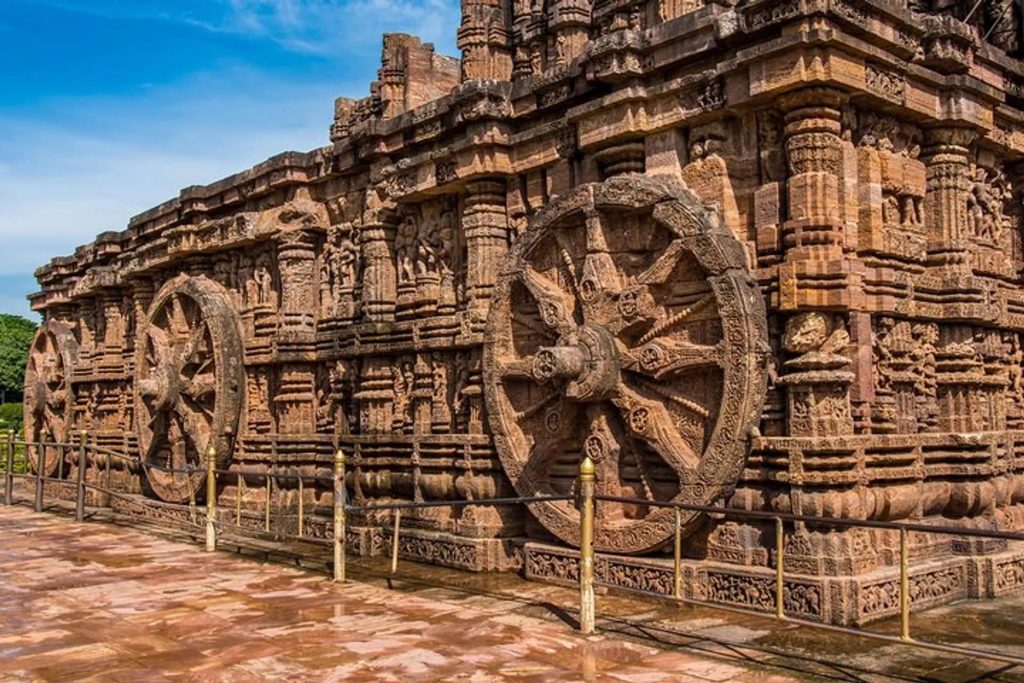
- Constructed in the 13th century.
- Built under the Eastern Ganga dynasty.
- Known for its intricately carved stone wheels.
Ranakpur Temple, Rajasthan
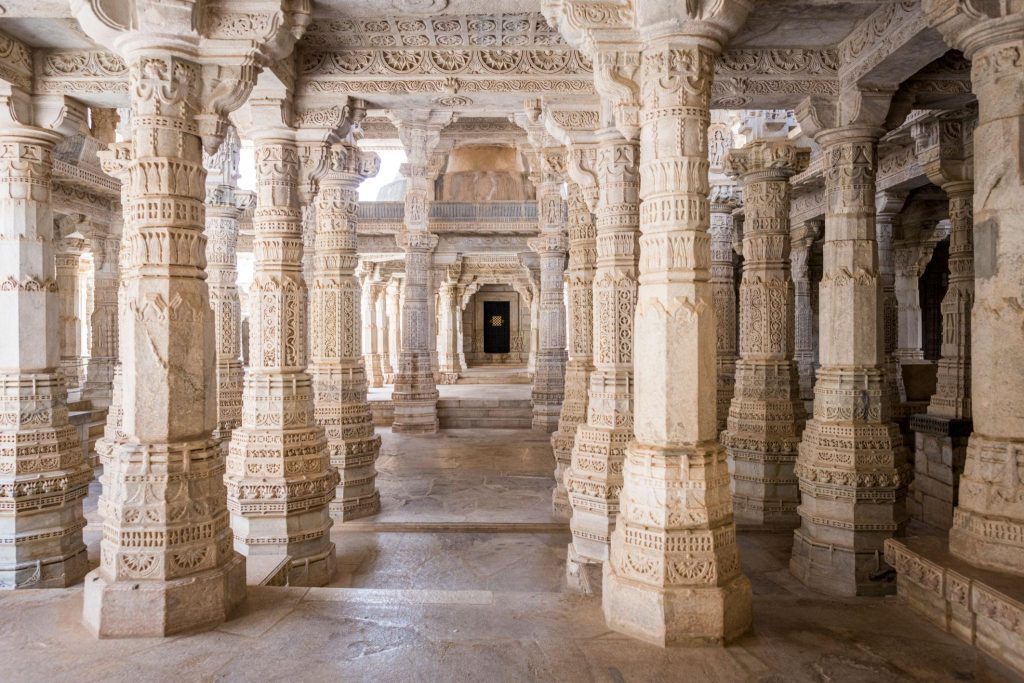
- Built in the 15th century.
- Dedicated to Tirthankara Rishabhanatha.
- Associated with the Jain businessman Dhanna Seth.
Sheesh Mahal, Amer Fort
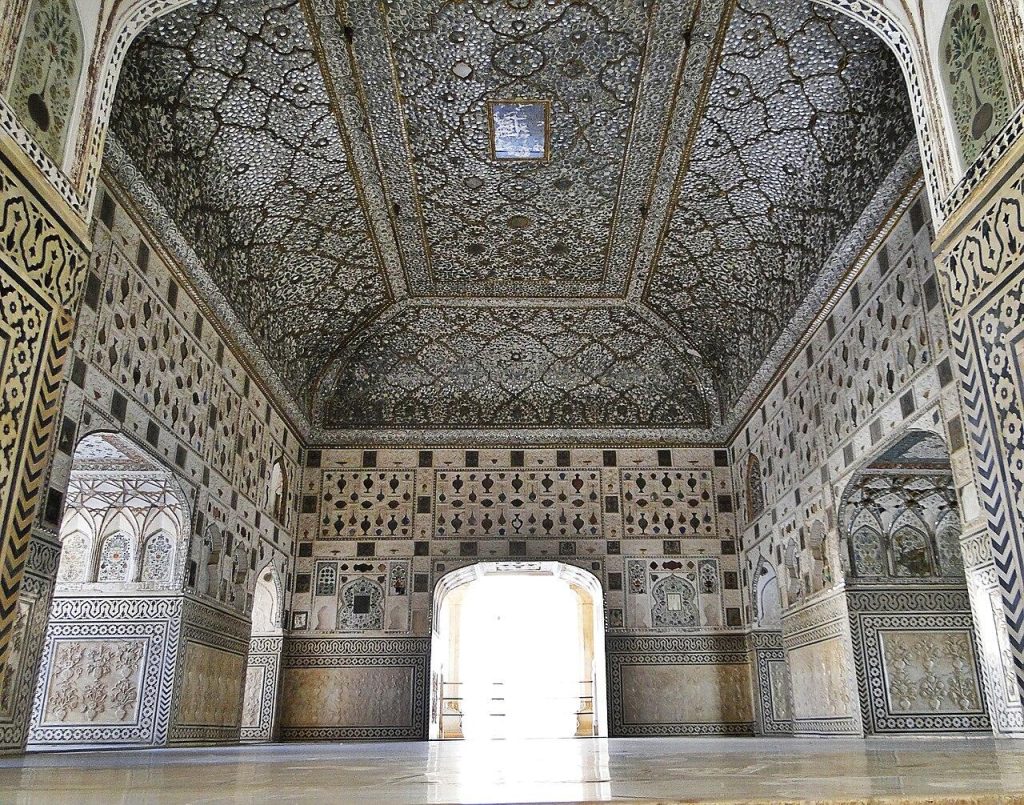
- Known as the Palace of Mirrors.
- Its walls and ceilings contain tiny convex mirrors.
- The mirrors sparkle even in the light of a single lamp.
B. Temple Building Under Vijayanagara
Under Krishnadevaraya, the Vijayanagara Empire experienced a golden age of art, architecture, and cultural revival.
- Hampi became an important centre of urban planning and temple construction.
- Grand temples demonstrated engineering skill and artistic craftsmanship.
- Temple construction reflected religious devotion, prosperity, and cultural vitality.
- Sacred buildings were constructed and expanded even during periods of political conflict.
C. Temple Reconstruction
The chapter describes the restoration of temples that had been destroyed during conflicts.
The Sri Ranganathaswamy Temple at Srirangam is an example. After suffering destruction in the early 14th century, the temple complex was rebuilt by the end of that century, and additional temples were constructed later.
Key idea: The rebuilding of temples and restoration of sacred images demonstrated the continuity of cultural and religious traditions during turbulent times.
12. Cultural Exchange in Daily Life
Cultural interaction was not limited to religion, art, architecture, and literature. It also influenced food, clothing, and everyday habits.
A. Food
Different culinary traditions influenced one another, particularly in royal kitchens.
Important developments:
- Spices such as cardamom, clove, turmeric, coriander, and black pepper became part of imperial kitchens and those of ordinary people.
- Curd was used for marination, and ghee became popular.
- Khichri, made from rice and lentils, acquired new flavours.
- Akbar is said to have tried to reduce meat consumption, partly under the influence of Jain and Hindu traditions.
Food items showing cultural exchange:
Samosa
The Indian samosa developed from the Persian dish sambuseh. The chapter explains that the original stuffing of meat, pistachios, almonds, and walnuts was replaced by fillings such as potatoes and peas.
Jalebi
Jalebi is described as the Indian version of the Persian zalabiyeh. Persian zalabiyeh used honey and rose-water syrup, while Indian jalebi uses sugar syrup and circular coils.
Naan
Naan cooked in a clay oven is identified as a Persian influence on northern Indian cuisine.
These examples show how foods introduced through cultural contact were adapted to local ingredients, tastes, and cooking practices.
B. Clothing
Indians had long traditions of clothing, dyeing, hairstyles, footwear, and jewellery. Contact with other cultures encouraged experimentation with styles, especially among ruling groups.
Important changes and continuities:
– Cotton, muslin, and silk production increased.
– The jama, a tunic-like dress, and the pyjama were adopted in courtly clothing.
– Variations of these garments were worn by women.
– Fine muslin, sari-inspired dupattas became part of clothing styles.
– The sari continued to be worn, with considerable regional variation.
– The angrakha, a robe-like upper garment worn by men and women, is believed to have evolved from Persian court fashion and was adapted to Indian fabrics and aesthetics.
– Turbans, colourful fabrics, and different clothing styles formed part of courtly dress.
Key idea: Indian clothing traditions continued while incorporating and adapting influences from other cultures.

Leave a Reply