1. Introduction: Life on Earth
- Geography helps us understand how climate, landforms, and water influence life on Earth.
- Different environments, such as forests, grasslands, deserts, and coastal regions, support different forms of life.
- Humans adapt their lifestyles according to natural conditions and available resources.
- Human activities also influence natural systems.
- Physical features, climate, and living organisms are closely related to one another.
Meaning of Biome
A biome is a large natural region of the world where particular types of plants and animals live under similar climatic conditions.
- The word biome comes from bio, derived from the Greek word bios, meaning life.
- Examples of biomes include tundras, deserts, forests, and grasslands.
- Each biome has its own climate, vegetation, and animal life.
Difference Between a Biome and an Ecosystem
| Biome | Ecosystem |
|---|---|
| A large natural region with similar climatic conditions and characteristic plant and animal life. | A system in which plants, animals, and non-living things interact closely. |
| It includes broad environmental regions. | It refers to interacting living organisms and their physical environment. |
2. Types of Biomes
Biomes are broadly classified into two categories:
1. Terrestrial Biomes
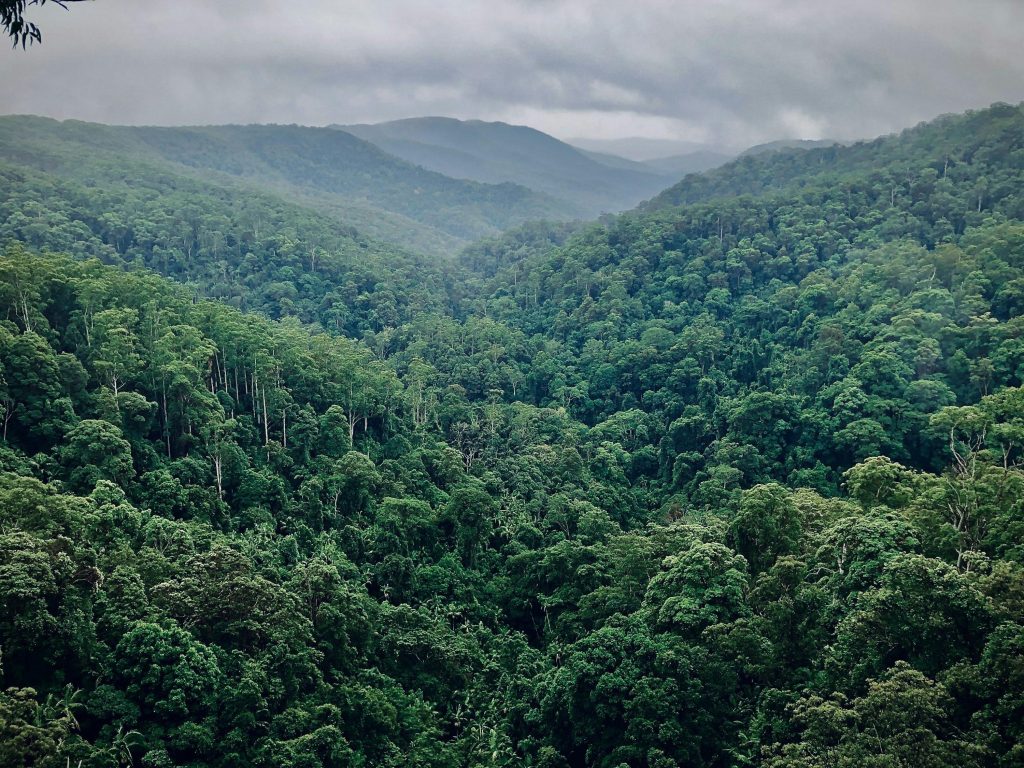
Land-based biomes, classified into forests, grasslands, deserts, and tundra according to their climate.
2. Aquatic Biomes
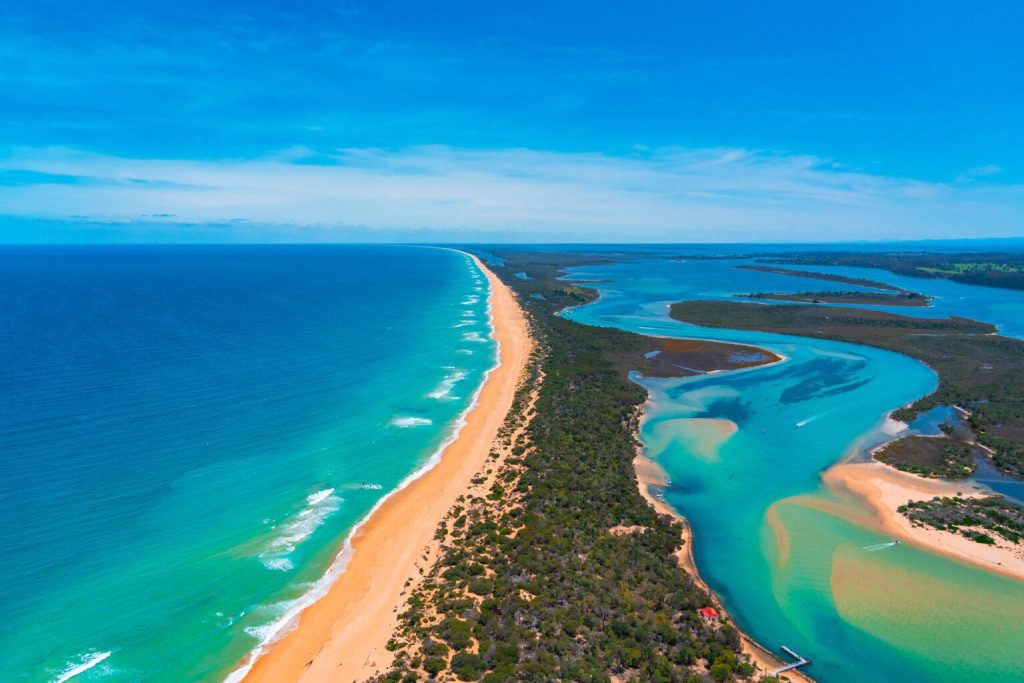
Water-based biomes, divided into freshwater and marine biomes.
The main factors determining the types of plants and animals found in a biome are:
- Temperature
- Precipitation patterns
- Dominant plant species
- Growth forms of vegetation
3. Terrestrial Biomes
A. Forest Biome
A forest biome is characterised by extensive tree growth and supports a wide variety of plants and animals.
Tropical rainforests
- Mainly found near the Equator, between the Tropic of Cancer and the Tropic of Capricorn (23.5° N to 23.5° S).
- Remain hot and wet throughout the year.
- Support dense forests and rich biodiversity.
- Major regions include the Amazon Basin in South America, the Congo Basin in Africa, and parts of Southeast Asia, including Indonesia and Malaysia.
- Smaller rainforest regions are found in Central America, India’s Andaman and Nicobar Islands, and the northeastern states.
Importance of forests
- They are rich storehouses of biodiversity and genetic resources.
- They preserve unique genetic material useful for conservation and scientific research.
- They are known as gene banks because they preserve genetic resources.
- They help maintain oxygen levels.
- They help balance the Earth’s climate.
- They support the livelihoods of many communities.
Layers of a rainforest
- Emergent layer
- Upper canopy
- Understory or lower canopy
- Forest floor
These layers represent different levels of vegetation within a rainforest.
B. Grassland Biome
Grasslands are large, open areas covered mainly with grasses and very few trees.
Characteristics
- Develop in regions receiving moderate rainfall.
- Rainfall is insufficient to support dense forests.
- Support grazing animals and human activities such as agriculture and livestock rearing.
Types of grasslands
1. Temperate grasslands
- Include the prairies of North America and the steppes of Asia.
- Have fertile soil.
- Are often used for farming.
2. Tropical grasslands
- Also known as savannas.
- Found in regions such as Africa.
- Have scattered trees.
- Support large animals such as lions, elephants, and giraffes.
C. Desert Biome
Deserts are the driest biomes and receive very little rainfall.
Characteristics
- Deserts may be hot or cold.
- The Sahara in Africa is an example of a hot desert.
- The Gobi in Asia is an example of a cold desert.
- They often have sandy soil and sparse vegetation.
- Extreme conditions make survival difficult.
Adaptations of desert plants and animals
- Plants such as cacti and animals such as camels, lizards, and snakes are adapted to desert conditions.
- Some can store water and withstand heat and dryness.
The Rann of Kutch
- Located in Gujarat.
- It is one of the world’s largest salt deserts.
- During the monsoon, it becomes a marshy wetland.
- During the dry season, it becomes a vast white salt desert.
Importance of deserts
- They support unique ecosystems.
- Many deserts provide valuable resources such as minerals and oil.
D. Tundra Biome
The tundra is the coldest biome and is found near the Arctic and Antarctic regions.
Characteristics
- Has very long and harsh winters.
- Summers are short.
- The soil remains frozen for almost the entire year.
- Trees find it difficult to grow.
- Vegetation mainly consists of mosses, lichens, and small shrubs.
- Animals include reindeer, Arctic foxes, and polar bears.
Permafrost: A condition in which soil remains frozen almost throughout the year.
Why is the tundra fragile?
Even small changes in temperature can affect its ecosystem. Therefore, the tundra is particularly sensitive to environmental changes.
4. Aquatic Biomes
Aquatic biomes cover about three-fourths of the Earth’s surface. They are divided into freshwater and marine biomes.
| Freshwater Biomes | Marine Biomes |
|---|---|
| Include rivers, lakes, ponds, and wetlands. | Include oceans, seas, and coral reefs. |
| Provide water for agriculture and drinking. | Store and distribute heat, influencing the Earth’s climate. |
| Support fish, frogs, insects, and other species. | Support whales, dolphins, fish, plankton, and many other species. |
| Are important for human needs and biodiversity. | Provide food and livelihoods for millions of people. |
5. Biome Pyramid
A biome pyramid is a graphical representation of the relationship between organisms in a biome, usually in terms of energy, number, or biomass.
Levels of a biome pyramid
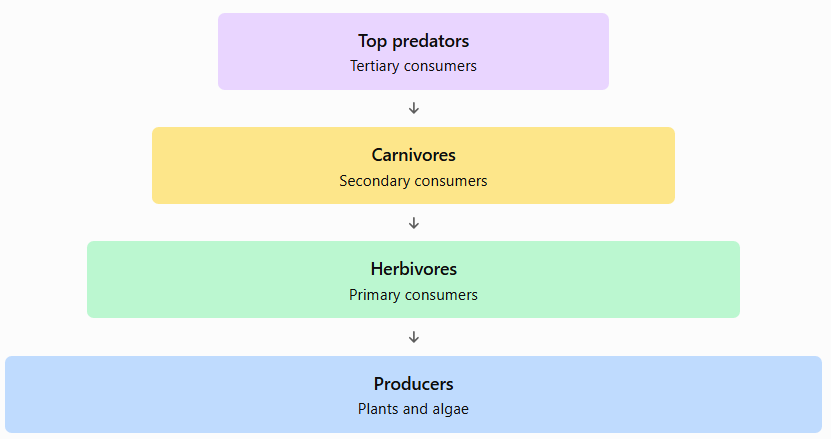
Explanation of the levels
- Producers: Plants and algae capture solar energy through photosynthesis.
- Primary consumers: Herbivores feed on producers.
- Secondary consumers: Carnivores feed on other consumers.
- Tertiary consumers: Top predators occupy higher levels of the food chain.
Why does the number of organisms decrease towards the top?
- Energy is lost as heat during metabolic processes at each trophic level.
- Therefore, the available energy decreases as we move up the pyramid.
- The number of organisms and biomass also decrease as described in the chapter.
Importance of the biome pyramid
It helps us understand the structure of ecosystems, the flow of energy, and the balance between different living organisms.
6. Interconnectedness Between Biomes and Living Beings
Biomes and living beings depend on and influence one another.
How living beings influence biomes
- Animals help in pollination and seed dispersal.
- Humans modify landscapes for farming and building cities.
- Microorganisms recycle nutrients.
How biomes support living beings
- They provide natural habitats.
- They support the survival of plants, animals, and humans.
- They supply resources needed by living organisms.
This interdependence helps maintain ecological balance and biodiversity.
7. Maintaining Ecological Balance and Biodiversity
Meaning of Biodiversity
Biodiversity is the variety of life on Earth, including plants, animals, microorganisms, and the ecosystems they inhabit.
It includes:
- The variety of different species.
- Genetic differences within species.
- The variety of habitats.
- Ecological processes that sustain life.
Importance of biodiversity
- Maintains healthy ecosystems.
- Supports human survival.
- Helps maintain the natural balance of life.
- Preserves the variety of living organisms and their habitats.
Geographical Aspects of Biodiversity Conservation
Geography plays an important role in conservation because biodiversity is unevenly distributed across the Earth. Location, climate, landforms, and ecosystems influence how living organisms can be protected.
1. Hotspots of biodiversity
These are regions rich in unique species, including species found nowhere else.
Examples given in the chapter:
- Himalaya
- Western Ghats
- North-East India
- Andaman and Nicobar Islands
Protecting these regions is a priority for biodiversity conservation.
2. Ecosystem-based conservation
Different environments support different forms of life. Therefore, conservation methods should suit the geographical setting.
Examples:
- Protecting mangroves along coasts.
- Afforestation in mountains.
3. Protected areas
These areas help preserve important habitats and prevent habitat fragmentation.
Examples:
- National parks
- Wildlife sanctuaries
- Biosphere reserves
- World Heritage Sites
4. Geographical barriers and corridors
- Rivers, mountains, and valleys can act as barriers or corridors.
- They influence animal movement and gene flow.
- Wildlife corridors are created to support animal movement between habitats.
5. Human–environment interaction
Geography studies how communities use land, water, and forests.
Examples:
- Terrace farming in hills.
- Agroforestry in plains.
Thus, biodiversity conservation depends on habitat conditions, geographical location, and human activities.
8. Forest Ecotourism
Meaning of Ecotourism
Ecotourism means travelling to nature-friendly places without harming the environment and supporting local people.
Forest ecotourism involves responsible travel to forest areas where visitors enjoy nature while contributing to conservation.
Features of forest ecotourism
- Encourages visitors to appreciate natural beauty and wildlife.
- Minimises environmental damage.
- Respects local communities.
- Promotes learning about ecosystems.
- Supports conservation programmes.
- Generates income for local people.
Examples include visiting national parks, wildlife sanctuaries, and rainforests.
Swadesh Darshan 2.0 Scheme
- Launched by the Ministry of Tourism, Government of India.
- Aims to develop sustainable tourism destinations.
- Focuses on sustainable development, conservation, and local community involvement.
Case Study: Thenmala Ecotourism in Keralam
- Thenmala is located in Kollam district, Keralam.
- It is India’s first planned ecotourism destination.
- It was developed jointly by the Tourism Department, Forest Department, and Irrigation Department of Keralam.
- The name Thenmala means Honey Hill.
- It lies in the Western Ghats, a UNESCO World Heritage Site.
- The project promotes sustainable tourism while conserving forests.
- Local inhabitants work as guides, eco-guards, and service providers.
- It combines recreation, environmental education, conservation, and local employment.
Importance: Thenmala demonstrates how tourism can support environmental protection and local livelihoods together.
9. Forests and Livelihoods
Forests are essential for the survival, income, and culture of many people, particularly rural and tribal communities.
Resources obtained from forests
- Food
- Fuel and firewood
- Fodder
- Medicine and medicinal plants
- Shelter and timber
- Bamboo
- Honey
- Fruits and nuts
- Resins
Economic importance of forests
- Provide resources for daily household needs.
- Generate income through non-timber forest products.
- Support livestock grazing.
- Encourage small forest-based industries.
- Create employment through ecotourism.
Cultural importance of forests
- Several communities, including the Gonds and Bhils, perform rituals to honour forest deities.
- These practices reflect respect for nature and traditional methods of resource use.
Sacred Groves
Sacred groves are small patches of forest protected by local communities for religious and cultural purposes.
Different names include:
- Devrai
- Devarakadu
- Kavu
- Sarna
Importance of sacred groves
- They preserve biodiversity.
- They protect rare plants, medicinal species, and wildlife.
- They help conserve species that may not survive elsewhere.
- Some are associated with water sources and help maintain streams and groundwater.
The chapter states that India has over 1,00,000 sacred groves, although many are not officially recorded.
10. Forest Dwellers and Their Relationship with Forests
Forest dwellers depend on forests for household needs, cultural practices, and livelihoods. Women play an especially important role in collecting and managing forest resources and preserving traditional knowledge.
Major roles of forest dwellers
1. Livelihood and income
- Collect and process non-timber forest products (NTFPs).
- Examples include tendu leaves, mahua flowers, honey, lac, and bamboo.
- These products provide income for households.
2. Knowledge holders
- Possess traditional knowledge about herbs, plants, food, medicines, and cultural practices.
- Pass this knowledge from one generation to another.
- Help preserve biodiversity through traditional practices.
3. Household needs
Forest dwellers collect:
- Firewood
- Fodder for cattle
- Wild fruits
- Roots and tubers
- Medicinal plants
4. Cultural and social role
- Forests are connected with rituals, festivals, and beliefs.
- Forest dwellers help preserve ecological and cultural traditions.
5. Forest protection
- Forest communities have played an important role in forest protection movements.
- They contribute to community forest management and ecological restoration.
Important Forest Conservation Movements
Bishnoi Movement
- Associated with Rajasthan.
- Led by Amrita Devi.
- Represents the efforts of people to protect forests and trees.
Chipko Movement
- Associated with Uttarakhand.
- Village women hugged trees to prevent deforestation.
- The movement highlighted the importance of community participation in forest conservation.
11. Geographical Indication (GI)
Meaning of a GI Tag
A Geographical Indication (GI) tag is a type of intellectual property right that identifies a product as originating from a particular geographical region. The product’s quality, reputation, or other characteristics are essentially linked to that place.
Importance of GI tagging
- Protects region-specific products.
- Promotes cultural heritage.
- Recognises products linked to traditional knowledge.
- Gives products distinctive market recognition.
- Generates economic benefits for local communities.
GI-Tagged Forest Products and Region-Specific Products Mentioned in the Chapter
| Product | State/Region | Important feature |
|---|---|---|
| Ramban Sulai Honey | Jammu and Kashmir | Distinct flavour, aroma, and taste; nutritional and antioxidant properties. |
| Tezpur Litchi | Assam | Bright colour and high pulp content; grown in the forest-influenced soil and climate of Tezpur. |
| Channapatna Toys | Karnataka | Made from the forest tree Wrightia tinctoria, locally called Aale mara. |
| Kandhamal Haldi | Odisha | Grown by tribal communities in forest regions; known for high curcumin content and medicinal value. |
| Erode Manjal (Erode Turmeric) | Tamil Nadu | Grown in forest-influenced soils; used in cooking and Ayurvedic medicine. |
| Nilgiri Tea | Tamil Nadu, Keralam, Karnataka | Its quality depends on the forest ecosystem conditions of the Western Ghats. |
| Tripura Queen Pineapple | Tripura | Known for its sweetness and aroma. |
| Khasi Mandarin | Meghalaya | A citrus fruit from the forest-rich hills of Meghalaya. |
Key point: Geography, climate, soil, forests, and traditional knowledge can contribute to the distinctive characteristics of products from particular regions.
12. Challenges Faced by People Living in Forests
Forest communities face several social, economic, and environmental difficulties.
A. Lack of basic facilities
- Limited access to healthcare.
- Limited access to education.
- Difficulty obtaining clean water.
- Exposure to fuelwood fumes, which can cause health problems, particularly for women.
B. Restrictions and depletion of forest resources
- Forest dwellers depend on firewood, honey, bamboo, and medicinal plants.
- Restrictions on forest use may limit access to these resources.
- Deforestation and commercial exploitation create additional difficulties.
- Conflicts may arise between conservation laws and people’s survival needs.
C. Natural disasters
Forested hilly regions are vulnerable to:
- Floods: May damage homes, crops, and roads.
- Landslides: May bury villages and cut off access to essential services.
- Forest fires: Can spread quickly through dense vegetation and destroy homes and resources.
Human care and preventive measures can help prevent many forest fires.
D. Human–wildlife conflict
- Elephants, monkeys, and wild boars may damage crops.
- People may sometimes face direct attacks by wild animals.
- These conflicts cause economic losses, fear, and insecurity.
E. Economic and social difficulties
- Forest dwellers may face discrimination and neglect.
- Forest products are often sold at relatively low prices.
- Limited processing and marketing opportunities reduce potential income.
- Communities may need assistance in accessing government schemes and understanding their legal rights.
Forest Fires: Important Facts
According to the Forest Survey of India figures quoted in the chapter:
- About 36% of India’s forest cover is estimated to be prone to forest fires.
- Nearly 4% is extremely prone to forest fires.
- Climate change and human-induced factors are major reasons for these occurrences.
- Severe forest fires can cause extensive damage to human life and the environment.
13. Government Efforts to Support Forest Dwellers
The Government of India has introduced laws and programmes to reduce the hardships faced by forest communities.
A. Forest Rights Act, 2006
The Scheduled Tribes and Other Traditional Forest Dwellers (Recognition of Forest Rights) Act, 2006, is commonly known as the Forest Rights Act (FRA).
Its important provisions include:
- Recognising the rights of eligible communities over forest land and resources they have traditionally depended upon.
- Allowing the collection of minor forest produce such as bamboo, honey, and medicinal plants.
- Granting ownership of small patches of land cultivated by eligible communities.
B. Other government initiatives
| Initiative | Main purpose described in the chapter |
|---|---|
| Joint Forest Management (JFM) | Encourages local communities to participate in forest protection while benefiting from forest produce. |
| Panchayats (Extension to Scheduled Areas) Act (PESA) | Supports governance in Scheduled Areas. |
| Dharti Aaba Janjatiya Gram Utkarsh Abhiyan (DAJGUA) | Aims to promote the welfare of tribal communities. |
| Pradhan Mantri Janjati Adivasi Nyaya Maha Abhiyan (PM JANMAN) | Aims to promote the welfare of tribal communities. |
The government also runs tribal welfare schemes relating to education scholarships, healthcare, and skill development.
Case Study: Mendha Lekha, Maharashtra
Mendha Lekha is a small tribal village in the Gadchiroli district of Maharashtra.
Important features
- The village is mainly inhabited by the Gond tribe.
- It became the first village in India to gain rights over its forest resources under the Forest Rights Act, 2006.
- The villagers follow the principle “Mawa Nate Mawa Raj”, meaning “our village, our rule”.
- Decisions are made collectively through the Gram Sabha.
- The community protects and sustainably uses 1,800 hectares of forest.
- It regulates tree cutting, prevents forest fires, and promotes bamboo harvesting as a renewable resource.
- Revenue from forest produce supports education and infrastructure.
Importance of the case study
Mendha Lekha demonstrates that traditional knowledge, community participation, forest rights, and sustainable resource use can work together. It strengthens local livelihoods while protecting biodiversity.
14. Ecological Commons — Shared Resources
Meaning
Ecological commons are natural resources shared and used collectively by a community for its survival and well-being.
Examples include:
- Forests
- Rivers
- Lakes
- Grazing lands
- Air
- Biodiversity
Characteristics
- They are shared by a community rather than owned by a single individual.
- They are often managed through traditional rules and practices.
- They provide food, water, fuel, fodder, and medicinal plants.
Importance
- Support rural and tribal livelihoods.
- Help maintain ecological balance.
- Contribute to climate regulation.
- Help conserve biodiversity.
Threats to ecological commons
- Population growth
- Industrial use
- Privatisation
These pressures can cause shared resources to shrink or deteriorate.
15. Case Study: Commons-Based Fisheries Management in Bihar
Background
- After independence, the Indian Fisheries Act, 1897, remained the basis for the governance of inland fisheries.
- Historically, large landowners controlled perennial water bodies and diara waterfronts in Bihar.
- Fishing communities were marginalised despite living in a region rich in aquatic resources.
Bihar Fish Jalkar Management Act, 2006
- The Act and its subsequent amendments were introduced to promote community-led fisheries management.
- The approach supports legal safeguards for public access and cooperative resource management.
- Local communities develop solutions suited to their surroundings.
- The aim is to balance resource productivity with sustainable levels of exploitation.
- Persistent growth in fish production in the region reflects the success described in the chapter.
Key lesson: Community participation and sustainable management can help protect shared aquatic resources while supporting livelihoods.
16. Case Study: Water Tanks Built by the Gond Kings
For centuries, communities in regions with seasonal rainfall have managed water collectively.
Traditional water-storage systems
| Region | Traditional water system |
|---|---|
| Bundelkhand | Tanks built by Chandella and Bundela kings |
| Karnataka | Keres |
| Tamil Nadu | Eri tanks |
| Andhra Pradesh and Odisha | Chevuru tanks |
| Bihar | Ahar pynes |
| Gondwana region | Katas funded by the Gond kings |
Important facts
- Between 800 and 1200 CE, Chandella and Bundela kings built around 8,000 tanks in Bundelkhand.
- Gond kings funded large katas, which are three-sided reservoirs, in the Gondwana region.
- According to the chapter, India currently has more than 15 lakh functional tanks.
Importance of traditional water tanks
- Help store water in regions with seasonal rainfall.
- Support water management as a collective responsibility.
- Provide water for agricultural activities and irrigation.

Leave a Reply