When you study architecture at Monash, you’ll explore the social, political, environmental and economic implications of architectural practice. It’s your first step on the pathway to a varied and exciting future career as an architect.
Architects don’t just design buildings; they play a critical role in shaping the world around us. When you study architecture at Monash, you’ll explore the social, political, environmental and economic implications of architectural practice. We’ll give you the confidence to engage with and respond to the challenges of our time, such as climate change and equitable access to housing.
You’ll get the tools you need to become an agent of change and someone who responds to the dynamic needs of contemporary society. Throughout the course, we’ll train you to think in future-oriented ways to engage with complex problems, and give you the confidence to present and position your work to peers, industry and the public.
Why study architecture at Monash?
What is unique to our Bachelor of Architectural Design, is that you’ll spend half your degree in the studio, which replicates the way many architectural and design practices operate. The studio isn’t a classroom in a traditional sense: it’s a collaborative environment where you’ll be guided by academics and practitioners from industry. You’ll work on real projects with your peers in small groups to develop responses to a wide range of social and spatial issues, either with community or embedded in an architectural practice. Each semester you can choose from a range of projects in studio with different subjects, practitioners and approaches to architectural practice, which means you can shape your education and future career by selecting studios that align with your interests and passions.
Who is the Bachelor of Architectural Design for?
We don’t ask for a folio. Whether you’ve studied design before, or are completely new to the subject, our Bachelor of Architectural Design will give you the practical skills to be successful in your degree and architectural practice. You’ll learn how to design through drawing and digital modelling. You’ll get to use the latest architectural software and make models using a range of materials in our dedicated workshops and digital fabrication labs.
How to become an architect
To become a registered architect in Australia, you need to complete an accredited Master of Architecture and you need to meet the professional practice requirements of the Architectural Registration Board of Victoria. This professional pathway allows you to work as an architect in many different countries.
Our Bachelor of Architecture is the first step on your path to work as an architect. When you successfully complete our Bachelor of Architectural Design, you’re guaranteed a place in our accredited Master of Architecture. This means you can continue your studies with the ongoing support of your peers and creative community at Monash.
The course develops through studies in architectural design, architectural performance, positions and dialogues study, and communication. These will come together in the form of a graduate exhibition developed during the final studio unit in the third year of the course.
Architecture design studios
Architecture design studio units bring together a range of complex issues inherent in the production of architecture: material, structure, program, site, history and representation. They focus on the architectural project as a process of investigation, critical observation and experimentation. Design studios foreground the needs of users in the development of architectural designs through material and three-dimensional testing of ideas. They combine various design, technical, conceptual, historical and professional issues into creative architectural outcomes across a range of scales and types of projects. Explore some of our most recent studios.
Architectural Performance Studies
Architectural performance studies units cover the integration of material, structural, construction and environmental conditions within the context of responsible and sustainable practices. Studies begin with the exploration of construction and materials through models and drawings. They expand to consider structural systems and environmental systems, including human comfort, climate impacts and energy usage. Studies culminate with a comprehensive integration of current and emerging building systems and the introduction of relevant professional practices. Across the units, issues are explored through design projects including the use of physical and digital models for performance analysis.
Positions and dialogues study
Positions and dialogues units cover the multiple histories, theories, perspectives and knowledge systems that inform the discipline of architecture. Beginning with a faculty wide unit that introduces Indigenous Australian creative practices and approaches to Country, you will go on to explore the formation of the discipline of architecture along with the shifting role of the architect. These units engage with contemporary, social, political, cultural and technical ideas and how architectural practitioners shape their work in response to these. You’ll carry out co-research and collaborative writing and editing, and work with your peers to plan, co-author and co-edit a piece of architectural research that communicates architectural ideas for a broad audience.
Communication studies
In the communications units you’ll be introduced to concepts, tools and techniques for the representation of architectural ideas in two and three dimensions including drawing, physical and digital model making and computer aided design (CAD). You’ll learn to select appropriate tools and methods to communicate a variety of architectural design ideas and explore the principles and uses of Information and Communication Technologies (ICT) in architectural design and project delivery, engaging with Building Information Modelling (BIM), Generative Design approaches, and Digital Fabrication.
Occupational health and safety study
This unit for all students will introduce you to occupational health, safety and environmental training particularly within the context of studying art, design and architecture at Monash.
Free elective study
Deepen your knowledge by selecting electives from across the Faculty of Art, Design and Architecture, including gaining workplace experience by selecting an internship unit as an elective and enriching your degree by using electives for Monash Abroad opportunities. Alternatively, you may choose to select electives from across the university (provided you satisfy the unit rules) to broaden your interdisciplinary perspectives.
All Courses
Entry Requirements (International students)
You need to satisfy all of the following requirements to be considered for entry into this course.
“Adopt as your fundamental creed that you will equip yourself for life, not solely for your own benefit but for the benefit of the whole community.” Sir John Monash
Who we are
Monash is a modern, global, research-intensive university, delivering education and research excellence in Australia and across the Indo-Pacific. We’re making a positive impact on today’s global challenges – whether that’s by mitigating climate change, easing geopolitical insecurity or fostering healthy communities.
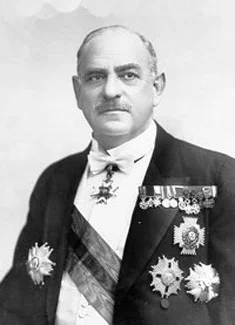
Sir John Monash
“…equip yourself for life, not solely for your own benefit but for the benefit of the whole community.”
– Sir John Monash
The University takes its name from Sir John Monash, a famous Australian who contributed to almost every level of Australian life. Not only do we carry Sir John’s name, we also take inspiration from his philosophy, as captured by the quotation at the top of this page. He was a man who used education to turn his natural talent into ability, allowing him to realise his daring ambitions. Our motto, Ancora Imparo (“I am still learning”), captures the essence of his approach to life, a life you can read more about below.
Sir John’s life and legacy
A proud history
Named after engineer, military leader and public administrator Sir John Monash, Monash University was established by an Act of Parliament in 1958. When our first students began their studies at our foundation campus in Clayton in 1961, we became the first university established in the state of Victoria in over 100 years.
Early years
The early vision was to create a research-focused tertiary institution with an emphasis on science and technology. As Monash has always done, though, we quickly moved beyond the bounds of expectation. Free from tradition and convention, we were within just a few years of our first intake of a mere 347 students, offering courses in arts, economics, education, engineering, law, medicine, politics and science.
Menzies building, 1970s
Creativity, innovation and activism
The focus on research excellence remained, but what grew around it was a culture of creativity, innovation and irreverence. In the 1970s the foundation campus at Clayton became the centre for student protest in Australia, and this philosophy of challenging the status quo permeated the University. It remains to this day, although where once it was the Vietnam war and second-wave feminism that occupied activists’ attention, today it is global poverty and sustainability, among many other causes. This position of leadership was not only confined to campaigning and advocacy, however, and Monash had soon become the model for a new generation of Australian universities, with new models of clinical education in medicine and law.
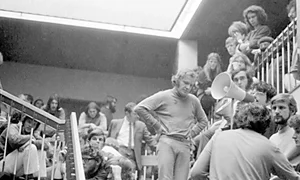
Student protesters occupying Administration building
Growth
The growth from technology/science specialists to general university was rapid. It was accelerated by a merger with Chisholm Institute in 1990, which saw the Caulfield and Peninsula campuses become a part of the University. A year later the Victorian College of Pharmacy entered into a partnership with Monash that allowed us to bring Parkville into our portfolio of campuses. The growth continued apace with the establishment of a new campus within the south-eastern growth corridor of Melbourne in 1994 – our (now former) Berwick campus.
International reach
In 1998, the Malaysian Ministry of Education invited Monash to set up a campus in Malaysia in collaboration with the Sunway Group. Monash University Malaysia was established in the same year, the first Monash campus outside Australia and the first “foreign” university in Malaysia. From 2001 until 2014, Monash University opened and operated a campus in South Africa. In 2001 Prato, Italy was added to the growing list of Monash campuses. In 2020, Monash University’s Indonesia campus became an official legal entity in Indonesia and was granted a licence to operate by the Indonesian Ministry of Education and Culture. Monash University will be Indonesia’s first international, foreign owned University with an in-country campus.
Today
From a single campus at Clayton with fewer than 400 students, Monash has grown into a network of campuses, education centres and partnerships spanning the globe. With well in excess of 60,000 students (and 350,000 alumni) from over 170 countries, we are today Australia’s largest university. The University now offers a broad selection of courses within 10 faculties: Art, Design and Architecture; Arts; Business and Economic; Education; Engineering; Information Technology; Law; Medicine, Nursing and Health Sciences; Pharmacy and Pharmaceutical Sciences; and Science.
The New Horizons initiative is a platform for excellence in future manufacturing research and teaching.
History brief
The first University Council, led by Monash’s first Chancellor Sir Robert Blackwood, selected a British professor of engineering, Sir Louis Matheson, to be the first Vice-Chancellor of Monash University, a position he held until 1976.
All Courses
Fees
Fees are subject to change annually.
International fee
Fees are per 48 credit points which represents a standard full-time course load for a year. The fees for 2025 are:
A$49,800
All Courses
Scholarships
We offer over 360 types of scholarships, valued at up to $280,000. Some scholarships offer one-off payments while others continue for the length of your course. Learn more about Monash Scholarships.
International students enrolling in a CRICOS-registered course can study no more than one third (33%) of their course by distance and/or online learning. Students must enrol in at least one unit that is not by distance and/or online in each compulsory study period unless the student is completing the last unit of their course. See standard 8.19 and 8.20 of National Code of Practice for Providers of Education and Training to Overseas Students 2018.
If you’re currently studying Australian Year 12 overseas, the International Baccalaureate (IB) in Australia or New Zealand, or the NCEA in New Zealand, then you’ll need to apply through VTAC.
If you’re not currently studying any of these qualifications, then you’ll need to apply directly to Monash through the Monash Online Admission and Scholarships Application portal. As an international student, you may decide to use an education agent to help with your university application and visa arrangements. You can find a list of licensed Monash agents through our agent database.
What financial assistance options are available to help with the cost of study?
There are plenty of options to help with the costs of study so you can focus on making the most of your university experience.
We offer more than 400 different types of scholarships that recognise disadvantage and reward talent. As one of the most generous scholarship programs in Australia, you may be more eligible than you think.
What is the travel to Monash campuses like?
There are many ways to get to and from our campuses. There are a range of closely located public transport connections between our campuses as well as a free inter-campus shuttle bus. Visit our “Travelling to Monash” page for more information.
What if I am looking to improve my english skills?
If you are looking to improve your English language skills, there are many programs that Monash offers through English Connect. You can also consider a Monash College pathway.
How can I contact a Monash staff or student?
Due to Australian privacy laws concerning sharing personal details, we can’t provide an individual’s specific contact details. We recommend you contact the relevant faculty for assistance – they can help address your question.
Studying in Australia: Your Guide to Universities, Programs, and Student Visas
Australia is a popular destination for international students, offering quality education, diverse campuses, and vibrant cities. From affordable universities to top-ranked institutions, Australia has something for everyone. Here’s everything you need to know about studying in Australia.
Top Universities in Australia
Australia’s Top Universities
Australia is home to some world-renowned universities, consistently ranking among the best globally. Australian National University (ANU), University of Melbourne, University of Sydney, and University of Queensland are a few examples of prestigious institutions that attract international students.
QLD Universities
Queensland offers a range of universities, including Griffith University, James Cook University in Brisbane, and Central Queensland University. These institutions provide various programs suited to different interests and career paths.
Universities in Perth, Australia
Perth is a vibrant city with reputable universities such as Edith Cowan University (ECU), Murdoch University, and University of Western Australia. Known for their high quality of education, these universities offer excellent options for both local and international students.
University in Melbourne List
Melbourne is a hub for quality education with universities like Deakin University, University of Melbourne, and RMIT University, each offering diverse programs and a dynamic student life.
University in Brisbane, Australia
Brisbane hosts renowned institutions like Griffith University and James Cook University, providing a range of study options with excellent facilities and support for international students.
Universities in Sydney, Australia
Sydney is home to leading universities, including the University of Sydney, University of New South Wales (UNSW), and Macquarie University.
Affordable and Cheapest Universities in Australia
Cheapest University in Australia
For those on a budget, Australia offers affordable education options without compromising quality. Central Queensland University and Edith Cowan University are known for providing affordable programs.
Low-Cost Universities in Australia
Universities like Western Sydney University and Victoria University offer lower tuition fees, making education accessible for international students.
Affordable Universities in Australia
Many Australian universities provide scholarships and affordable courses. University of Sunshine Coast and Charles Darwin University are among those that offer value without high costs.
Popular Programs and Courses in Australia
Masters Degrees and Programs in Australia
Australia offers a wide range of master’s programs in fields like IT, business, engineering, and more. Universities such as University of Queensland and Monash University offer specialized programs designed to boost your career prospects.
MBA in Australia Cost
The cost of pursuing an MBA in Australia varies by institution, with top programs available at University of Melbourne and Australian Graduate School of Management (AGSM). While MBA programs can be expensive, many universities offer financial aid and scholarships.
Best IT University in Australia
Australia’s top IT programs can be found at institutions like University of Technology Sydney (UTS) and RMIT University, providing cutting-edge knowledge and skills for a career in tech.
MBBS Cost in Australia
Medical education in Australia is rigorous and offers high-quality training. The cost of an MBBS in Australia is typically high but provides excellent career opportunities globally.
Scholarships and Financial Aid
Scholarships in Australia for Indian Students
Many Australian universities offer scholarships specifically for Indian students. Scholarships can help reduce tuition costs, making education more accessible for international students.
Student Visas and Living Costs
Student Visas Australia
To study in Australia, you’ll need a student visa. The visa application process is straightforward, but it’s essential to meet the requirements for acceptance. Ensure you apply early to secure your visa on time.
Living Cost in Australia for International Students
Living expenses vary depending on the city. Major cities like Sydney and Melbourne are more expensive, while places like Brisbane and Perth offer more affordable options. On average, international students should budget for accommodation, food, and other personal expenses.
Universities by Location and Specialty
Griffith University (Queensland)
Known for its research and industry connections, Griffith offers a variety of programs in fields like health, business, and environmental studies.
Deakin University (Melbourne)
Deakin is popular among international students for its flexible learning options and strong support services.
James Cook University (Brisbane)
Located in Queensland, James Cook is recognized for its programs in tropical health, marine science, and environmental studies.
Edith Cowan University (ECU) (Perth)
ECU provides a range of programs and is known for its focus on teaching quality and graduate outcomes.
Murdoch University (Perth)
Murdoch offers a student-centered approach and is known for courses in law, psychology, and veterinary science.
List of Australian one of the Best Universities
For a complete list of universities, Australia has a diverse range of institutions across various cities. Here are some popular ones:
Central Queensland University: Known for affordability and strong industry ties.
University of Western Australia: Highly regarded for research and academic excellence.
CQ University: Offers practical, career-focused courses in multiple disciplines