The Bachelor of Biomedical Science helps you understand disease, how it occurs and how we can prevent it to better improve quality of life. This multidisciplinary course offers units relating to biomedical chemistry, bioinformatics and human genetics. Graduates of this course will pursue careers in research, teaching, health promotion and much more.
Biomedical science is an interdisciplinary area of study, where you’ll investigate human health and disease on a deeper level. You’ll learn how diseases occur, how they affect the body, and how they can be controlled and treated. This degree covers the key biomedical disciplines of anatomy and developmental biology, biochemistry and molecular biology, immunology, microbiology, pharmacology and physiology, as well as epidemiology and how this informs human health and disease.
Our Bachelor of Biomedical Science gives you the flexibility to tailor your studies to fit your interests. Use your eight electives to gain more detailed knowledge in one of the key biomedical science areas, or broaden your knowledge by studying units from across the University. You could pick up a language, gain business skills or explore global issues and cultures.
As part of the Monash Biomedicine Discovery Institute, you’re embedded within a major biomedical research hub. Be taught, surrounded and inspired by some of the world’s leading biomedical scientists. And with professional development embedded throughout our degree – including opportunities for internships, work-integrated learning and hands-on research projects – you’ll graduate with transferable, in-demand skills to succeed in whichever workplace you choose.
Scholars Program
If you’re a high-achieving student, we want to recognise and nurture your potential through our Biomedical Science Scholars Program. You’ll be part of our Biomedicine Undergraduate Scholars Program (BUSP) which gives you mentoring and one-on-one support with senior students and leading researchers at the Monash Biomedicine Discovery Institute as well as a range of extracurricular activities that will help you be on your way to success in the biomedical sciences. Eligible students may be awarded the Monash Biomedicine Discovery Scholarship.
Career opportunities
Studying biomedical science opens the door to a range of rewarding careers where you can make a difference in health Our graduates have into roles in the pharmaceutical, biotechnology and medical sectors, in health policy, in government and non-government organisations, in laboratories and research institutes – just to name a few. With additional graduate study, you could pursue a clinical career in medicine, allied health, nursing or embryology. You could also choose to complete an Honours year, as a pathway towards a career in biomedical research.
Course structure
The course provides an interdisciplinary approach to study of biomedical science.
Through completion of the core biomedical/BMS units you will learn about the foundations of biomedical sciences, the body in health and disease, and the role of biomedical sciences in society. Scientific, academic and professional skill development is integrated across the course to prepare you for the workplace or further study.
You will be building a foundation for a career in the biomedical and health sciences, with your training beginning on day one with our exceptional learning opportunities and education delivery from leading experts in their field.
Foundations of Biomedical Sciences
You will gain an understanding of core scientific concepts which underpin biomedical science disciplines; including chemistry, biology and physics.
Biomedicine of health and disease
Understanding the structure and function of cells, tissues, organ systems and the body in health and disease across the lifespan is a cornerstone of biomedical science. Through your degree you will learn about these concepts through the contexts of biomedical disciplines such as anatomy, biochemistry, bioinformatics, developmental biology, genetics, immunology, microbiology, molecular biology, neuroscience, pharmacology and physiology.
Biomedicine and society
Across your degree you will learn about the impact of biomedical science in society and how it shapes our community. This includes how biomedical research breakthroughs are translated to clinical application and their impact on health policy, the broader societal contexts of health and disease through study of epidemiology, biostatistics, public health, evidenced-based medicine, health care systems and global health challenges.
Research methods and techniques
Interwoven through the core units of this course, you will learn about research methods and participate in highly engaging laboratory practicals in world-class facilities. This includes learning about research design including observational and experimental design, and research and laboratory techniques. Across your degree you will learn how to collect, analyse, interpret and communicate data to targeted audiences. You will also have the opportunity to engage with world-leading researchers and learn about their cutting-edge research
Personal and professional development
In addition to the scientific knowledge and research skills you will acquire across your degree, you will also have the opportunity to develop employability skills including communication, teamwork and critical thinking; with inclusion and diversity in mind. To further prepare you for the workforce, you will engage in a course-wide professional and personal development program which includes wellbeing, career development, and professionalism.
Elective study
Elective study allows you to supplement the core biomedical science units with additional areas of study you wish to pursue. This will enable you to broaden or deepen your knowledge of aspects of particular biomedical science disciplines, or to select non-biomedical units from across the University in which you are eligible to enrol.
All Courses
Entry Requirements (International students)
You need to satisfy all of the following requirements to be considered for entry into this course.
“Adopt as your fundamental creed that you will equip yourself for life, not solely for your own benefit but for the benefit of the whole community.” Sir John Monash
Who we are
Monash is a modern, global, research-intensive university, delivering education and research excellence in Australia and across the Indo-Pacific. We’re making a positive impact on today’s global challenges – whether that’s by mitigating climate change, easing geopolitical insecurity or fostering healthy communities.
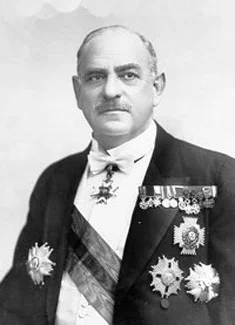
Sir John Monash
“…equip yourself for life, not solely for your own benefit but for the benefit of the whole community.”
– Sir John Monash
The University takes its name from Sir John Monash, a famous Australian who contributed to almost every level of Australian life. Not only do we carry Sir John’s name, we also take inspiration from his philosophy, as captured by the quotation at the top of this page. He was a man who used education to turn his natural talent into ability, allowing him to realise his daring ambitions. Our motto, Ancora Imparo (“I am still learning”), captures the essence of his approach to life, a life you can read more about below.
Sir John’s life and legacy
A proud history
Named after engineer, military leader and public administrator Sir John Monash, Monash University was established by an Act of Parliament in 1958. When our first students began their studies at our foundation campus in Clayton in 1961, we became the first university established in the state of Victoria in over 100 years.
Early years
The early vision was to create a research-focused tertiary institution with an emphasis on science and technology. As Monash has always done, though, we quickly moved beyond the bounds of expectation. Free from tradition and convention, we were within just a few years of our first intake of a mere 347 students, offering courses in arts, economics, education, engineering, law, medicine, politics and science.
Menzies building, 1970s
Creativity, innovation and activism
The focus on research excellence remained, but what grew around it was a culture of creativity, innovation and irreverence. In the 1970s the foundation campus at Clayton became the centre for student protest in Australia, and this philosophy of challenging the status quo permeated the University. It remains to this day, although where once it was the Vietnam war and second-wave feminism that occupied activists’ attention, today it is global poverty and sustainability, among many other causes. This position of leadership was not only confined to campaigning and advocacy, however, and Monash had soon become the model for a new generation of Australian universities, with new models of clinical education in medicine and law.
Student protesters occupying Administration building
Growth
The growth from technology/science specialists to general university was rapid. It was accelerated by a merger with Chisholm Institute in 1990, which saw the Caulfield and Peninsula campuses become a part of the University. A year later the Victorian College of Pharmacy entered into a partnership with Monash that allowed us to bring Parkville into our portfolio of campuses. The growth continued apace with the establishment of a new campus within the south-eastern growth corridor of Melbourne in 1994 – our (now former) Berwick campus.
International reach
In 1998, the Malaysian Ministry of Education invited Monash to set up a campus in Malaysia in collaboration with the Sunway Group. Monash University Malaysia was established in the same year, the first Monash campus outside Australia and the first “foreign” university in Malaysia. From 2001 until 2014, Monash University opened and operated a campus in South Africa. In 2001 Prato, Italy was added to the growing list of Monash campuses. In 2020, Monash University’s Indonesia campus became an official legal entity in Indonesia and was granted a licence to operate by the Indonesian Ministry of Education and Culture. Monash University will be Indonesia’s first international, foreign owned University with an in-country campus.
Today
From a single campus at Clayton with fewer than 400 students, Monash has grown into a network of campuses, education centres and partnerships spanning the globe. With well in excess of 60,000 students (and 350,000 alumni) from over 170 countries, we are today Australia’s largest university. The University now offers a broad selection of courses within 10 faculties: Art, Design and Architecture; Arts; Business and Economic; Education; Engineering; Information Technology; Law; Medicine, Nursing and Health Sciences; Pharmacy and Pharmaceutical Sciences; and Science.
The New Horizons initiative is a platform for excellence in future manufacturing research and teaching.
History brief
The first University Council, led by Monash’s first Chancellor Sir Robert Blackwood, selected a British professor of engineering, Sir Louis Matheson, to be the first Vice-Chancellor of Monash University, a position he held until 1976.
All Courses
Fees
Fees are subject to change annually.
International fee
Fees are per 48 credit points which represents a standard full-time course load for a year. The fees for 2025 are:
We offer over 360 types of scholarships, valued at up to $280,000. Some scholarships offer one-off payments while others continue for the length of your course. Learn more about Monash Scholarships.
Enrolment Obligations
International students enrolling in a CRICOS-registered course can study no more than one third (33%) of their course by distance and/or online learning. Students must enrol in at least one unit that is not by distance and/or online in each compulsory study period unless the student is completing the last unit of their course. See standard 8.19 and 8.20 of National Code of Practice for Providers of Education and Training to Overseas Students 2018.
If you’re currently studying Australian Year 12 overseas, the International Baccalaureate (IB) in Australia or New Zealand, or the NCEA in New Zealand, then you’ll need to apply through VTAC.
If you’re not currently studying any of these qualifications, then you’ll need to apply directly to Monash through the Monash Online Admission and Scholarships Application portal. As an international student, you may decide to use an education agent to help with your university application and visa arrangements. You can find a list of licensed Monash agents through our agent database.
What financial assistance options are available to help with the cost of study?
There are plenty of options to help with the costs of study so you can focus on making the most of your university experience.
We offer more than 400 different types of scholarships that recognise disadvantage and reward talent. As one of the most generous scholarship programs in Australia, you may be more eligible than you think.
What is the travel to Monash campuses like?
There are many ways to get to and from our campuses. There are a range of closely located public transport connections between our campuses as well as a free inter-campus shuttle bus. Visit our “Travelling to Monash” page for more information.
What if I am looking to improve my english skills?
If you are looking to improve your English language skills, there are many programs that Monash offers through English Connect. You can also consider a Monash College pathway.
How can I contact a Monash staff or student?
Due to Australian privacy laws concerning sharing personal details, we can’t provide an individual’s specific contact details. We recommend you contact the relevant faculty for assistance – they can help address your question.
Studying in Australia: Your Guide to Universities, Programs, and Student Visas
Australia is a popular destination for international students, offering quality education, diverse campuses, and vibrant cities. From affordable universities to top-ranked institutions, Australia has something for everyone. Here’s everything you need to know about studying in Australia.
Top Universities in Australia
Australia’s Top Universities
Australia is home to some world-renowned universities, consistently ranking among the best globally. Australian National University (ANU), University of Melbourne, University of Sydney, and University of Queensland are a few examples of prestigious institutions that attract international students.
QLD Universities
Queensland offers a range of universities, including Griffith University, James Cook University in Brisbane, and Central Queensland University. These institutions provide various programs suited to different interests and career paths.
Universities in Perth, Australia
Perth is a vibrant city with reputable universities such as Edith Cowan University (ECU), Murdoch University, and University of Western Australia. Known for their high quality of education, these universities offer excellent options for both local and international students.
University in Melbourne List
Melbourne is a hub for quality education with universities like Deakin University, University of Melbourne, and RMIT University, each offering diverse programs and a dynamic student life.
University in Brisbane, Australia
Brisbane hosts renowned institutions like Griffith University and James Cook University, providing a range of study options with excellent facilities and support for international students.
Universities in Sydney, Australia
Sydney is home to leading universities, including the University of Sydney, University of New South Wales (UNSW), and Macquarie University.
Affordable and Cheapest Universities in Australia
Cheapest University in Australia
For those on a budget, Australia offers affordable education options without compromising quality. Central Queensland University and Edith Cowan University are known for providing affordable programs.
Low-Cost Universities in Australia
Universities like Western Sydney University and Victoria University offer lower tuition fees, making education accessible for international students.
Affordable Universities in Australia
Many Australian universities provide scholarships and affordable courses. University of Sunshine Coast and Charles Darwin University are among those that offer value without high costs.
Popular Programs and Courses in Australia
Masters Degrees and Programs in Australia
Australia offers a wide range of master’s programs in fields like IT, business, engineering, and more. Universities such as University of Queensland and Monash University offer specialized programs designed to boost your career prospects.
MBA in Australia Cost
The cost of pursuing an MBA in Australia varies by institution, with top programs available at University of Melbourne and Australian Graduate School of Management (AGSM). While MBA programs can be expensive, many universities offer financial aid and scholarships.
Best IT University in Australia
Australia’s top IT programs can be found at institutions like University of Technology Sydney (UTS) and RMIT University, providing cutting-edge knowledge and skills for a career in tech.
MBBS Cost in Australia
Medical education in Australia is rigorous and offers high-quality training. The cost of an MBBS in Australia is typically high but provides excellent career opportunities globally.
Scholarships and Financial Aid
Scholarships in Australia for Indian Students
Many Australian universities offer scholarships specifically for Indian students. Scholarships can help reduce tuition costs, making education more accessible for international students.
Student Visas and Living Costs
Student Visas Australia
To study in Australia, you’ll need a student visa. The visa application process is straightforward, but it’s essential to meet the requirements for acceptance. Ensure you apply early to secure your visa on time.
Living Cost in Australia for International Students
Living expenses vary depending on the city. Major cities like Sydney and Melbourne are more expensive, while places like Brisbane and Perth offer more affordable options. On average, international students should budget for accommodation, food, and other personal expenses.
Universities by Location and Specialty
Griffith University (Queensland)
Known for its research and industry connections, Griffith offers a variety of programs in fields like health, business, and environmental studies.
Deakin University (Melbourne)
Deakin is popular among international students for its flexible learning options and strong support services.
James Cook University (Brisbane)
Located in Queensland, James Cook is recognized for its programs in tropical health, marine science, and environmental studies.
Edith Cowan University (ECU) (Perth)
ECU provides a range of programs and is known for its focus on teaching quality and graduate outcomes.
Murdoch University (Perth)
Murdoch offers a student-centered approach and is known for courses in law, psychology, and veterinary science.
List of Australian one of the Best Universities
For a complete list of universities, Australia has a diverse range of institutions across various cities. Here are some popular ones:
Central Queensland University: Known for affordability and strong industry ties.
University of Western Australia: Highly regarded for research and academic excellence.
CQ University: Offers practical, career-focused courses in multiple disciplines