Develop a solid foundation in agricultural science by studying a common curriculum, designed in consultation with industry and employers. You’ll complete eight core subjects to gain a broad understanding of agricultural science with studies in biology, natural environments, agricultural production and life sciences.
Learn about sustainable agriculture and how we can use it to adapt to a changing climate
Find out how science is applied in the real world and its applications in the agricultural industry
Understand Australia’s agricultural context locally and globally.
SECOND YEAR
In your second year, you’ll choose a major – a sequence of subjects you complete throughout your degree that indicates you are a specialist in that discipline.
Agricultural Economics: learn how to analyse and advise on the business management and financial sustainability of agricultural enterprise
Plant and Soil Science: understand the science of using plants for food, fuel, fibre and land reclamation and to address issues in plant health and sustainable agriculture
Production Animal Science: prepare for a career in animal health and production, animal welfare or biosecurity. Learn about animal production industries, animal behaviour and disease, and how management strategies can optimise growth and welfare.
Dookie semester
You can choose to spend Semester 2 of your second year living and studying at the Dookie campus, where you’ll practice your new skills in a hands-on environment. Get the opportunity to observe a wide variety of farming activities first hand, including cropping, livestock and dairy management, horticulture and viticulture, as well as support industries such as irrigation management, logistics and food processing operations.
Scholarships are available to facilitate the move to Dookie and accommodation costs are low compared to a similar standard of accommodation in the city.
THIRD YEAR
You’ll focus on further developing your specialised major knowledge and work with your peers from other specialisations to prepare for your career. You can choose to spend part of this year based at the Dookie campus.
Work individually and in small groups with your peers from other majors to apply your range of knowledge in value chain analysis, animal health and nutrition, plant growth or water management, and make improvements relevant to the industry
Develop your skills in gathering and interpreting evidence, teamwork, and oral and written communication
Learn how to apply a ‘systems thinking’ approach to problems – considering the complete context of an agricultural enterprise, including relevant scientific, environmental, economic, social and political factors.
Your course plan is based around compulsory core subjects, major subjects that let you specialise in the field that interests you, and elective subjects that supplement your skills, interests and experience. This degree requires the successful completion of 300 points – with subjects usually worth 12.5 points each. You will complete eight subjects, or 100 points of study, in each year of full-time study
Honours
Honours is an optional fourth year of study that gives you the opportunity to draw together your previous studies and focus your knowledge, skills and intellect on an exciting piece of original research. Honours can further prepare you for employment, or a research higher degree.
BE IN DEMAND
A Bachelor of Agriculture is your opportunity to use science, technology and business to tackle critical sustainability issues and build a career with lasting impact.
If you’d like to understand how to harness natural processes to sustainably feed our growing population, improve natural resource management and contribute to Australia’s growing agricultural industry, the Bachelor of Agriculture is an ideal choice. Graduates with a degree in agriculture are highly sought after in Australia, with an employment rate of over 92 per cent.
You’ll learn the science necessary to produce safe, high-quality and ethical food and fibre as well as the economics underpinning Australia’s important role in international trade. Australia is a major global supplier of agricultural goods – around $40 billion of Australia’s projected $60 billion of agricultural production in 2019-20 was exported.
LEARN IN THE LAB AND THE FIELD
An agriculture degree lets you apply biology, chemistry, physics, and economics and see the real-world results of your actions. Whether you start your post-university career in a laboratory, on farms or in a bank, you’ll be making a real impact on the world. You’ll complement your lab and classroom learning with fieldwork, and you can even choose to spend a semester learning at our agricultural research and teaching campus at Dookie, giving you additional hands-on experience and knowledge of farm operations.
APPLY THE LATEST TECHNOLOGY
Agriculture is at the beginning of a technological revolution, with research by Melbourne academics playing a leading role. Drone-based sensors can monitor plants for disease and water stress across areas equivalent to hundreds of football fields in under an hour. ‘Big data’ and machine learning will give you tools to help farmers grow more food while reducing agriculture’s environmental impact. Study the science and economics underpinning these innovations and enter the workforce ready to contribute to sustainable and profitable agriculture.
IMPROVE CROP AND ANIMAL HEALTH
Plants and animals provide more food and fibre when we protect their health and welfare. Our academics determine the best ways to maintain the welfare of farm animals, develop diets to help livestock thrive in hot and dry conditions, discover the origin, spread and effects of disease and develop new medicines. Our scientists are using precision gene-editing tools to develop crops that can survive disease, drought and heat. Develop an understanding of plant and animal health and welfare to prepare you for a career in the agricultural industry or for further study in veterinary medicine.
MAKE OUR FOOD SUPPLY SUSTAINABLE
Farmers manage 48 per cent of Australia’s landmass, and each year, on average, an Australian farmer will feed 600 people. But in a changing climate we need to maintain a healthy environment too. Benefit from the knowledge and expertise of our researchers as they find ways to make farming more drought-resilient, reduce greenhouse gas emissions, improve soil health and re-use waste while producing high-quality food. You’ll learn how to monitor and optimise the transfer of nutrients from soils to plants to animals and how to make land and water use more sustainable by applying agricultural science and economics.
All Courses
Admission criteria
This stream is for students without work experience. The first 50 credit points (equivalent to one semester of study) of subjects are chosen to fill gaps on your knowledge from your prior study.
To be considered for entry into this course, you must have:
An undergraduate degree (or equivalent) in any discipline, with
a Weighted Average Mark (WAM) of at least 65% (or equivalent), and
One technical subject (at any tertiary year level) focused on computer programming.
Meeting the published entry requirements for this course does not guarantee selection.
Where our admission criteria includes a minimum Weighted Average Mark (WAM) and/or specific subject criteria, these are based on University of Melbourne grades and subjects. If you’ve studied elsewhere, we’ll assess your relevant prior studies and equivalent grades. Your final WAM may be adjusted depending on your previous institution’s accreditation, subject grading, and pass marks.
English language requirements
All applicants to the University of Melbourne must satisfy the English language requirements. This may be achieved in a number of ways, including recognised previous study taught and assessed entirely in English or an approved English language test. If you are from a non-English speaking background, the required standard of English for this degree is one of the following English proficiency test scores:
English language test score requirements
If you need to undertake an English language test, you must meet one of the scores* below:
PEARSON – 64+ – with no communicative skill below 60
CAMBRIDGE – 176+ – with no skill less than 169
About selection
When assessing applications, the Selection Committee will consider your previous studies and academic performance.
The Selection Committee may request additional information to clarify any aspect of an application, according to the University’s Academic Board rules regarding selection instruments.
Meeting the published entry requirements for this course does not guarantee selection.
If relevant to your application, the Selection Committee will also consider your professional experience.
If you are applying on the basis of relevant work experience, your application must include documentary evidence (such as a letter from your current or previous employer on letterhead) that confirms the nature of the work, its duration, its full-time or part-time status and your position or role. This documentary evidence must be an original or original certified copy.
Additional information
Advanced Standing
Prior studies may be credited towards your degree and potentially reduce the duration of your course. This is known as Advanced Standing (also known as credit or recognition of prior learning).
All Courses
Australia’s leading university
Our distinctive Melbourne experience helps graduates become well-rounded, thoughtful and skilled professionals – making a positive impact across the globe.
Our research contributes to solving social, economic and environmental challenges the world is facing today and into the future. We’re tightly connected with our communities, at home and abroad, which only enriches our learning, teaching, and research.
The University of Melbourne has a distinguished history of high achievement. Our strategy supports the best researchers, provides an exceptional student experience and assists our international partners.
We’ve attracted professional industry leaders to grow our acumen and ensure the University will continue to be a leader for generations to come.
Our History
We have a rich and fascinating past spanning 160 years.
Every building, every department and every period of time has its own story. While some of these stories have been recounted many times over, countless remain to be written.
Beginning as a cluster of buildings set in a large park on the fringe of the city with four professors and 16 students, the University now sits at the heart of a thriving international city.
Today, nearly 10,000 academic and professional staff support a vibrant student body of more than 54,000, including more than 20,000 international students from over 130 countries around the world.
Our vision
Our purpose is to benefit society through the transformative impact of education and research. We prepare graduates to make their own impact by offering education that stimulates, challenges and fulfils our students, leading to meaningful careers and skills that can make profound contributions to society.
We measure our success by the goals articulated in the University’s strategic plan, Advancing Melbourne.
CAMPUS LOCATIONS
Our main Parkville campus is located a short walk from central Melbourne, a vibrant and diverse international city of 4.9 million people that ranks 11th on the Innovation Cities Global Index (2019). Parkville campus anchors an additional six specialist campuses located throughout Greater Melbourne and regional Victoria, and three innovation precincts in Melbourne’s central business district.
Our innovation precincts provide deep capability and a network of learning and research partnerships enriched by co-location. They include world-renowned medical research institutes in the Melbourne Biomedical Precinct, creative and performing arts organisations in Melbourne’s Arts Precinct at Southbank, new developments in digital knowledge at Melbourne Connect, and future developments in engineering and design at Fishermans Bend.
Parkville Campus
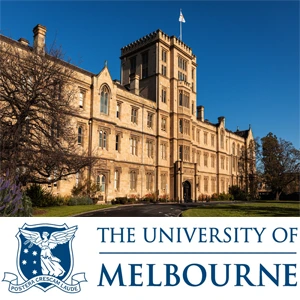
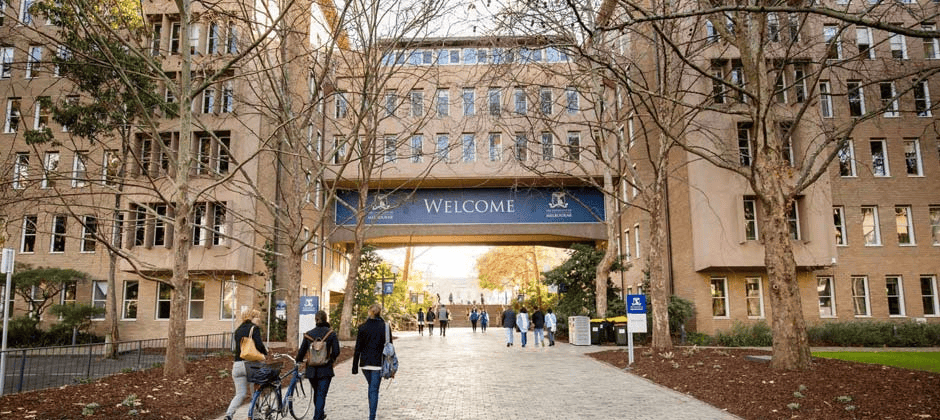
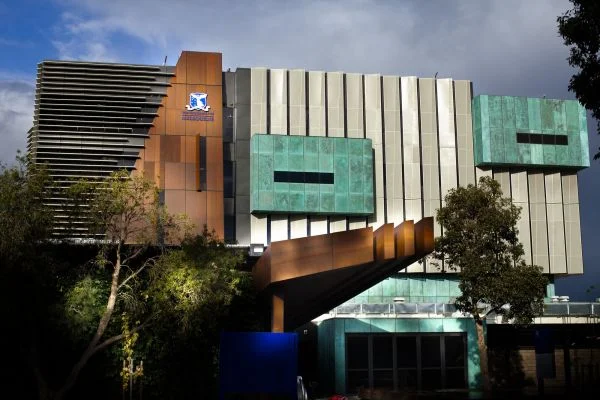
Parkville is the University of Melbourne’s original and main campus. Established in 1853, Parkville campus centres around the original Old Quadrangle building and features many historically significant spaces alongside award-winning modern architecture. Located within walking distance of central Melbourne, the campus is home to ten faculties and a diverse community of students, researchers and professional staff. In recent years, it has significantly expanded its footprint south of Grattan Street.
Location: https://maps.unimelb.edu.au/parkville
Southbank Campus
Home to the University’s Faculty of Fine Arts and Music, Southbank campus co-locates the Melbourne Conservatorium of Music with the Victorian College of the Arts. A thriving ecosystem of world-class learning, performance, studio and gallery spaces, Southbank brings our creative disciplines together in a dynamic urban environment at the heart of Melbourne’s Arts Precinct.
Location: https://maps.unimelb.edu.au/southbank
Burnley campus
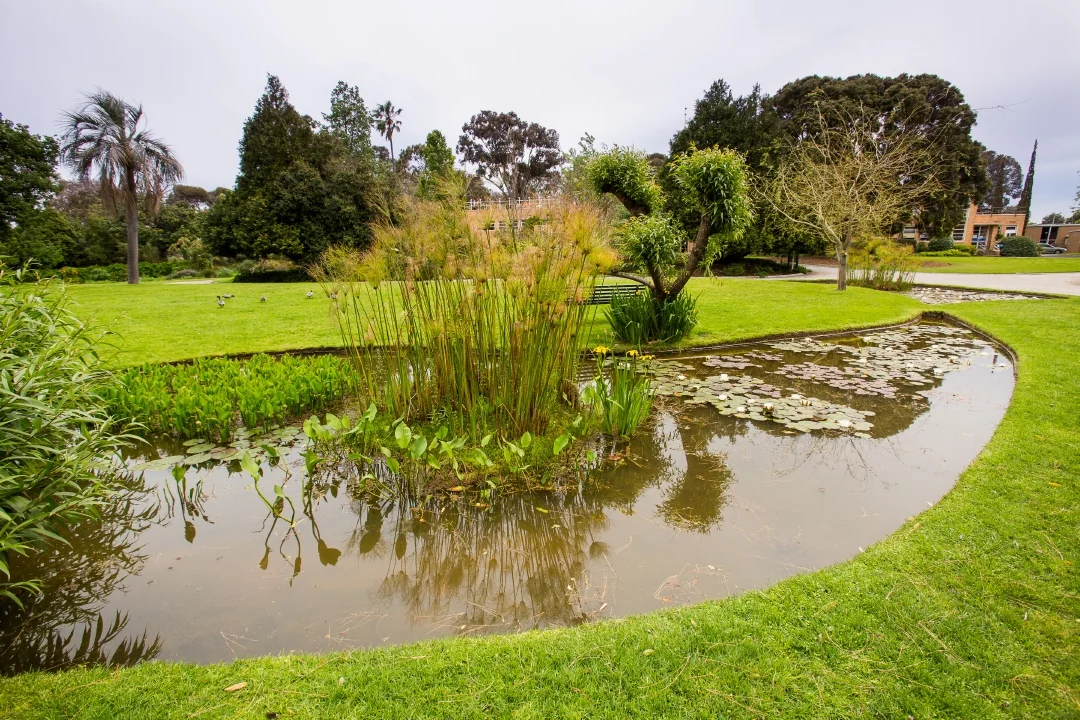
Burnley campus is internationally recognised for its teaching and research in urban, environmental and ornamental horticulture, and its expanding profile in green infrastructure research and development. Located on nine-hectares of heritage listed gardens 7km from central Melbourne, Burnley campus was first founded in 1891 by the Victorian Department of Agriculture, making it the first horticultural college in the southern hemisphere and among the first in the world.
Location: https://maps.unimelb.edu.au/burnley
Dookie Campus
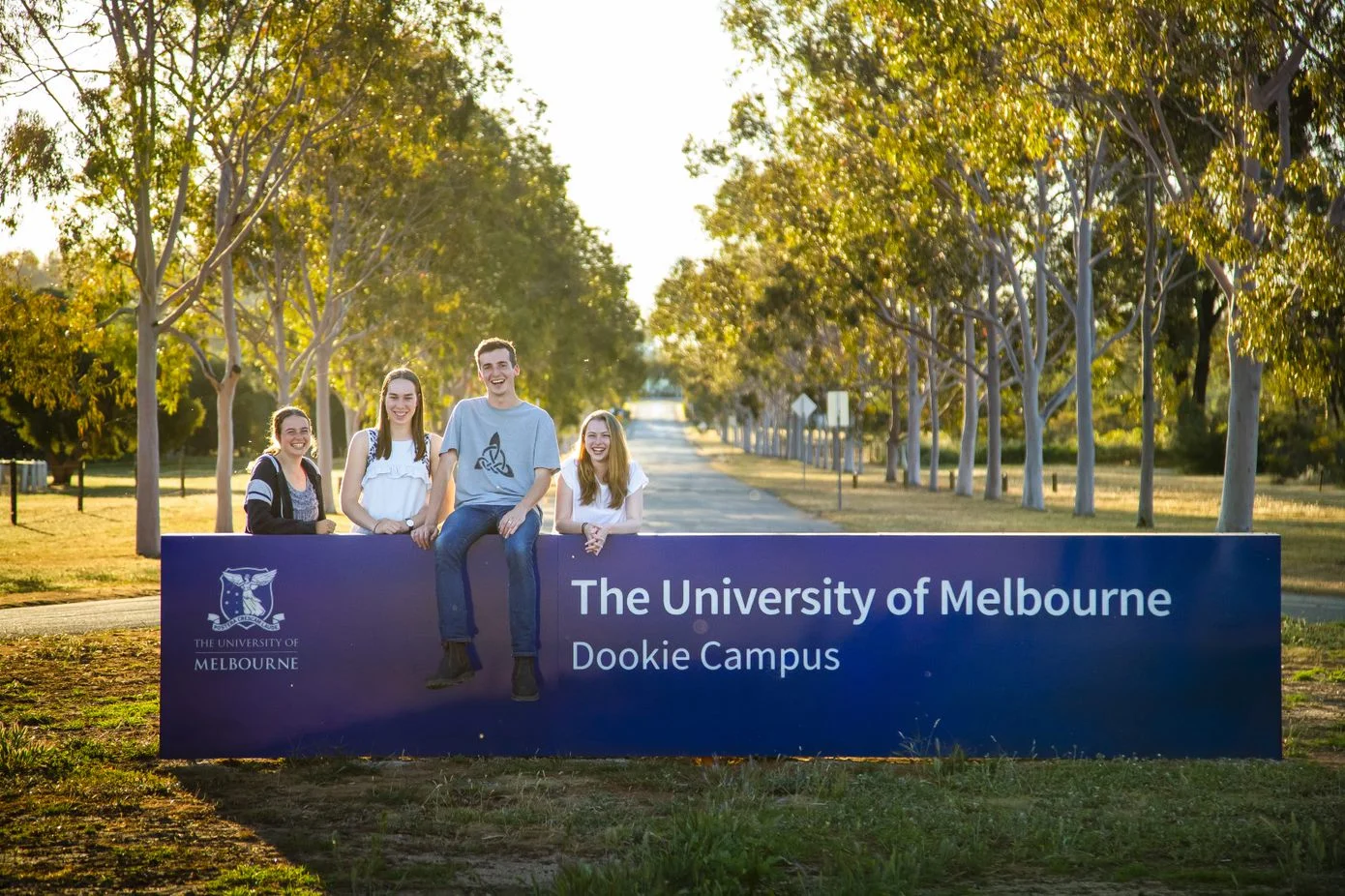
Dookie campus is a living laboratory situated on 2,440 hectares that incorporates a working farm, state-of-the-art robotic dairy, orchard, winery and natural bush reserve. Established in 1886 as Dookie Agricultural College, Dookie played a formative role in the development of agriculture and agricultural education in Australia. Teaching, research and technology development at Dookie continues to shape the future of modern agriculture and agribusiness.
Location: https://maps.unimelb.edu.au/dookie
Creswick Campus
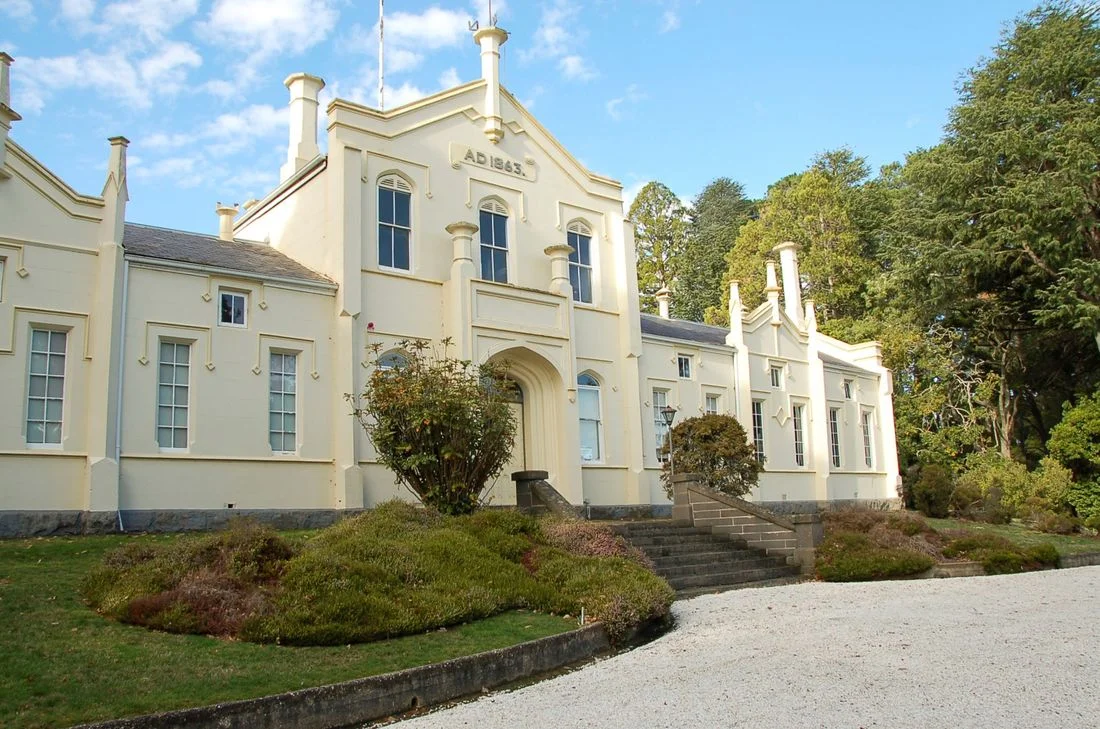
Creswick is Australia’s only dedicated forest science and research campus. Established in 1910, it features heritage listed buildings and state-of-the-art laboratories on 15-acres of land adjacent to native and plantation forests. Creswick campus is also home to a specialist forest science library and historical collections documenting a century of Australian forestry education.
Location: https://maps.unimelb.edu.au/creswick
Werribee Campus
Our Werribee campus is a hub for teaching, research and equine specialist care, and hosts the Werribee Equine Centre and Greencross Veterinary Hospital. Located 32kms south-west of Melbourne, our Werribee Campus trains the next generation of veterinarians and veterinary researchers in state-of-the art facilities and houses organisations providing general, specialist and emergency vet services to the local community.
Location: https://maps.unimelb.edu.au/werribee
Shepparton Campus
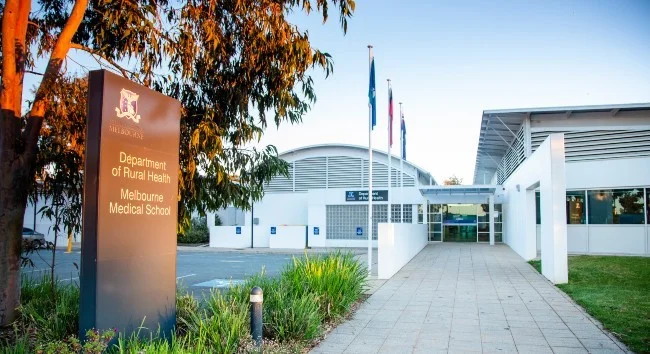
Shepparton is home to the Academy of Sport Health and Education (ASHE) and the University’s Department of Rural Health (DRH). The DRH furthers Australia’s clinical and research capabilities in rural and remote health, and delivers world class medical training in the rural context. ASHE is an Indigenous community leadership hub where sports participation provides a pathway to culturally-relevant education, health and employment opportunities.
Location: https://maps.unimelb.edu.au/shepparton
All Courses
International student fees
Tuition fees are charged for each year you are enrolled. You will pay tuition fees according to your specific enrolment in any given semester. Your tuition fees are subject-based, which means you’ll pay according to subjects you are studying, not your degree. The exact cost of your degree depends on the type and number of subjects you take. Detailed fee information, including the fee policies covering your enrolment, will be provided when you are offered a place at the University of Melbourne. Fees are subject to annual review and may be adjusted each year.
Visa requirements
With an Australian student visa, you can only take full-time study in a CRICOS-registered course. You also need to have met character and any additional health tests, as well as have acceptable Overseas Student Health Cover (OSHC).
Overseas Student Health Cover (OSHC)
International students on a student visa must arrange visa-length Overseas Student Health Cover while studying in Australia. OSHC covers the cost of out-of-hospital medical treatment, pharmaceuticals, and emergency ambulance services while you are in Australia. You are usually required to arrange and purchase this at the same time as accepting your course offer. For further information on choosing and arranging your OSHC visit our student services webpage.
Other financial assistance
The University’s Student Financial Aid Service can provide you with advice and information on student loans and bursaries/grants, cost of living, budgeting and tax advice.
All Courses
Scholarships and financial support
What scholarships are available to me?
To find a scholarship that matches your circumstances, you can filter opportunities on our scholarship search. Each scholarship has important information regarding eligibility criteria, the application process and benefits.
Many of our scholarships are merit-based and awarded to eligible students based on their academic performance. Other scholarships are need-based, helping to support students who might otherwise miss out on tertiary education.
If you’re ineligible for scholarships at the time of applying, please note that there are many more scholarships available to continuing students who demonstrate academic excellence throughout their studies at Melbourne.
What financial help is available while studying?
Visit our Financial Aid page to find out how we can help you navigate the challenges of having a limited income while studying. The Financial Aid team provides information and advice about budgeting, managing debt and Centrelink payments, and can help you to access assistance during times of financial hardship.
Applying
How do I apply to study at the University of Melbourne?
The application process varies with your preferred level and area of study, and whether you are a domestic or international student.
Domestic students are an Australian or New Zealand citizen, an Australian permanent resident or a permanent humanitarian visa holder.
International students are a temporary visa holders or a bridging visa holders.
You can find detailed application guides to match your requirements on our How to apply web page.
Current Year 12 students interested in studying at the University, must submit a course application via the Victorian Tertiary Admissions Centre (VTAC). Applications open each year in August.
When will I receive my course application outcome?
Our selection officers prioritise course application assessments according to their intake, not the date of submission. The selection periods for our key intakes are:
Start year (February) intake: September of the preceding year
Mid-year (July) intake: March of the same year.
Once the assessment of your application has begun, you can expect to receive an outcome within the below timeframes:
Course type and indicative application turnaround time: Undergraduate: 4-8 weeks Graduate coursework: 4-8 weeks Graduate research: 8-12 weeks
The indicative turnaround times listed above will not be relevant if the course you have applied for:
Makes selection decisions only at set times during the year (this can be determined by consulting our How to apply page)
Requires results from an admissions test that have not yet been released (e.g. GMAT, GAMSAT/MCAT)
Requires outcomes of auditions or interviews that have not yet been scheduled.
I’m receiving an application error, what do I do?
If you receive an error message while completing your online course application, please attempt the following troubleshooting steps:
Use a computer or laptop when accessing the system.
Ensure that you are using a compatible internet browser. For optimal performance, please use Google Chrome. The system also operates on the most recent versions of Mozilla Firefox, Opera and Safari.
Clear the cache (cookies and temporary internet files), then reload the browser before attempting to log in again. Alternatively, try opening the application system in an incognito/ private browsing tab.
Review your application to check that all sections of the form are complete. If a section does not apply to you, please enter ‘NA’ into the text field, or upload a blank document where applicable.
Uploading documents is a two-step process. In each section, first ‘Choose’ the file(s) and then press ‘Upload Files’.
When attaching supporting documents, ensure the total size of all files in each section is less than 6MB. For example, you can upload three 2MB files in the Personal Statement section of the application system. If the size of all files totals more than 6MB, you might consider compressing one or more files or uploading the document in two separate sections of the application.
Save all document attachments prior to clicking the ‘Save & Continue’ button at the bottom of each page.
After all sections of the application form are complete, press ‘Save’, then ‘Submit’ to lodge your application.
If you are having difficulty with the Application Fee payment section, check that your postal address is no more than 80 characters and written in the English alphabet. This applies to the postal address provided under the ‘Personal Details’ section of the application. If you need to change your address to make your application payment you will be able to update it once your application has been submitted.
Need more help? If the error persists, please contact our Future Student Support Team with full screenshots of the error you are receiving and outline all troubleshooting steps you have taken: Submit an online enquiry.
How do VTAC preferences work?
You can list up to to eight course preferences. Each of your nominated VTAC preferences will consider your application at the same time, regardless of how high or low they appear on your preference list.
Key points to remember:
Your VTAC preference order won’t disadvantage your application. Universities don’t consider whether their course is preference number 1 or 8 when deciding to make you an offer.
You only receive a single offer each round. VTAC examines your preferences and sends you a single offer that corresponds to your highest preference. Course preferences should be listed in the order you would most like to study, with your dream courses at the top, regardless of how likely you think they are to make you an offer.
For a step by step VTAC guide, visit How to apply for courses or Changing your course preferences.
How do I transfer to the University of Melbourne?
To transfer to the University of Melbourne from another institution, you need to follow our standard application process. You can find detailed application guides for all our courses on our How to apply web page.
If your application is successful, you can apply for Advanced Standing (also known as recognition of prior learning or credit) to receive credit from your prior studies, reducing your overall course duration at Melbourne.
How can I apply for undergraduate study as a mature age applicant?
If you successfully completed an Australian Year 12 (or equivalent) but have taken some time off before applying for university courses, please follow the standard undergraduate application process.
If you have taken at least seven years away from any kind of study, you may be eligible to apply for undergraduate study via our Non-school leaver pathway.
If you have not completed an Australian Year 12 qualification or equivalent (or didn’t do well enough in your Year 12 subjects for admission to your preferred degree) you could become eligible by:
Undertaking Year 12 in an adult learning environment (such as the (such as the Centre for Adult Education or a TAFE institution)
Using the Non-school leaver pathway (if you are over 23 years of age).
How do I upload documents to my application?
When completing your online course application, you will be prompted to upload supporting documentation.
Most documents can be uploaded directly to your course application. For detailed instructions, please see How to upload documents. Please note that the sum of documents under each section within your course application must not exceed 6MB.
Why is my application status ‘Request for Additional Application Info’?
If you have received a request for further information, you will need to satisfy the request for the assessment of your application to continue. When information is requested, the status of your application changes to ‘Request for Additional Application Info’.
Our Online Application System may continue to display the status ‘Request for Additional Application Info’, even after you have provided the requested information. Please do not be alarmed – if you have added the requested information to your application and this addition is visible to you, you can disregard this application status. The assessment of your application will continue.
In the event that the information you have provided is not satisfactory, our Admissions Team will be in touch via email with further instructions.
I want to plan my travel
Do I need to return to Melbourne to study in 2024?
The University of Melbourne has largely returned to campus-based Teaching & Learning.
Undergraduate programs returned to campus-based delivery in 2023 and students are expected to be on campus. Most of our Graduate programs have returned to campus-based learning with some programs offering flexible delivery modes at the subject level.
Make sure you are aware of the visa implications of changing your enrolment. Check the Handbook for further information on the subject delivery modes for your program of study.
When should I aim to arrive in Melbourne?
If you are enrolling in standard Semester 1, 2024 subjects, aim to arrive before Orientation starts.
This will enable you to
Make the most of the orientation activities that will be scheduled
Get settled before the start of semester 1 classes
Attend classes from the start of semester.
Always check the teaching start date for your subjects in the subject entry in the Handbook.
Is there a University-supported service to plan and book my travel?
UniTravel is the University’s own travel program, supported by ATPI. The service has many benefits including access to discounted airfares and up-to-date general travel advice. UniTravel is with you every step of the way, including rebooking flights, should your flights be cancelled or rescheduled.
In an added safety and wellbeing measure, flights booked with UniTravel are visible to us here at the University. This means staff can monitor any significant disruptions or delays to your journey and can support you with any changes to your travels plans, right through to your arrival in Melbourne.
If you would like book your travel through UniTravel please contact student.unitravel@atpi.com or +61 3 9035 5666. This supported service is available 24 hours a day, 7 days a week.
Can I get a refund with UniTravel if I find a better deal somewhere else?
Like other travel services, any booked airfare will be subject to the conditions set by the chosen airline.
If students choose to explore a booking with UniTravel, all the terms and conditions will be made clear when selecting a flight and communicated by our travel consultants.
How can I find accommodation in Melbourne?
Find out all about the range of accommodation options at Melbourne.
If you are looking for accommodation close to the Parkville campus, check out the range of University accommodation options, available exclusively to students. Dedicated staff are available to assist you with your options and support your arrival in Melbourne.
Are there accommodation options for students with families?
Students with families that include young children typically organise accommodation via the private rental market in Melbourne. There are a range of commercial websites available listing properties for rent in the suburbs close to campus, and students are encouraged to contact the rental agents promoting these properties directly for support and advice on arranging an inspection once you arrive in Melbourne.
I’ve recently arrived in Melbourne
How do I get around in Melbourne?
Melbourne has the world’s largest tram network, as well as an extensive system of trains and buses. Find all the ways you can move around in Melbourne via public transport.
Keep the link to campus maps handy during your first days on campus so you can easily plan your routes between classes.
What fun things are happening on campus?
Please visit our student life page which highlights featured events across semester and helpful links to get involved with campus life.
Will there be student clubs and societies I can join in?
Yes, for information on clubs and societies, please see: https://umsu.unimelb.edu.au/buddy-up/clubs/ and https://gsa.unimelb.edu.au/gradgroups/
Studying in Australia: Your Guide to Universities, Programs, and Student Visas
Australia is a popular destination for international students, offering quality education, diverse campuses, and vibrant cities. From affordable universities to top-ranked institutions, Australia has something for everyone. Here’s everything you need to know about studying in Australia.
Top Universities in Australia
Australia’s Top Universities
Australia is home to some world-renowned universities, consistently ranking among the best globally. Australian National University (ANU), University of Melbourne, University of Sydney, and University of Queensland are a few examples of prestigious institutions that attract international students.
QLD Universities
Queensland offers a range of universities, including Griffith University, James Cook University in Brisbane, and Central Queensland University. These institutions provide various programs suited to different interests and career paths.
Universities in Perth, Australia
Perth is a vibrant city with reputable universities such as Edith Cowan University (ECU), Murdoch University, and University of Western Australia. Known for their high quality of education, these universities offer excellent options for both local and international students.
University in Melbourne List
Melbourne is a hub for quality education with universities like Deakin University, University of Melbourne, and RMIT University, each offering diverse programs and a dynamic student life.
University in Brisbane, Australia
Brisbane hosts renowned institutions like Griffith University and James Cook University, providing a range of study options with excellent facilities and support for international students.
Universities in Sydney, Australia
Sydney is home to leading universities, including the University of Sydney, University of New South Wales (UNSW), and Macquarie University.
Affordable and Cheapest Universities in Australia
Cheapest University in Australia
For those on a budget, Australia offers affordable education options without compromising quality. Central Queensland University and Edith Cowan University are known for providing affordable programs.
Low-Cost Universities in Australia
Universities like Western Sydney University and Victoria University offer lower tuition fees, making education accessible for international students.
Affordable Universities in Australia
Many Australian universities provide scholarships and affordable courses. University of Sunshine Coast and Charles Darwin University are among those that offer value without high costs.
Popular Programs and Courses in Australia
Masters Degrees and Programs in Australia
Australia offers a wide range of master’s programs in fields like IT, business, engineering, and more. Universities such as University of Queensland and Monash University offer specialized programs designed to boost your career prospects.
MBA in Australia Cost
The cost of pursuing an MBA in Australia varies by institution, with top programs available at University of Melbourne and Australian Graduate School of Management (AGSM). While MBA programs can be expensive, many universities offer financial aid and scholarships.
Best IT University in Australia
Australia’s top IT programs can be found at institutions like University of Technology Sydney (UTS) and RMIT University, providing cutting-edge knowledge and skills for a career in tech.
MBBS Cost in Australia
Medical education in Australia is rigorous and offers high-quality training. The cost of an MBBS in Australia is typically high but provides excellent career opportunities globally.
Scholarships and Financial Aid
Scholarships in Australia for Indian Students
Many Australian universities offer scholarships specifically for Indian students. Scholarships can help reduce tuition costs, making education more accessible for international students.
Student Visas and Living Costs
Student Visas Australia
To study in Australia, you’ll need a student visa. The visa application process is straightforward, but it’s essential to meet the requirements for acceptance. Ensure you apply early to secure your visa on time.
Living Cost in Australia for International Students
Living expenses vary depending on the city. Major cities like Sydney and Melbourne are more expensive, while places like Brisbane and Perth offer more affordable options. On average, international students should budget for accommodation, food, and other personal expenses.
Universities by Location and Specialty
Griffith University (Queensland)
Known for its research and industry connections, Griffith offers a variety of programs in fields like health, business, and environmental studies.
Deakin University (Melbourne)
Deakin is popular among international students for its flexible learning options and strong support services.
James Cook University (Brisbane)
Located in Queensland, James Cook is recognized for its programs in tropical health, marine science, and environmental studies.
Edith Cowan University (ECU) (Perth)
ECU provides a range of programs and is known for its focus on teaching quality and graduate outcomes.
Murdoch University (Perth)
Murdoch offers a student-centered approach and is known for courses in law, psychology, and veterinary science.
List of Australian one of the Best Universities
For a complete list of universities, Australia has a diverse range of institutions across various cities. Here are some popular ones:
Central Queensland University: Known for affordability and strong industry ties.
University of Western Australia: Highly regarded for research and academic excellence.
CQ University: Offers practical, career-focused courses in multiple disciplines