The Major Environment can be completed through the Bachelor of Science degree (available through the Faculty of Science, on the Downtown Campus), or through the B.Sc. (Ag. Env. Sc.) degree (available through the Faculty of Agricultural and Environmental Sciences, on the Macdonald Campus). Students interested in working primarily on one or the other campus should apply to the appropriate Faculty.
The Major Environment comprises two course components: Core and Concentration.
All Courses
1. Core (Required Courses) (21 credits)
Core — Introductory Courses (15 credits)
The Core includes four introductory courses and one intermediate course which expose students to different interdisciplinary perspectives, approaches, and world views — to help them understand the complexity and conflicts that underlie most environmental problems. Students will be challenged by the Core program to look beyond the confines of their individual views of environment.
ENVR 200 – The Global Environment ENVR 201 – Society,Environ&Sustainability ENVR 202 – The Evolving Earth ENVR 203 – Knowledge, Ethics&Environment ENVR 301 – Environmental Research Design
Core — Senior Courses (6 credits)
In the two senior courses of the Core, students will apply the general and specialized knowledge acquired through the rest of the program, to the analysis of a selection of contemporary environmental problems.
ENVR 400 – Environmental Thought (3 cr) AND One of the following Senior Research Project courses (3 cr*) – AEBI 427 – Barbados Interdisc Project (6 cr) (M) (in Barbados) ENVR 401 – Environmental Research (3 cr) ENVR 451 – Research in Panama (6 cr) (in Panama) FSCI 444 – Barbados Research Project (6 cr) (in Barbados) GEOG 451 – Res in Society & Dev in Africa (6 cr) (in Africa) * Only 3 credits will be applied to the program; extra credits will count as electives.
2. Concentration: Complementary Courses (36-45 credits, depending on Concentration selected)
In addition to the Core, each student chooses a Concentration. Concentrations provide a transdisciplinary study of a particular theme or component of the environment. The requirements and complementary course sets vary between Concentrations; these can be viewed by clicking on the links to each Concentration, below. Except where indicated, all Concentrations are available through both the Faculty of Science (Downtown Campus), and the Faculty of Agricultural & Environmental Sciences (Macdonald Campus). You can choose one of the following Concentrations in the B.Sc. Major Environment, or B.Sc.(Ag.Env.Sc.) Major Environment: Atmospheric Environment and Air Quality Science only Biodiversity and Conservation Earth Sciences and Economics Science only Ecological Determinants of Health Environmetrics Food Production and Environment Land Surface Processes and Environmental Change Renewable Resource Management Water Environments and Ecosystems
All Courses
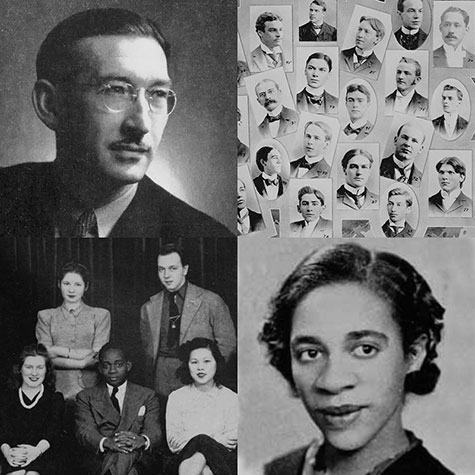
Two hundred years of history
From its founding in 1821, McGill has been home to momentous firsts thanks to brilliant and curious minds.
Our university grounds were the birthplace of basketball and hockey. This is where Archie, the world’s first internet search engine, was created, and where Canada’s first female professor taught.
Recently, McGill’s researchers have been making significant breakthroughs in RNA research that will shape the future of medicine. In all fields, McGillians continue to push boundaries and make an impact.
McGill. Made by dreamers and trailblazers.
From revolutionary scientific and medical innovations, to artists and humanitarians giving back to the community — McGillians have made, and continue to make, a lasting change in the world.
Our faculties’ histories
McGill has 11 faculties and 13 schools across three world-renowned campuses. Discover the people and events that shaped them.
James McGill (1744-1813)
James McGill, the man whose vision would lead to the creation of the University that bears his name, was born in Glasgow, Scotland on October 6, 1744.
Who We Are
McGill University is one of Canada’s best-known institutions of higher learning and one of the leading universities in the world. International students from more than 150 countries make up nearly 30% of McGill’s student body ‒ the highest proportion of any Canadian research university.
History
McGill is a public university, founded in 1821.
A Tradition of Success
McGill is recognized around the world for the excellence of its teaching and research programs. Ernest Rutherford’s Nobel Prize-winning research on the nature of radioactivity was conducted at McGill, part of a long tradition of innovation on our campuses that includes the invention of the artificial blood cell and Plexiglas. Today our professors are building the new field of epigenetics, developing alternative energy sources from crop plants and driving human achievement in every field imaginable.
The Best and Brightest
In addition to a stellar faculty, McGill is known for attracting the brightest students from across Canada, the United States, and around the world. McGill students have the highest average entering grades in Canada, and our commitment to fostering the very best has helped our students win more national and international awards on average than their peers at any other Canadian university. The prestigious Rhodes Scholarship has gone to a nation-leading 147 McGill students.
All Courses
Fees and expenses
Tuition and Fees
Students can estimate the cost of their program by using the Student Accounts Fee Calculator. The following information is required:
Residency: Quebec, Non-Quebec Canadian, or International
Academic Year or Term: Fall 2023/Winter 2024 (for example)
Program: Master’s Full-Time (for example)
When selecting your program, take the following into consideration:
Master’s Thesis students have a registration status of “Full-Time” for the first 3 terms of the Program (not including the Summer term). Followed by a registration status of “Additional Session” for each term (Fall, Winter and Summer) until graduation.
Master’s Non-Thesis students have a registration status of “Full-Time” (registration of 12 or more credits) for the first 3 terms of the Program (not including the Summer term). Followed by a registration status of “Non-Thesis Extension” (registration of 0 credits) for each term (Fall and Winter) until graduation. Non-thesis students are charged fees based on the number credits registered each term.
PhD students have a registration status of “Full-Time” for the first 6 or 8* terms of the Program (not including the Summer term). Followed by a registration status of “Additional Session” for each term (Fall, Winter and Summer) until graduation. *Students entering the PhD program having completed only a Bachelor’s degree register for 8 “Full-Time” terms. Students entering the PhD program having completed a Master’s degree register for 6 “Full-Time” terms.
Expenses
The cost of living in Montreal is very affordable. Some of the estimated expenses per year for a single student are:
Apartment rent and food
$14,400
Books and supplies
$1,000
Public transportation (student fare)
$612
Winter clothing
$600
Personal expenses
$3,600
$20,212
Please visit the graduate student Cost of Attendance page for information on residences and student housing and links to tools that will help you calculate your expenses and budget your money.
Study in Canada: Your Complete Guide to Universities, Courses, and Visas
Canada is a top destination for international students, offering world-class education, diverse cultures, and numerous career opportunities. Whether you’re interested in pursuing a master’s degree, MBA, or even MBBS, here’s everything you need to know about studying in Canada.
Top Universities for Higher Studies in Canada
Universities in Canada for Masters
Canada is home to several renowned institutions offering master’s programs across various fields. Students can find specialized courses tailored to their career aspirations.
Canada MS Universities
For those pursuing a Master of Science (MS) degree, Canada has a wide range of institutions like the University of Toronto, Simon Fraser University, and University of Calgary that are recognized for their advanced research facilities.
Best Universities for MBA in Canada
Canada is known for its excellent MBA programs. The top universities for MBA offer robust curricula and provide significant networking opportunities to kick-start your business career.
Universities in Toronto, Canada
Toronto, a vibrant multicultural city, is a popular choice among students. Institutions like the University of Toronto are globally recognized for their academic excellence.
Canadian University Canada
Canadian universities are known for their quality education and supportive environment for international students.
Popular Courses in Canada
Master’s Degree in Canada: Canada offers a variety of master’s programs in fields like engineering, business, healthcare, and more.
MBBS in Canada: Though limited, some Canadian universities do offer MBBS or equivalent medical programs. The MBBS degree in Canada can be costly but provides excellent training and career opportunities.
Courses in Canada for International Students: Canadian institutions offer a wide range of courses, from technology and arts to business and healthcare.
Visas and Study Permits for Canada
Canada Student Visa:
To study in Canada, you’ll need a student visa. The visa application process may vary depending on your home country, so it’s essential to check the specific requirements.
Study Visa Canada & Canada Education Visa:
The study visa, also known as the Canada education visa, allows international students to live and study in Canada for the duration of their course.
Processing Time for Canada Student Visa:
Visa processing times may vary. It’s advisable to apply well in advance to avoid delays. The typical study visa processing time ranges from a few weeks to several months.
SX1 Visa Canada:
The SX1 visa is designed for short-term courses in Canada, ideal for those enrolling in programs less than six months in duration.
Canada Student Visa Processing Time:
Processing times vary by country. Ensure you check the latest information and apply early to avoid any disruptions in your academic plans.
Life as an International Student in Canada
International Student in Canada:
Canada is highly welcoming to international students, offering an inclusive environment and a high quality of life. From student support services to international student networks, you’ll find a thriving community.
Canada for Indian Students:
Canada is a top choice for Indian students due to its affordable tuition, quality education, and post-graduation work opportunities. Programs like the PGWP (Post-Graduation Work Permit) allow Indian students to gain valuable work experience in Canada.
Canada After 12th:
Canada also offers undergraduate courses, making it a great destination for students right after their 12th grade, with programs tailored for students looking to start their academic journey abroad.
Key Canadian Universities
Simon Fraser University Canada:
Known for its comprehensive range of programs and research opportunities, Simon Fraser University is a prominent choice among international students.
The University of Calgary:
This university offers a variety of courses and a vibrant campus life, making it a top choice for students seeking quality education in Canada.
Studying and Staying in Canada After Graduation
Degree in Canada:
Earning a degree from a Canadian university is a significant achievement that is highly regarded worldwide. Canada’s education system is recognized for its quality and commitment to research.
PGWP Canada:
The Post-Graduation Work Permit (PGWP) allows international students to stay and work in Canada after completing their studies, making it easier to transition to the Canadian job market.
Cost of Studying in Canada
MBBS Cost in Canada:
Medical studies in Canada can be expensive, but the quality of education and the opportunities available make it worthwhile.
Whether you’re considering a master’s degree in Canada, an MBA, or other specialized programs, Canada offers a diverse range of options and a supportive environment for international students. Apply for your Canada student visa today, start planning, and take the first step towards an exciting educational journey in Canada!