Biomedical Engineers apply their knowledge in engineering, biology, and medicine to healthcare and medical device industries. Biomedical Engineering is a distinct field that encompasses engineering disciplines, biology, life sciences, medicine, clinical applications, and the improvement of human health. Since 2006, our MASC program has trained students in the fundamentals of Biomedical Engineering, providing extensive research experience in biomechanics, biomaterials, biochemical processing, cellular engineering, imaging, medical devices, micro-electro-mechanical implantable systems, and physiological modeling, simulation, monitoring, and control, as well as medical robotics. Graduates continue on to PhD programs as well as research and development positions in industry and other institutions. A professional program, Master of Engineering, is also available.
What makes the program unique?
The Biomedical Engineering Program at UBC is a part of the School of Biomedical Engineering. This unique interdisciplinary structure provides students with unparalleled access to engineering experts across varied Biomedical Engineering research areas at UBC. It emphasizes a balance of biomedical engineering and life science study with a focus on clinical and industrial application. Our graduates have gone on to become industry leaders, especially in the medical device industry, and provide a network of professionals within the community.
Biomedical Engineering at UBC is the only program in Canada to offer the Engineers in Scrubs (EiS) training program. The EiS program began as an NSERC-funded Collaborative Research and Training Experience (CREATE) program designed to foster innovation in medical technology by training biomedical engineers in clinical environments. Students receive a significant portion of their training in hospital settings, and the program focuses on the medical technology innovation process. This program complements the research training of MASc and PhD students and allows them to work closely with medical professionals in identifying clinical problems and developing a solution.
Specialization
Biomedical Engineering is a multidisciplinary field that involves the application of engineering techniques and technologies to medical and healthcare areas. Opportunities for interdisciplinary education and research exist in areas such as biomechanics, biomaterials, biochemical processing, cellular engineering, imaging, medical devices, micro-electro-mechanical implantation systems, physiological modelling, simulation, monitoring and control, as well as medical robotics.
All Courses
Admission Information & Requirements
1) Check Eligibility
Minimum Academic Requirements
The Faculty of Graduate and Postdoctoral Studies establishes the minimum admission requirements common to all applicants, usually a minimum overall average in the B+ range (76% at UBC). The graduate program that you are applying to may have additional requirements. Please review the specific requirements for applicants with credentials from institutions in:
Canada or the United States
International countries other than the United States
Each program may set higher academic minimum requirements. Please review the program website carefully to understand the program requirements. Meeting the minimum requirements does not guarantee admission as it is a competitive process.
English Language Test
Applicants from a university outside Canada in which English is not the primary language of instruction must provide results of an English language proficiency examination as part of their application. Tests must have been taken within the last 24 months at the time of submission of your application.
Minimum requirements for the two most common English language proficiency tests to apply to this program are listed below:
TOEFL: Test of English as a Foreign Language – internet-based
Overall score requirement: 93
Reading
Writing
Speaking
Listening
22
21
21
22
IELTS: International English Language Testing System
Overall score requirement: 6.5
Reading
Writing
Speaking
Listening
6.0
6.0
6.0
6.0
Other Test Scores
Some programs require additional test scores such as the Graduate Record Examination (GRE) or the Graduate Management Test (GMAT). The requirements for this program are:
The GRE is not required.
2) Prepare Application
Transcripts
All applicants have to submit transcripts from all past post-secondary study. Document submission requirements depend on whether your institution of study is within Canada or outside of Canada.
Letters of Reference
A minimum of three references are required for application to graduate programs at UBC. References should be requested from individuals who are prepared to provide a report on your academic ability and qualifications.
Statement of Interest
Many programs require a statement of interest, sometimes called a “statement of intent”, “description of research interests” or something similar.
Supervision
Students in research-based programs usually require a faculty member to function as their thesis supervisor. Please follow the instructions provided by each program whether applicants should contact faculty members.
Instructions regarding thesis supervisor contact for Master of Applied Science in Biomedical Engineering (MASc)
Applicants should browse faculty profiles and indicate in their application who they are interested in working with. No commitment from a supervisor prior to applying is necessary, but contacting faculty members is encouraged.
All Courses
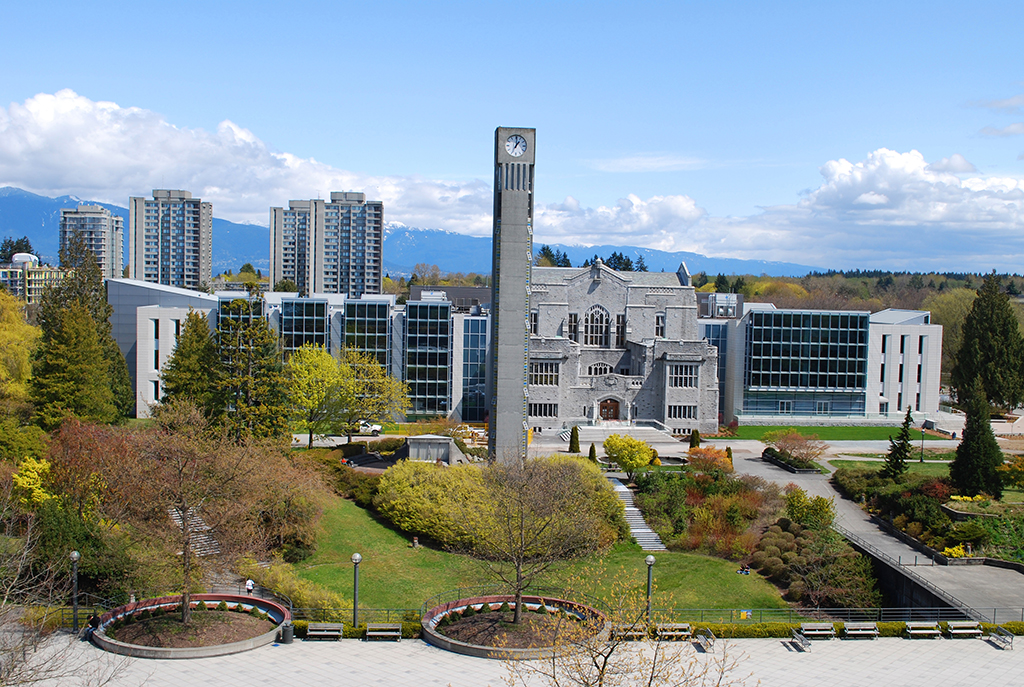
The University of British Columbia is a global centre for teaching, learning and research, consistently ranked among the top public universities in the world.
UBC embraces innovation and transforms ideas into action. Since 1915, UBC has been opening doors of opportunity for people with the curiosity, drive and vision to shape a better world.
All Courses
Tuition
Fees
Canadian Citizen / Permanent Resident / Refugee / Diplomat
International
Application Fee
$114.00
$168.25
Tuition *
Installments per year
3
3
Tuition per installment
$1,838.57
$3,230.06
Tuition per year (plus annual increase, usually 2%-5%)
$5,515.71
$9,690.18
Int. Tuition Award (ITA) per year (if eligible)
$3,200.00 (-)
Other Fees and Costs
Student Fees (yearly)
$1,116.60 (approx.)
Costs of living
Estimate your costs of living with our interactive tool in order to start developing a financial plan for your graduate studies.
* Regular, full-time tuition. For on-leave, extension, continuing or part time (if applicable) fees see UBC Calendar. All fees for the year are subject to adjustment and UBC reserves the right to change any fees without notice at any time, including tuition and student fees. Tuition fees are reviewed annually by the UBC Board of Governors. In recent years, tuition increases have been 2% for continuing domestic students and between 2% and 5% for continuing international students. New students may see higher increases in tuition. Admitted students who defer their admission are subject to the potentially higher tuition fees for incoming students effective at the later program start date. In case of a discrepancy between this webpage and the UBC Calendar, the UBC Calendar entry will be held to be correct.
Financial Support
Applicants to UBC have access to a variety of funding options, including merit-based (i.e. based on your academic performance) and need-based (i.e. based on your financial situation) opportunities.
Program Funding Packages
The majority of MASc students are offered research assistantships (RAs) by faculty members. RAs are funded by research grants for specific projects which almost always constitute thesis projects. Although you will automatically be considered for an RA when submitting your online application, to successfully secure an RA appointment you are encouraged to make contact with a research supervisor. The number of RA’s offered will vary depending on lab and research space as well as available funding.
All full-time students who begin a UBC-Vancouver MASc program in the School of Biomedical Engineering in September 2018 or later will be provided with a funding package of at least $21,000 for each of the first two years of their MASc. The funding package may consist of any combination of internal or external awards, teaching-related work, research assistantships, and graduate academic assistantships. Please note that research supervsiors may provide funding packages that are greater than $21,000 per year.
Scholarships & awards (merit-based funding)
All applicants are encouraged to review the awards listing to identify potential opportunities to fund their graduate education. The database lists merit-based scholarships and awards and allows for filtering by various criteria, such as domestic vs. international or degree level.
Graduate Research Assistantships (GRA)
Many professors are able to provide Research Assistantships (GRA) from their research grants to support full-time graduate students studying under their supervision. The duties constitute part of the student’s graduate degree requirements. A Graduate Research Assistantship is considered a form of fellowship for a period of graduate study and is therefore not covered by a collective agreement. Stipends vary widely, and are dependent on the field of study and the type of research grant from which the assistantship is being funded.
Graduate Teaching Assistantships (GTA)
Graduate programs may have Teaching Assistantships available for registered full-time graduate students. Full teaching assistantships involve 12 hours work per week in preparation, lecturing, or laboratory instruction although many graduate programs offer partial TA appointments at less than 12 hours per week. Teaching assistantship rates are set by collective bargaining between the University and the Teaching Assistants’ Union.
Graduate Academic Assistantships (GAA)
Academic Assistantships are employment opportunities to perform work that is relevant to the university or to an individual faculty member, but not to support the student’s graduate research and thesis. Wages are considered regular earnings and when paid monthly, include vacation pay.
Financial aid (need-based funding)
Canadian and US applicants may qualify for governmental loans to finance their studies. Please review eligibility and types of loans.
All students may be able to access private sector or bank loans.
Foreign government scholarships
Many foreign governments provide support to their citizens in pursuing education abroad. International applicants should check the various governmental resources in their home country, such as the Department of Education, for available scholarships.
Working while studying
The possibility to pursue work to supplement income may depend on the demands the program has on students. It should be carefully weighed if work leads to prolonged program durations or whether work placements can be meaningfully embedded into a program.
International students enrolled as full-time students with a valid study permit can work on campus for unlimited hours and work off-campus for no more than 20 hours a week.
A good starting point to explore student jobs is the UBC Work Learn program or a Co-Op placement.
Tax credits and RRSP withdrawals
Students with taxable income in Canada may be able to claim federal or provincial tax credits.
Canadian residents with RRSP accounts may be able to use the Lifelong Learning Plan (LLP) which allows students to withdraw amounts from their registered retirement savings plan (RRSPs) to finance full-time training or education for themselves or their partner.
Please review Filing taxes in Canada on the student services website for more information.
Study in Canada: Your Complete Guide to Universities, Courses, and Visas
Canada is a top destination for international students, offering world-class education, diverse cultures, and numerous career opportunities. Whether you’re interested in pursuing a master’s degree, MBA, or even MBBS, here’s everything you need to know about studying in Canada.
Top Universities for Higher Studies in Canada
Universities in Canada for Masters
Canada is home to several renowned institutions offering master’s programs across various fields. Students can find specialized courses tailored to their career aspirations.
Canada MS Universities
For those pursuing a Master of Science (MS) degree, Canada has a wide range of institutions like the University of Toronto, Simon Fraser University, and University of Calgary that are recognized for their advanced research facilities.
Best Universities for MBA in Canada
Canada is known for its excellent MBA programs. The top universities for MBA offer robust curricula and provide significant networking opportunities to kick-start your business career.
Universities in Toronto, Canada
Toronto, a vibrant multicultural city, is a popular choice among students. Institutions like the University of Toronto are globally recognized for their academic excellence.
Canadian University Canada
Canadian universities are known for their quality education and supportive environment for international students.
Popular Courses in Canada
Master’s Degree in Canada: Canada offers a variety of master’s programs in fields like engineering, business, healthcare, and more.
MBBS in Canada: Though limited, some Canadian universities do offer MBBS or equivalent medical programs. The MBBS degree in Canada can be costly but provides excellent training and career opportunities.
Courses in Canada for International Students: Canadian institutions offer a wide range of courses, from technology and arts to business and healthcare.
Visas and Study Permits for Canada
Canada Student Visa:
To study in Canada, you’ll need a student visa. The visa application process may vary depending on your home country, so it’s essential to check the specific requirements.
Study Visa Canada & Canada Education Visa:
The study visa, also known as the Canada education visa, allows international students to live and study in Canada for the duration of their course.
Processing Time for Canada Student Visa:
Visa processing times may vary. It’s advisable to apply well in advance to avoid delays. The typical study visa processing time ranges from a few weeks to several months.
SX1 Visa Canada:
The SX1 visa is designed for short-term courses in Canada, ideal for those enrolling in programs less than six months in duration.
Canada Student Visa Processing Time:
Processing times vary by country. Ensure you check the latest information and apply early to avoid any disruptions in your academic plans.
Life as an International Student in Canada
International Student in Canada:
Canada is highly welcoming to international students, offering an inclusive environment and a high quality of life. From student support services to international student networks, you’ll find a thriving community.
Canada for Indian Students:
Canada is a top choice for Indian students due to its affordable tuition, quality education, and post-graduation work opportunities. Programs like the PGWP (Post-Graduation Work Permit) allow Indian students to gain valuable work experience in Canada.
Canada After 12th:
Canada also offers undergraduate courses, making it a great destination for students right after their 12th grade, with programs tailored for students looking to start their academic journey abroad.
Key Canadian Universities
Simon Fraser University Canada:
Known for its comprehensive range of programs and research opportunities, Simon Fraser University is a prominent choice among international students.
The University of Calgary:
This university offers a variety of courses and a vibrant campus life, making it a top choice for students seeking quality education in Canada.
Studying and Staying in Canada After Graduation
Degree in Canada:
Earning a degree from a Canadian university is a significant achievement that is highly regarded worldwide. Canada’s education system is recognized for its quality and commitment to research.
PGWP Canada:
The Post-Graduation Work Permit (PGWP) allows international students to stay and work in Canada after completing their studies, making it easier to transition to the Canadian job market.
Cost of Studying in Canada
MBBS Cost in Canada:
Medical studies in Canada can be expensive, but the quality of education and the opportunities available make it worthwhile.
Whether you’re considering a master’s degree in Canada, an MBA, or other specialized programs, Canada offers a diverse range of options and a supportive environment for international students. Apply for your Canada student visa today, start planning, and take the first step towards an exciting educational journey in Canada!