International Admission Requirements for Undergraduate Studies
UNBC is home to a large and active International Student population with over 396 International Students from over 40 countries enrolled. Students who complete their studies at an appropriate high school and/or recognized post-secondary institution will be considered for admission.
English Language Proficiency Requirements for Undergraduate Studies
Admission with a General Certificate of Education (or Equivalent)
Admission Requirements for Students from an International High School
Each international application will be reviewed on its own merits.
India
About UNBC
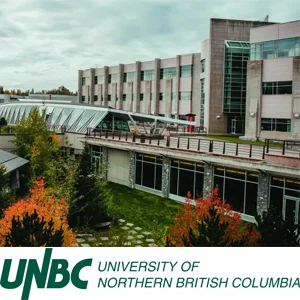
Located in the spectacular landscape of northern British Columbia, UNBC is one of Canada’s best small universities. We have a passion for teaching, discovery, people, the environment, and the North.
UNBC provides outstanding undergraduate and graduate learning opportunities that explore cultures, health, economies, sciences, and the environment. As one of B.C.’s research-intensive universities, we bring the excitement of new knowledge to our students, and the outcomes of our teaching and research to the world. In addition to fostering and celebrating academic excellence, UNBC is a welcoming place, with a learning environment that is friendly, inclusive, and supportive.
UNBC is a university both in and for the North. This mission has instilled a strong sense of ownership, purpose, and adventure among our students, alumni, faculty, staff, and the communities we serve. We are also Canada’s Green University™, leading the way to a more sustainable future for all.
Our mission
Ignite. Inspire. Lead change.
UNBC facilitates learning and generates knowledge through teaching and research. How we do that is unique.
We are connected to the North and the communities that call northern British Columbia home.
Supporting the sustainability of these communities is why we exist – this is what drives UNBC.
In service to the North, we ignite curiosity, inspire creativity, and champion excellence to help the region thrive.
We lead positive change by sharing what we learn with the world.
Our vision
Leading a sustainable future
Education. Research. Community Impact.
Our values
In our workplaces, relationships, and communications, we are committed to positive and productive work and learning environments.
Our values inform our lives, our decisions, and our choices. At UNBC we value:
Academic excellence
Excellence in teaching and research is a central tenet of a destination university.
Experiential learning and discovery
Our community celebrates and strives to provide an unparalleled learning experience which ensures that our students are prepared to meet the challenges of a fast-paced modern world, while stepping up and making a difference. UNBC is a champion of intellectual freedom, academic inquiry, learning for its own sake, access to information, learning through applied and best practices in experiential initiatives, and the development and mobilization of new knowledge.
Inclusiveness and diversity
Social and cultural diversity is core to enriching the learning environment of a modern university. The confluence of diversity and respectful discussion stimulates creative thoughts, new ways of thinking, and new pathways of inquiry. This ensures that our research questions address society as a whole and enables us to train leaders who understand our local and global communities.
Community
UNBC is a place where community thrives and where we strive to understand and care for other members of our University. It is a place all are welcome and where we commit to being respectful, innovative, resourceful, and responsive in our interactions with others.
Integrity
To succeed we must be true to who we are, and focus on where we are now and what we want to be in the future. We are honest, supportive, and forthright in all our interactions, confronting problems and issues openly and constructively.
Traditional Territory Acknowledgement
For thousands of years, Indigenous Peoples have walked gently on the diverse traditional territories where the University of Northern British Columbia community is grateful to live, work, learn, and play. We are committed to building and nurturing relationships with Indigenous peoples and we acknowledge their traditional lands.
Prince George campuses
The Prince George campuses are situated on the unceded traditional territory of the Lheidli T’enneh First Nation, part of the Dakelh (Carrier) Peoples’ territory. The Prince George campus is situated on University Hill, and the Wood Innovation and Design Centre and Wood Innovation Research Laboratory satellite campuses are located in downtown Prince George, B.C.
South-Central campus
The South-Central campus in Quesnel, B.C. is situated on the unceded traditional territories of the Lhtako Dene Nation, Nazko First Nation, Lhoosk’uz Dené Nation, and ?Esdilagh First Nation (formerly Alexandria Band). Lhtako, Nazko, and Lhoosk’uz are on traditional Dakelh territory, and ?Esdilagh is a member of the Tsilhqot’in Nation.
Peace River-Liard campus
The Peace River-Liard campus in Fort St. John, B.C. is situated in Treaty 8 territory on the traditional lands of the Dane-zaa Peoples of the Doig River First Nation, Blueberry River First Nation, and Halfway River First Nation.
Northwest campuses
The Northwest campus in Terrace, B.C. is situated on the unceded traditional Ts’msyen (Tsimshian) territory of the Kitsumkalum and Kitselas First Nations. There is also a satellite campus in the coastal community of Prince Rupert, B.C., situated on or near unceded traditional Ts’msyen territories including the Lax Kw’alaams Band, Metlakatla First Nation, Gitxaała Nation (Kitkatla), Gitga’at First Nation (Hartley Bay), and Kitasoo Band (Klemtu).
Wilp Wilxo’oskwhl Nisga’a Institute
UNBC has a federated agreement with the Wilp Wilxo’oskwhl (House of Wisdom) Nisg̱a’a Institute (WWNI). Established by the Nisg̱a’a Lisims Government in 1993 and situated on Gitwinksihlkw Village Lands within Nisg̱a’a Treaty territory, WWNI is a fully-accredited university-college serving all people in northwestern British Columbia.
UNBC History
In 2015, UNBC celebrated its 25th anniversary. It was in June 1990 that the members of the BC legislative assembly passed the UNBC Act, officially creating UNBC. The dream of having a northern university goes back much further, to the 1960s, when then-MLA Ray Williston set aside the land on which UNBC’s Prince George campus is currently situated as a university reserve. Later, former Bishop Fergus O’Grady proposed a catholic university for Prince George. Instead Prince George College (now closed) became a high school, though the Prince George neighbourhood around the school (called College Heights) bears university street names as a legacy of his idea.
More milestones on our history timeline
1987: The Origins
The modern UNBC story began in January 1987. Three local residents – Tom Steadman, Charles McCaffrey, and Bryson Stone – had been talking about the idea of a northern university and decided to see if their idea had any merit by each inviting 10 people to a meeting on the topic. 40 showed up. By the fall of 1987, after around a dozen meetings, it had become apparent that there was considerable enthusiasm for the creation of a full university in the north, and on December 1, 1987, the Interior University Society (IUS) was incorporated under the Societies Act. Key founders would go on to chair the IUS: Murray Sadler, Elsie Gerdes, and Roy Stewart.
1988: The Campaign and Political Advocacy
Important early support for the IUS was obtained from Bruce Strachan, MLA for Prince George South and Minister of State for the Cariboo Region, who saw the regional development potential of a northern university. This led to the commissioning of a study authored by Urban Dahllof, a Swedish expert on northern universities. His report, Building a Future of Excellence: a University of Northern BC, which demonstrated the credibility and feasibility of a university in the north, was one major element of the IUS strategy. The other elements included public education, gaining endorsements from public bodies, and a region-wide petition. On October 13, an IUS delegation to Victoria was able to present the government with:
- a petition signed by 16,000 people who had paid $5 for the privilege
- letters of support from every town, village, city, regional district, hospital board, school board, and Chamber of Commerce in northern BC
- an Angus Reid survey which indicated that 94% of northerners were in favour of creating the university;
- the Dahloff Report indicating the feasibility, credibility, and value of a university.
1989: The IPG
Some felt that the momentum towards creation of a university was now unstoppable, but the provincial government then received the “Bullen Study” on the expansion of post-secondary education, which recommended creation of university-colleges rather than the full university for which the IUS was campaigning.
In April, the IUS negotiated with the Ministry of Advanced Education, Training and Technology on a way forward. Subsequently, Minister Stan Hagen appointed the Implementation Planning Group (IPG), chaired by Horst Sander of Prince George, to advise him on what type of institution would be best for the north. During the summer of 1989, doubts were being raised about whether there was the political will to create a university in northern BC, but just as they were peaking, the Minister was quoted in the Globe and Mail on 2 October as saying “In the interior…people don’t think of education beyond grade twelve. The questions they ask at the end of the day are ‘How many trees did you cut today?’ or ‘How were things down in the mine?’
This generated 3,000 letters of protest to the Government and a month later, Premier Bill Vanderzalm revealed his support for a northern university when he announced that Bruce Strachan, the local MLA and clear advocate of the university, was the new Minister of Advanced Education.
1990: The Government of BC Creates UNBC
On January 9, Minister Strachan made a formal statement that the government had accepted the IPG recommendation: that a university was to be established in the north with a main campus in Prince George. On June 22, the Provincial Legislature passed Bill 40, The UNBC Act, with all-party support. This officially created UNBC. The Interim Governing Council, chaired by Murray Sadler, then met formally for the first time on July 21. It was to act as both Board and Senate until such time as the University had gained the officers, faculty, and students capable of forming a senate.
Two dominant themes of early deliberations were site selection and the Presidential search. The latter began in June, and the outcome was the appointment of Geoffrey Weller, previously Vice-President Academic of Lakehead University. The IGC’s site selection committee, meanwhile, had initially considered fifteen sites, but these were reduced to a shortlist of six sites for detailed study, and the Cranbrook Hill site finally carried the day when crown acreage was located with a fine view of the City.
1991: Consolidation
UNBC’s first president, Dr. Geoffrey R. Weller.
1991 saw the appointment of the first executive staff, development of the master plan for the Prince George campus, publication of the first Academic Plan, creation of enrolment forecasts, distribution of UNBC newsletters throughout the north, participation in scores of public meetings, planning of a major fundraising campaign, development of proposals for regional operations, and many other items of consolidation.
Tuition and fees
The following information on Tuition and Fees for International students is intended to supplement information available on the Finance website and provide additional details about deposits, deadlines, refunds and payment option. Please refer to the Finance website for additional information and for current tuition rates.
Tuition deposit
All International students are required to pay an admission deposit. The deposit is $9,000 for undergraduate students and $1,500 for graduate students. This deposit will be used to pay for your tuition and fees at UNBC.
When the UNBC Admissions office has finished reviewing your application and has determined you are admissible to your chosen program, admissions will ask you to pay the Admissions deposit. Once the deposit is paid, you will receive the information required to apply for your study permit and your official Letter of Admission. Receipts can be downloaded from your student account.
The international admission deposit is $9,000 and non-refundable. Refunds may be granted in cases of study permit refusal, less any tuition or charges owing. Please read our refund policy for details.
If you are an MBA student you will also pay an additional $2000 MBA deposit. To receive a refund for this deposit you must inform the MBA Program of your request by the required deadline. Late requests even with study permit denial are non-refundable. Please contact mba@unbc.ca for more information.
If you require a financial support letter for a bank, please email ie@unbc.ca.
British Columbia Medical Services Plan Fee (BC MSP)
All international students in British Columbia must pay a $75 a month fee for healthcare to the Province of British Columbia. This fee begins after the three-month mandatory waiting period. You are responsible for enrolling yourself and paying for this independently. This fee cannot be paid from your UNBC account.
BC MSP is separate from your student health and dental fee and should not be confused.
Click here for more details on this fee
Payment deadlines
- Admissions Deposit is due two weeks after notification of admission. In some instances, this deadline can be extended.
- The obligation to pay fees for a course or program is made when you register for classes. Payment of tuition and fees are due by the first day of the semester (please refer to the UNBC Academic Calendar for all important dates).
- Late registration and any additional fees owing as a result of changes in a student’s registration and/or other student activities are due on the day the charges are incurred unless otherwise indicated.
How to pay
UNBC accepts a range of payment methods. We strongly recommend that International student’s needing to make a payment use UNBC’s preferred payment platform, Convera (previously Western Union GlobalPay).
This service allows you to pay in your local currency using a range of local online payment options, or bank transfer. Please see here for tips and FAQs about Convera for students.
For full details on the benefits of using Convera for students, as well as other payment options available to you, please visit the payment options web page.
Refunds
In most cases the international admissions deposit is non-refundable. For all international admissions deposit refund requests, a $150 processing charge will apply.To submit a refund request please see our deferral, refunds and withdrawals web page.
Refund requests are usually processed within 8-10 weeks of the receipt of a complete refund request. Incomplete refund requests will not be processed. If you are eligible and your refund request is approved, the funds will be returned to the original payment location.
Awards and scholarships
Upcoming opportunities
All inquiries about graduate awards and scholarships should be sent via email to grad-scholarships@unbc.ca.
Internal research scholarship opportunities and deadlines
External awards and deadlines
Other funding sources
The Awards and Financial Aid department also lists available opportunities. Award notifications will also be sent out via the Office of Graduate Administration email list. If you have any questions about available awards, please contact us via email at grad-scholarships@unbc.ca.
Scholarship application tips
Students who are applying for or renewing scholarships should make sure that their student account is in good standing, registration is up to date and all required paperwork has been submitted to the Office of Graduate Programs. This may be a requirement of a scholarship and could result in your application being ineligible.
Admission Requirements and Application Process
What are the admission requirements for international undergraduate students?
International applicants must have completed studies at an appropriate high school or recognized post-secondary institution. Each application is reviewed individually. Specific requirements vary by country: detailed information can be found on UNBC’s International Admissions Requirements page.
What documents are required for the application process?
Applicants must submit official transcripts from all previously attended institutions. If transcripts are not in English, a notarized translation is required. Additional documents may include proof of English Language proficiency and a copy of your passport.
Is proof of English Language Proficiency required?
Yes, it is. Students are expected to provide a proof to demonstrate an acceptable level of proficiency in the use of English in order to receive and participate in classroom instruction and discussion as well as to complete written assignments.
International Admissions – English Language Requirements
How can I apply to UNBC?
All applications are submitted online through EducationPlannerBC. Please ensure all required documents are prepared. For assistance, contact Future Students Office at futurestudents@unbc.ca.
Undergraduate Admissions – Become a UNBC Student
What is the process of transferring credits from another institution?
UNBC evaluates transfer credits on a case-by-case basis. Official transcripts and detailed course descriptions are required. For more information, visit the UNBC Transfer Credit page.
For assistance, email futurestudents@unbc.ca connect with a recruiter.
Tuition and Fees
What is a tuition deposit? (Why do I need to pay it?)
The tuition deposit is the payment students make once they receive an offer of admission from UNBC. It is a way to show that you are committed to attending and secure your place in the program.
This deposit is also part of your first semester’s tuition. You are not paying extra – you are just paying some portion in advance.
How much is the tuition deposit for international students?
All International students are required to pay an admission deposit of $9,000 Canadian dollars for undergraduate students.
When is the deposit due?
You will find the payment deadline in your offer letter. The International Admissions Office recommend that the payment is completed within 14 days of receipt of the email which contains the offer of admission.
How do can I pay the tuition deposit?
You can pay through various methods. We strongly recommend that international students needing to make a payment use UNBC’s preferred payment platform Convera for Students.
This service allows you to pay in your local currency using a range of local online payment options, or bank transfer.
Payment Options – International Students
Convera takes so long. Is there another way I can make the deposit?
You have the option to pay the tuition deposit by calling 250-960-5631 during regular work hours (Monday to Friday, 9:00 a.m. – 4:00 p.m.) and pay by phone.
Please be aware our cashiers are often busy serving students and may experience delays.
Payment methods: Credit card (Visa, Mastercard and American Express).
I’m already in Canada. Do I still need to pay through Convera?
If you are already in Canada and have a Canadian banking account, you can pay via internet banking. Please see instruction here: Paying via Internet Banking
Can I take the deposit back if I change my mind or can’t attend?
The $9,000 international admission deposit is non-refundable. Refunds may be granted in cases of study permit refusal. Please read our refund policy for details.
In circumstances where you cannot attend your chosen semester, you may request to defer the start of your studies to the next semester.
Note: Deferral requests will not be considered without the admission deposit.
For questions and support, contact the International Student Recruiter at justine.caban@unbc.ca.
What happens if I don’t pay the admission deposit?
If the deposit is not paid by the given deadline, your application will be closed, and you will lose your spot in the program.
If you are experiencing challenges meeting the deadline, please reach out to the International Admissions Office immediately.
I’d like to take a course at UNBC under LOP (Letter of Permission). Do I need to pay a deposit?
If you are planning to take a course at UNBC under a Letter of Permission, you will not need to pay an admission deposit.
This deposit is mainly for international students enrolling in full programs at UNBC.
Is there a payment plan to pay the tuition deposit?
Unfortunately, the tuition deposit must be paid in full single payment.
Do I still need to pay for another deposit if I reapply for the next semester?
Your admission deposit will remain in your student account and be applied to the semester you reapplied for.
Are there any scholarships I can apply for to cover the admission deposit?
Unfortunately, there are no scholarships specifically designated to cover the admission deposit at UNBC. To be considered for UNBC scholarships, students must first apply and get admitted to UNBC. The admission deposit is a payment you must make in order to accept your admission to UNBC and secure your spot in the program.
Housing Accommodations
Does UNBC offer on-campus housing?
Yes, UNBC offers on-campus accommodation option to students.
UNBC Housing & Residence Life
Is living on-campus mandatory?
Students have the option to live on-campus or off-campus during the duration of their studies at UNBC.
Immigration Related
Do I need a study permit to study at UNBC?
All international students who are planning to study in Canada for greater than 6 months are required to obtain a study permit.
Review Immigration, Refugees and Citizenship Canada website for complete details.
Can you help me with my study permit application?
It is students’ responsibility to acquire the accurate study permit before arriving in Canada. While the International Office is unable to assist you on the application process, we can help you with general immigration questions.
Student Life and Opportunities
Does UNBC offer co-op programs? Yes. UNBC offers co-op programs to all undergraduate programs except Nursing, Social Work and Education.
UNBC Co-operative Education
Is there an orientation for new international students?
Aside from the UNBC Orientation for all new students attending UNBC, the International Office also holds an in-person orientation for our new international students.
What support services are available for international students?
Do I have to get a health insurance when I get there?
UNBC’s number one priority is the health and safety of students therefore, all students are required to have a health insurance while registered as a student. Visit International – Health Insurance for further information.
Are there scholarships available for international students?
UNBC offers scholarships and awards to all students. Available scholarships can be reviewed at Scholarship, Bursary and Award Guide.
Does UNBC provide fully funded scholarship and living expenses?
Unfortunately, we are unable to provide fully funded scholarships and living expenses to students.
There are scholarships and awards that students can apply for once they are admitted to UNBC. Email futurestudents@unbc.ca for further information.
UNBC Athletics and Intramurals
Does UNBC accept international athletes?
International students are eligible to join the varsity teams at UNBC. UNBC Timberwolves welcomes applications from qualified students worldwide, and international student-athletes are encouraged to participate in varsity sports.
For personalized guidance, prospective student-athletes should contact respective teams’ coaching staffs. Contact details are available on the official UNBC Timberwolves website.
What varsity sports are available at UNBC?
UNBC offers varsity teams in basketball, soccer, and cross-ski and biathlon.
Visit Official Website of the UNBC Timberwolves!
How can I join UNBC varsity team?
Future/prospective student-athletes interested in joining UNBC’s team should contact the respective team’s coaching staff for information on tryouts and recruitment processes. Contact details are available on the official UNBC Timberwolves website.
Official Website of the UNBC Timberwolves
Are there intramural sports opportunities at UNBC?
Yes, UNBC offers a variety of intramural sports for students looking to participate in recreational activities. These programs provide a fun and competitive experience for all skill levels.
UNBC Intramurals
Can I participate in intramural sports?
Current UNBC students and CNC Nursing Students who have paid the Intramural Recreation & Fitness fee are eligible to participate. A valid UNBC student card with a U-Pass sticker is required for all games.
How do I register for intramural sports?
Registration details and forms are available on the UNBC Timberwolves website. Students can register as individuals or as part of a team.
Do you offer sports scholarships to students who want to be athletes?
UNBC offers several scholarships and bursaries to support student-athletes. For scholarship details and applications, visit UNBC Financial Aid page.